The People ….

India is a very diverse country with inequality evident everywhere you look.

And while I have found some people here a little pushy, the hawkers and beggars, on the whole everyone here has been incredibly friendly and helpful.
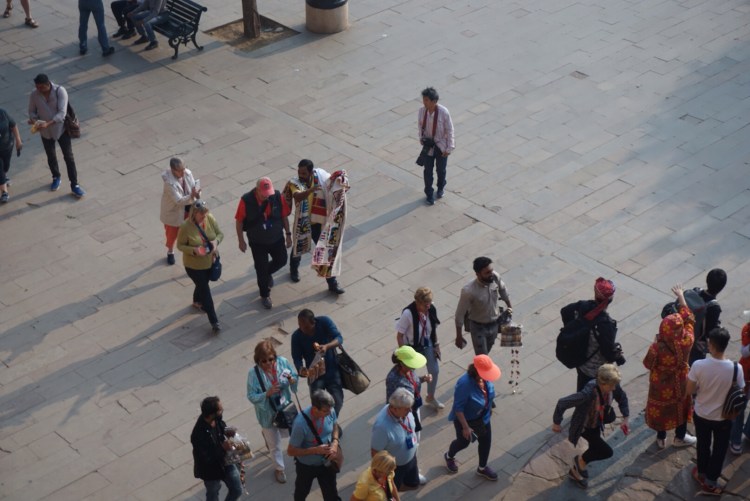
My first interaction on the street was with a rickshaw driver, and while he was at me for about 15 minutes wanting to take me for a ride, he still pointed out where I wanted to be, and that was the hop on hop off bus office. He still helped!

Our guide tried to tell us that many Indians are rich and that they ‘hide’ it in their jewellery, even the village people.

While it is evident that some people are rich, living in very opulent homes behind massive walls and have security, many people are living on the streets, sleeping under a tarp like a swag or have constructed themselves a small bivouac for themselves and others, mostly their children. This is saw from my first outing in Delhi, as I walked past the office buildings of the international banks, others were sleeping on their doorsteps.

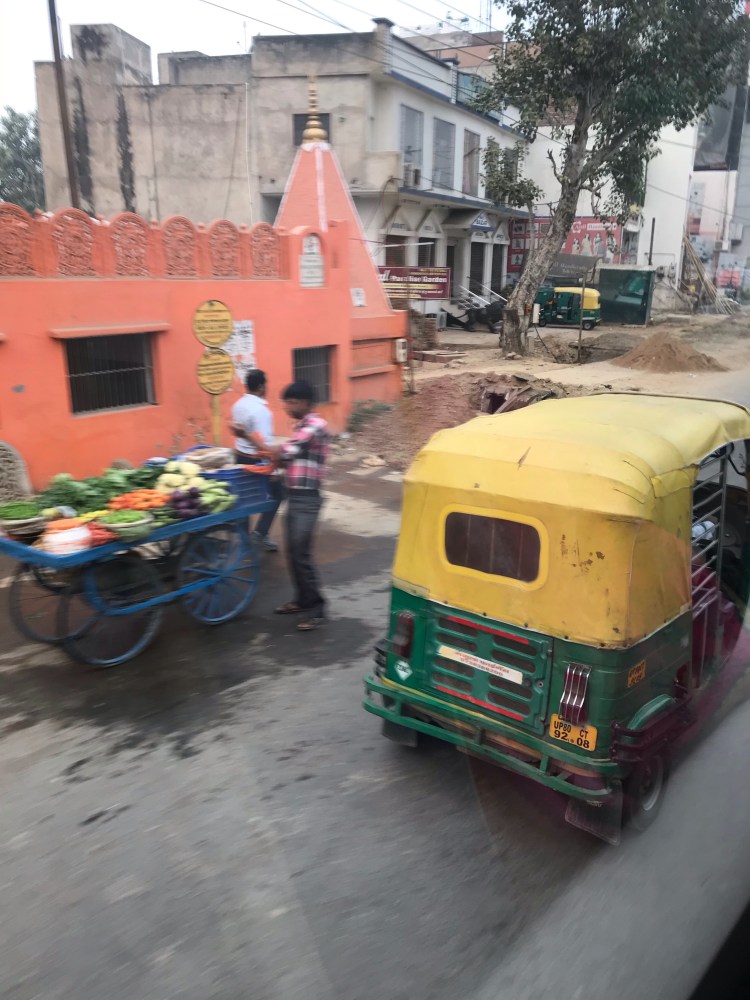
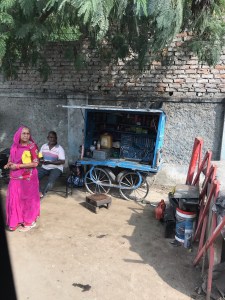
And there is no escaping seeing people, they are everywhere! I know there are 1.3 billion of them, but quite literally wherever you turn, you will see people; Standing around a vendors cart, sitting at the front of some shop, ploughing a field, riding a motorbike past you, walking on the road or highway or even the train tracks. There is simply no escaping.
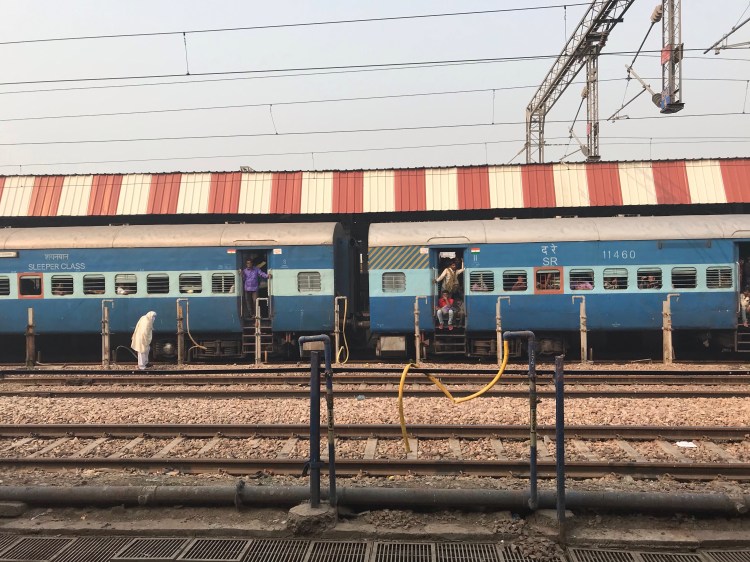
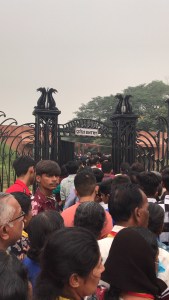
And the queues, pushing and jockeying for a better position like horses coming on to the Flemington straight on the first Tuesday in November.
At no time in India have I felt unsafe. I have walked down back lanes of Varanasi towards the Ganges River, trusted a stranger driving a rickshaw to take me to lesser known tourist sites which were amazing in Delhi, walked the market streets of cities such as Jaipur and Jodhpur at night, crossed manic roads between trucks, buses, cows, dogs, motorbikes and cars!

But there are a few things that have been challenging for me from the Indian people. The constant spitting! They chew something that colours their saliva and they spit it out, leaving a blood red mark wherever it lands, and that could be the side of the bus from passengers, footpaths, next to your feet in markets and it goes on. A few times I wanted to sit down and you look and decide it may be best to stand. In addition to spitting, the men will just piss anywhere. By the state of many public toilets, a wiz against a city wall or a bush is probably more hygienic for them. And unfortunately, I have also seen some poop too. Enough said!

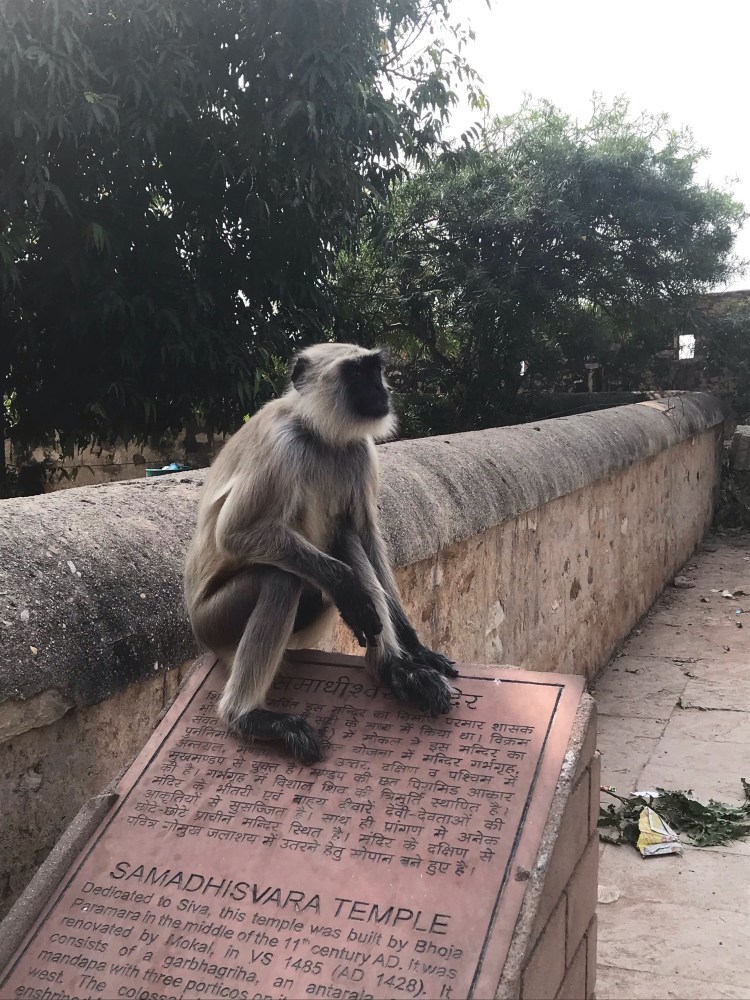
As I have been escorted around the states of Rajasthan, Utter Pradeep and Delhi, I can’t help but think that most living things in India are just trying to survive; fighting for every scrap of food, space and money. Tips are vital for the locals to survive and the animals (cows and cattle, goats, boar, dogs, monkies, squirrels and camels) in towns are scouring for any food that they can find, either via the hand of a local or from a bin or rubbish on the roads and amongst the carts and shops.
Long term, this would not be a place for me. I have become soft in the underbelly of Australia and I am quite happy with my lot in life and will treasure it even more than I did in the past.
Jodhpur – the Blue City

Upon arriving in Jodhpur, one thing is very evident, this is a military city! Located only 350kms from the Pakistan border, Jodhpur is the second most ‘sensitive’ city in Rajasthan in relation to Pakistan.

Large barracks, Air Force, military hospitals and engineering barracks line the road into Jodhpur.

Why the blue city?

Three reasons:

1. Premises were painted blue to demonstrate that they were the highest/elite level in the caste system!

2. Helped reflect light to maintain the coolness of the premises!

3. The blue paint also repels mosquitos!

Jodhpur is part of the state of Rajasthan, which was allowed to keep its royal families upon independence in 1947 from the United Kingdom. So within the state of Rajasthan there are multiple royals, effectively, one for each major city; Jaipur, Jodhpur and Udaipur, to name a few.

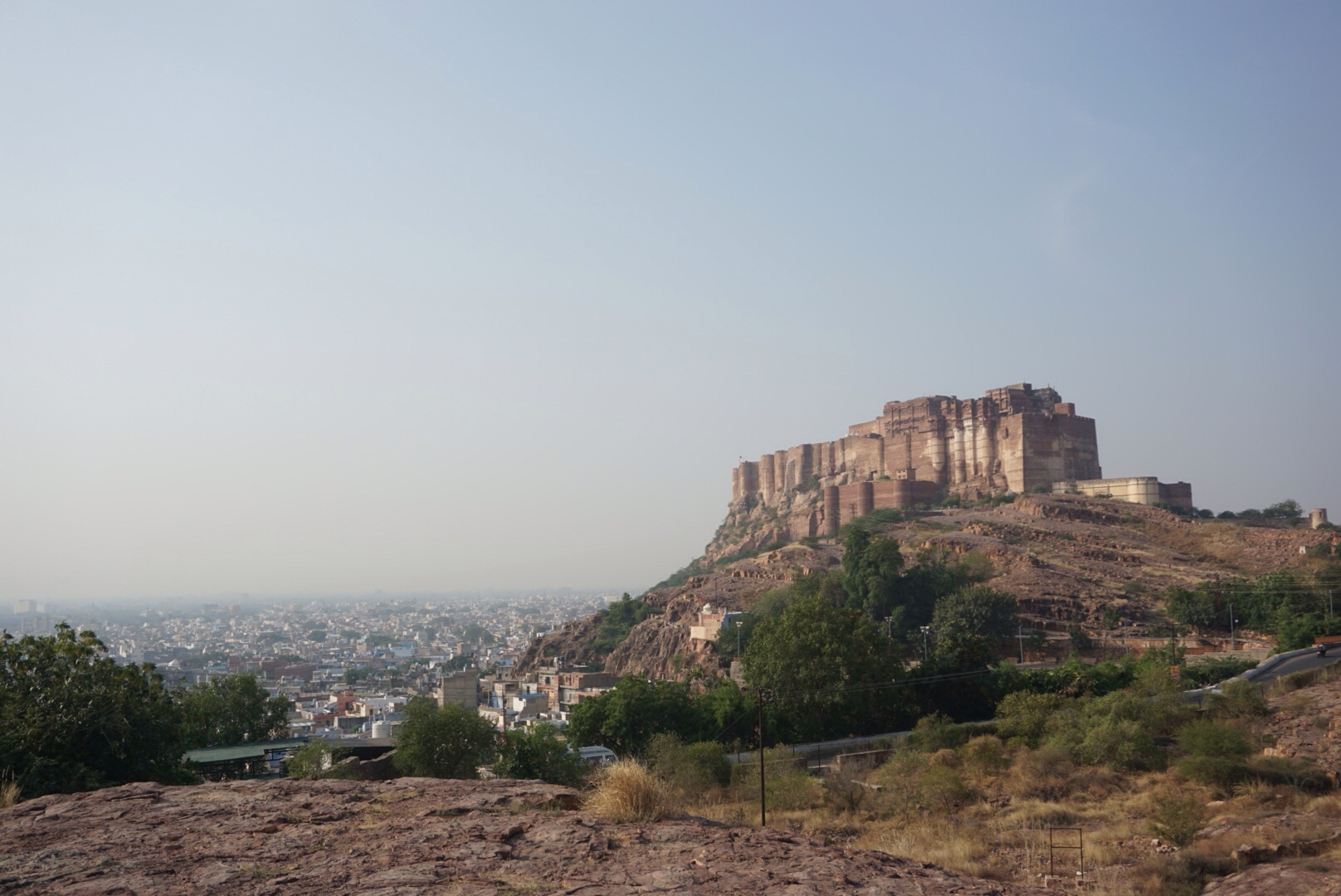
The mighty Mehrangarh Fort dominates the Jodhpur skyline, sitting over 120me meters above the city. The Fort, with an elevator, consists of the private living quarters if previous royals and also have a few battle scars from the 19th century invasion by the Jaipur rulers upon the Fort with some cannonball damage evident.

The Fort was constructed in 1459!

It looks like it is something out of Game of Thrones or something similar.

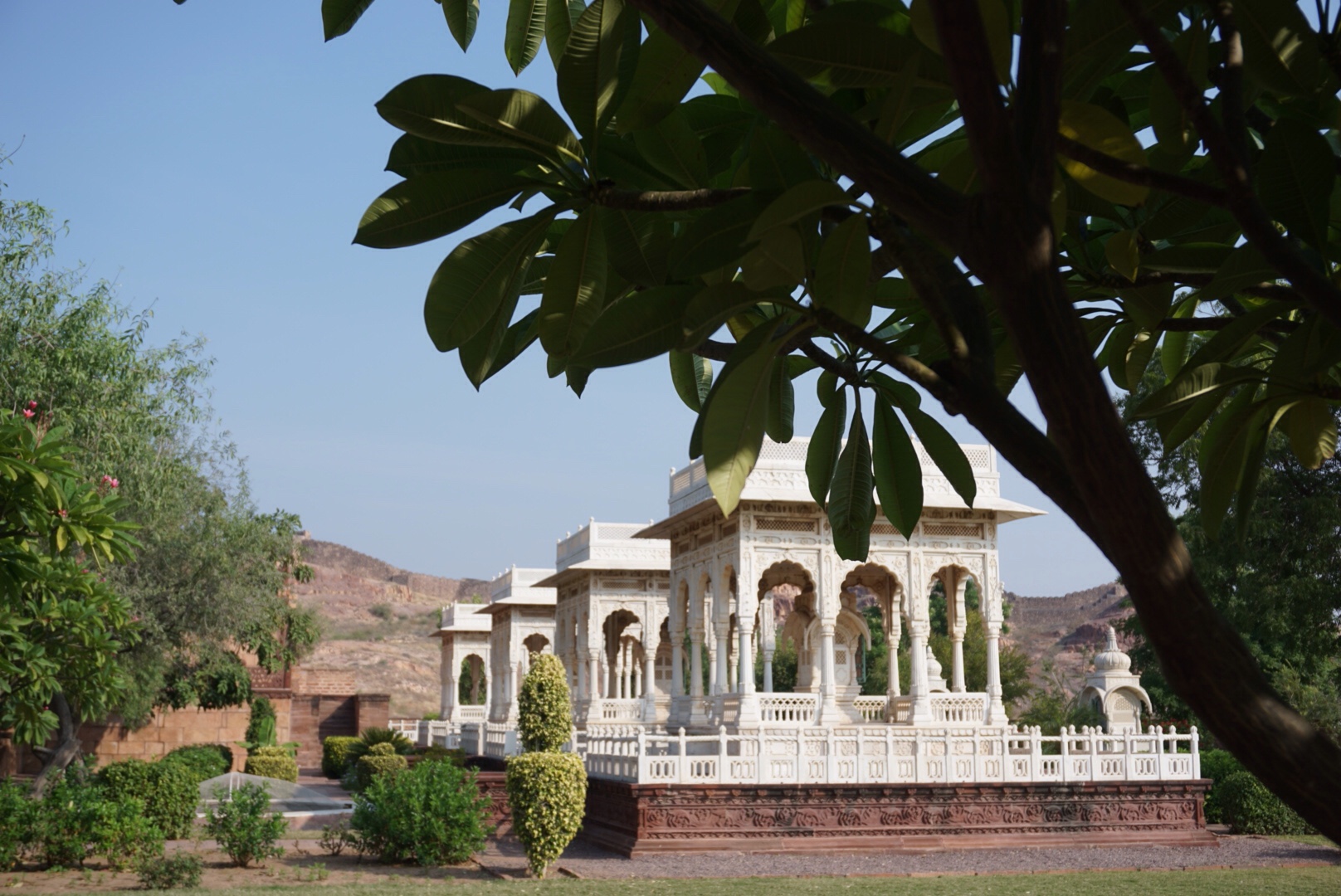
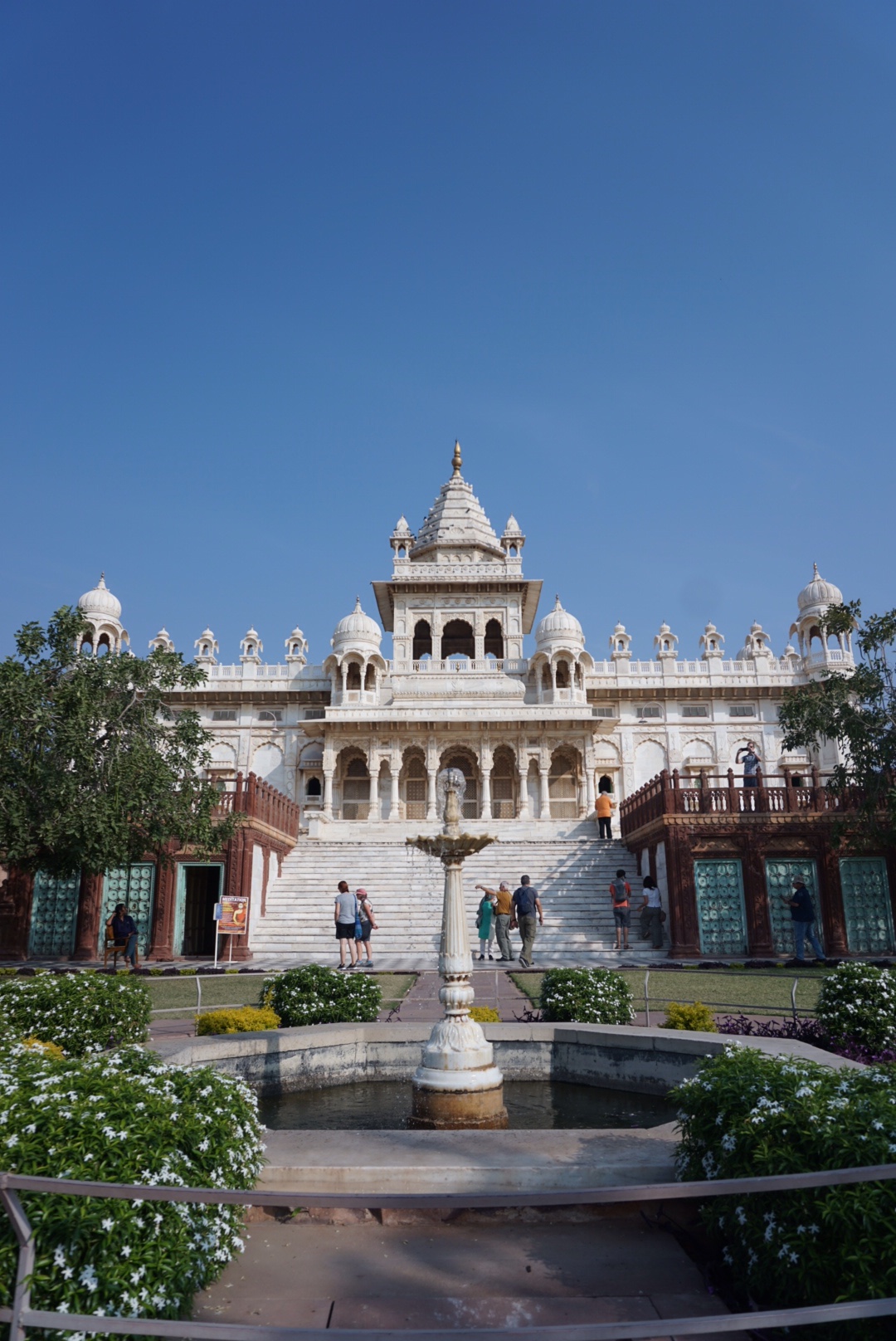
Prior to visiting the Fort, we visited the show built at the end of the 19th century by the wife of the local maharajah. Each body off a royal member is brought to here be cremated and than r called fondly by not only the family, it generate no to come. The shrine, built for the king, is an example of wonderful craftsmanship and skill for the preservation of the life and spirit of the Mehrangarh!

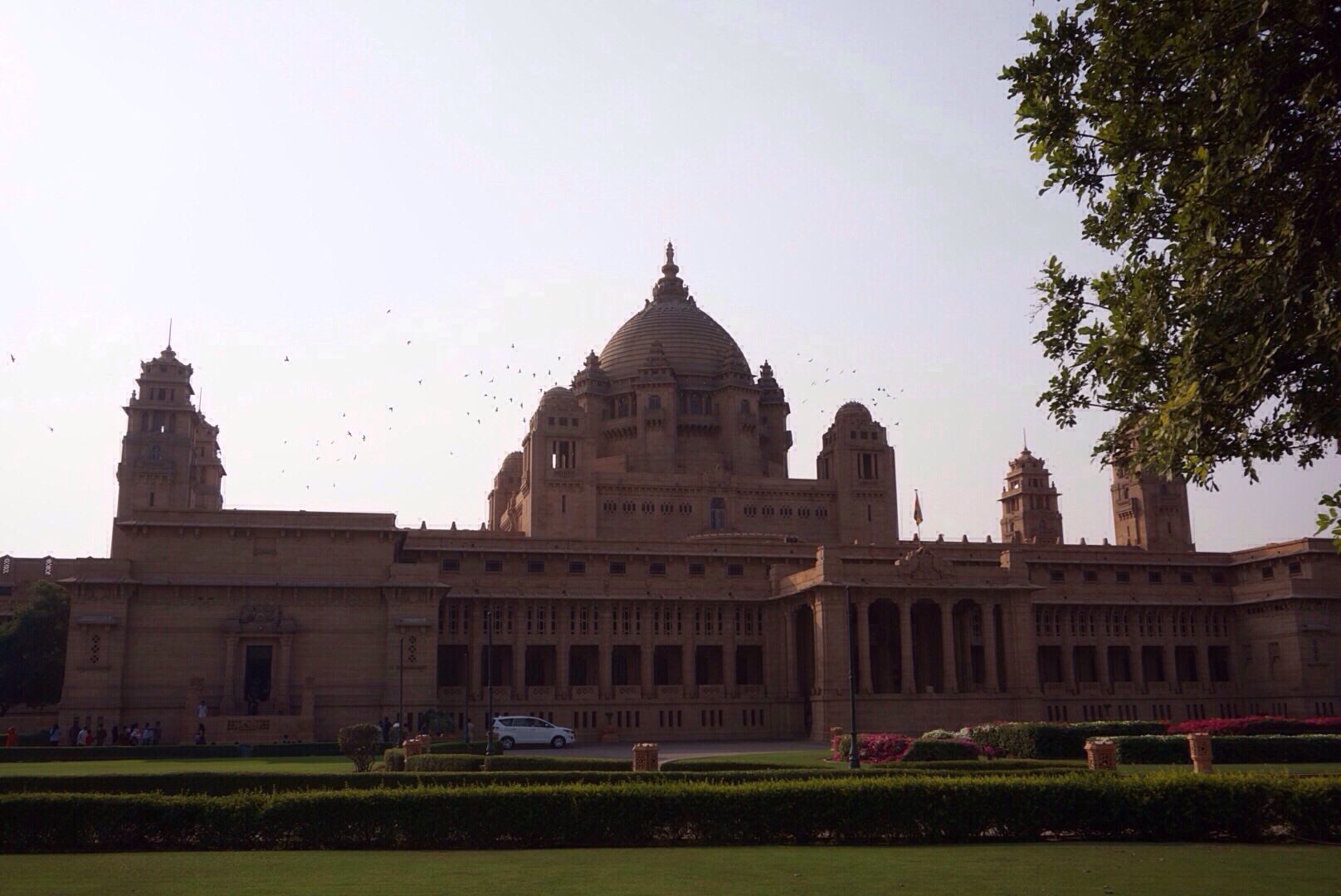
Finally, every good king needs a palace and and for grandeur fewer are more so than this one in Jodhpur. Built during the 1930s, it has been converted to a hotel and museum as well as maintain its primary role as the offical residence of the royal family.

Udaipur – the white city

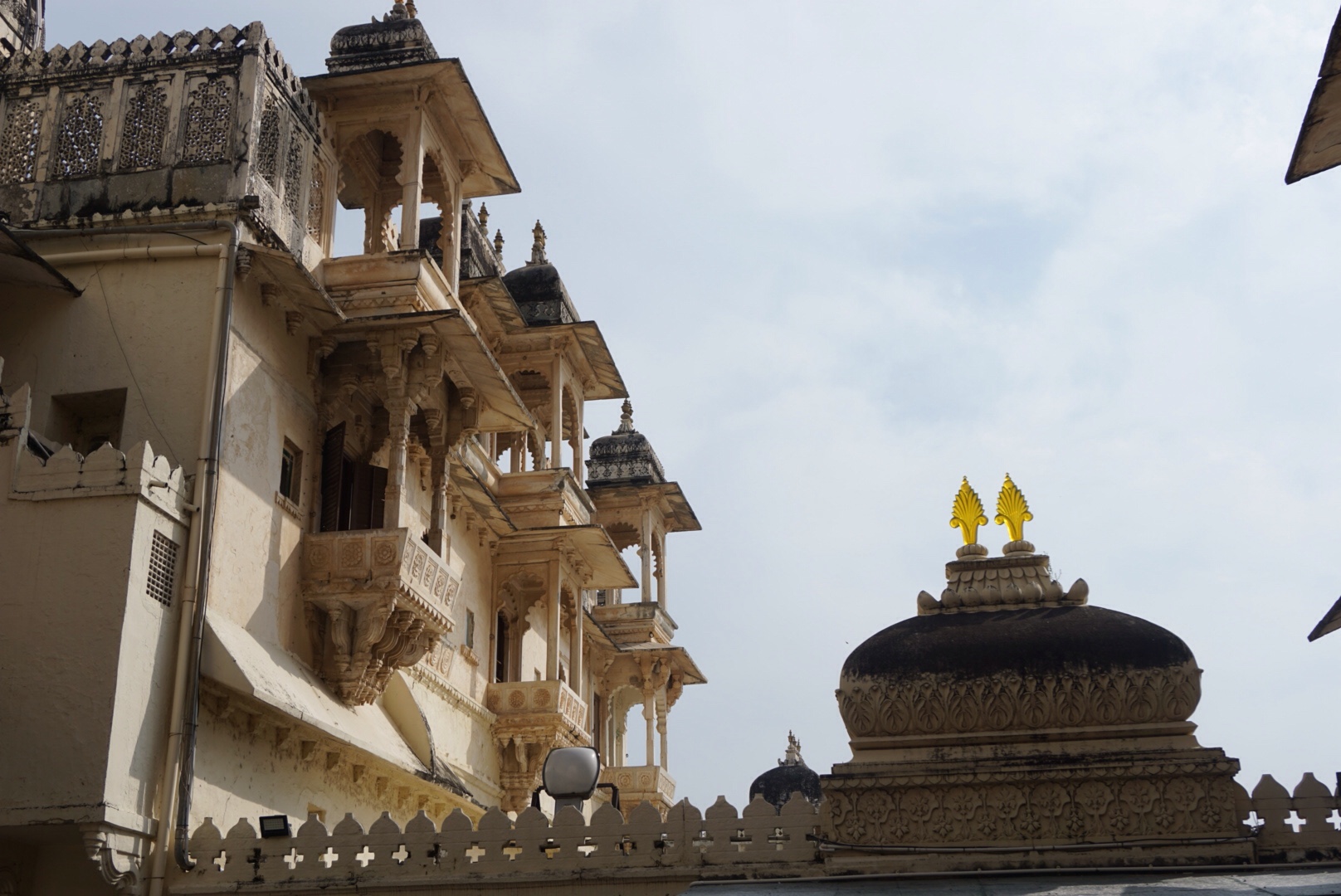
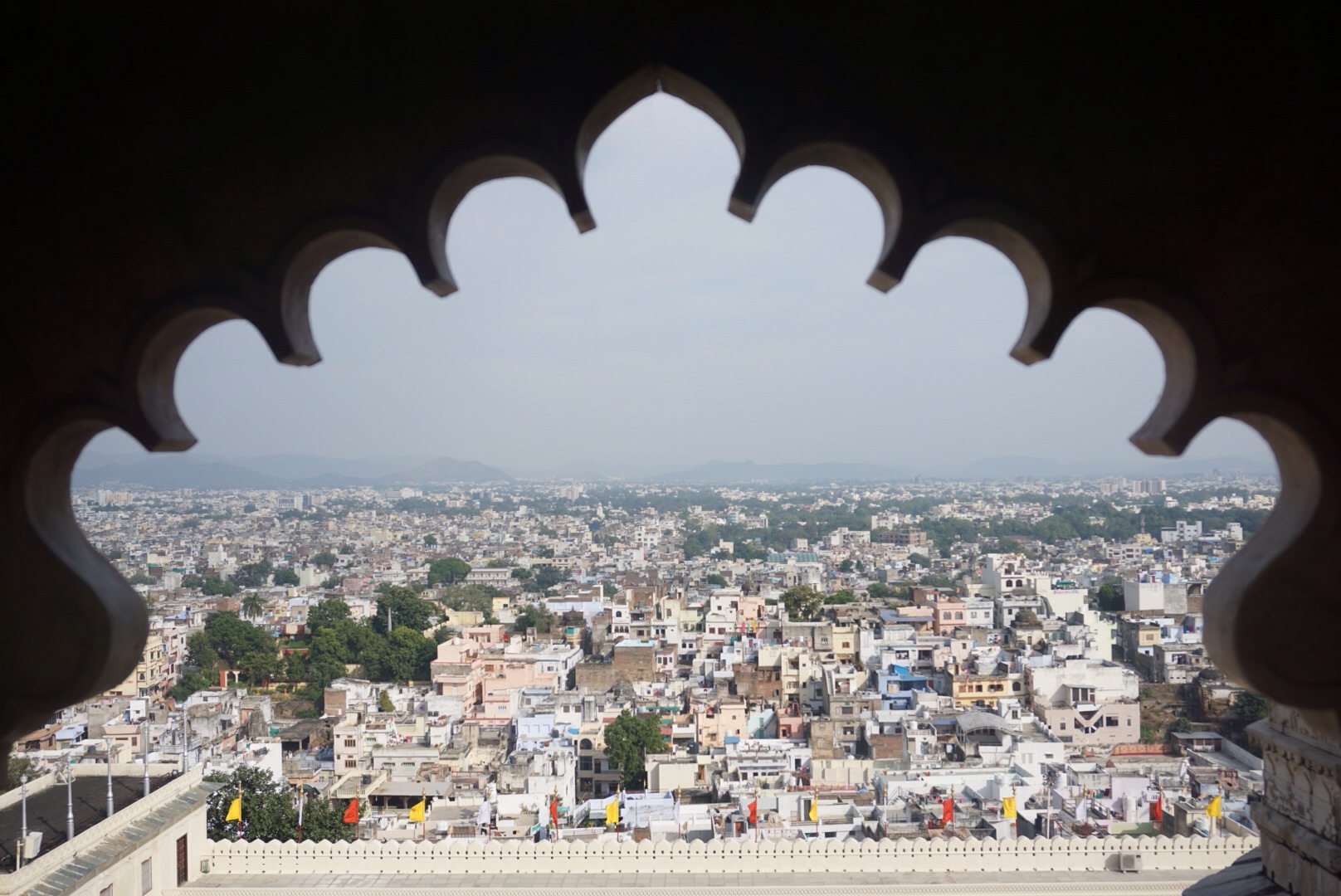
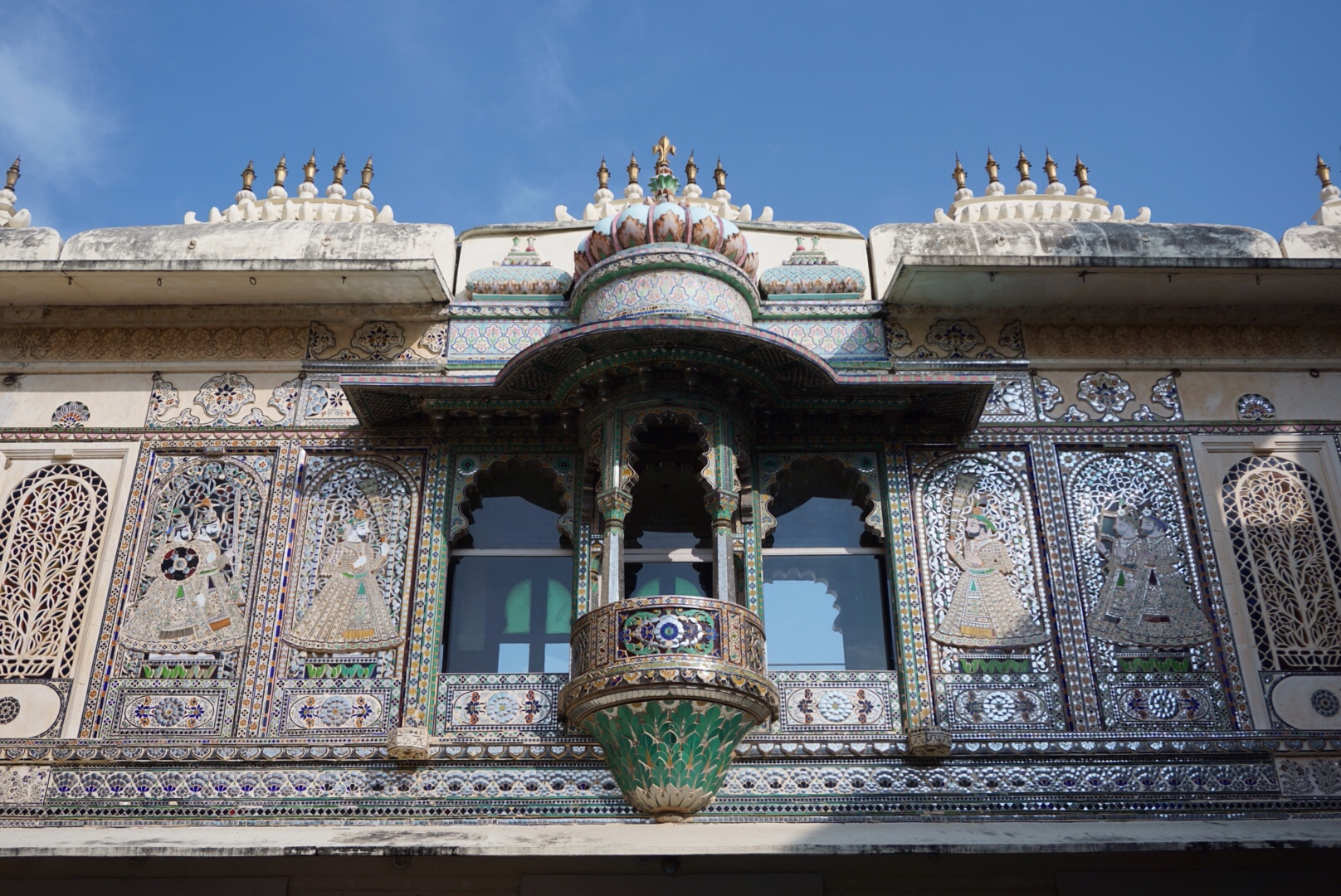
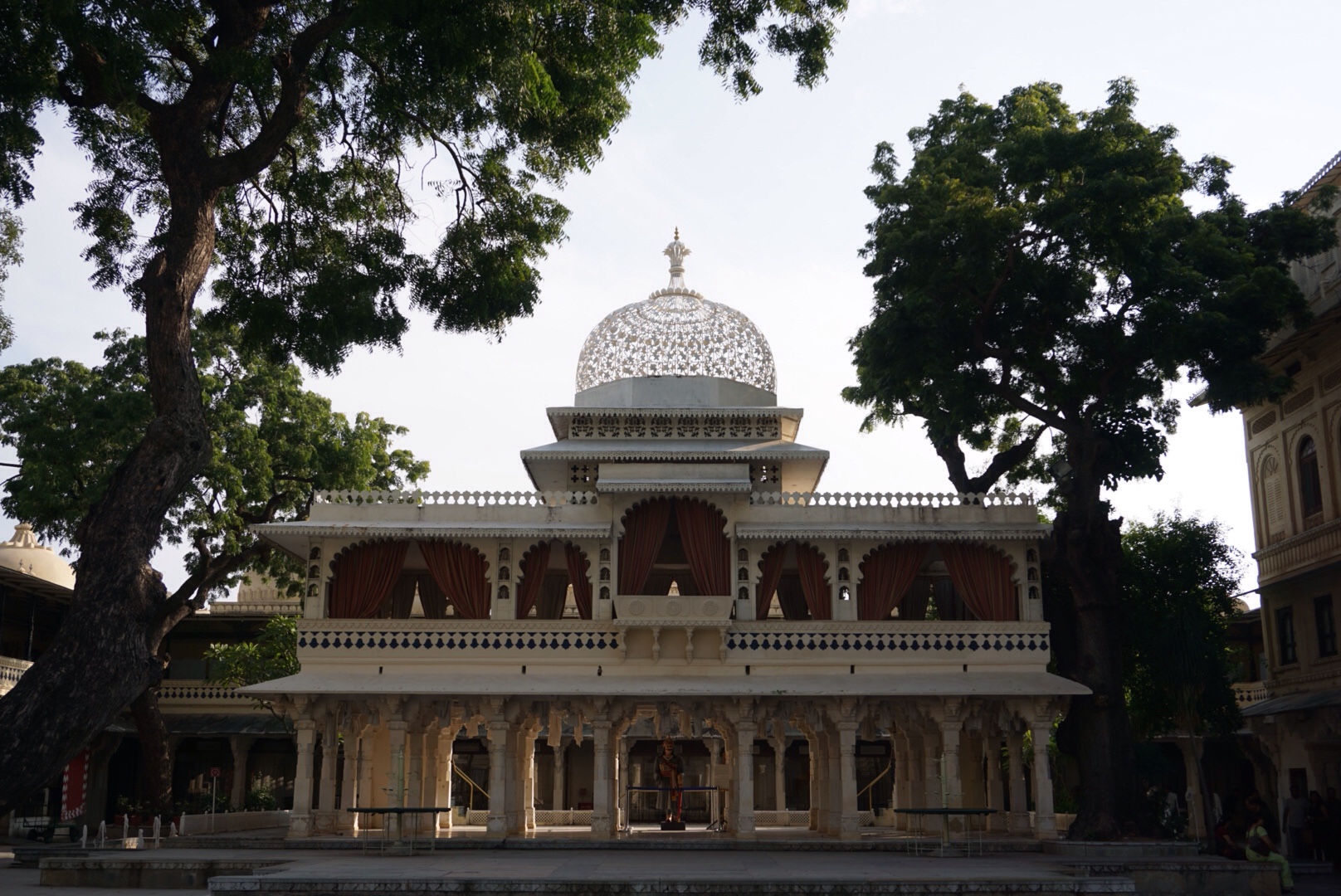
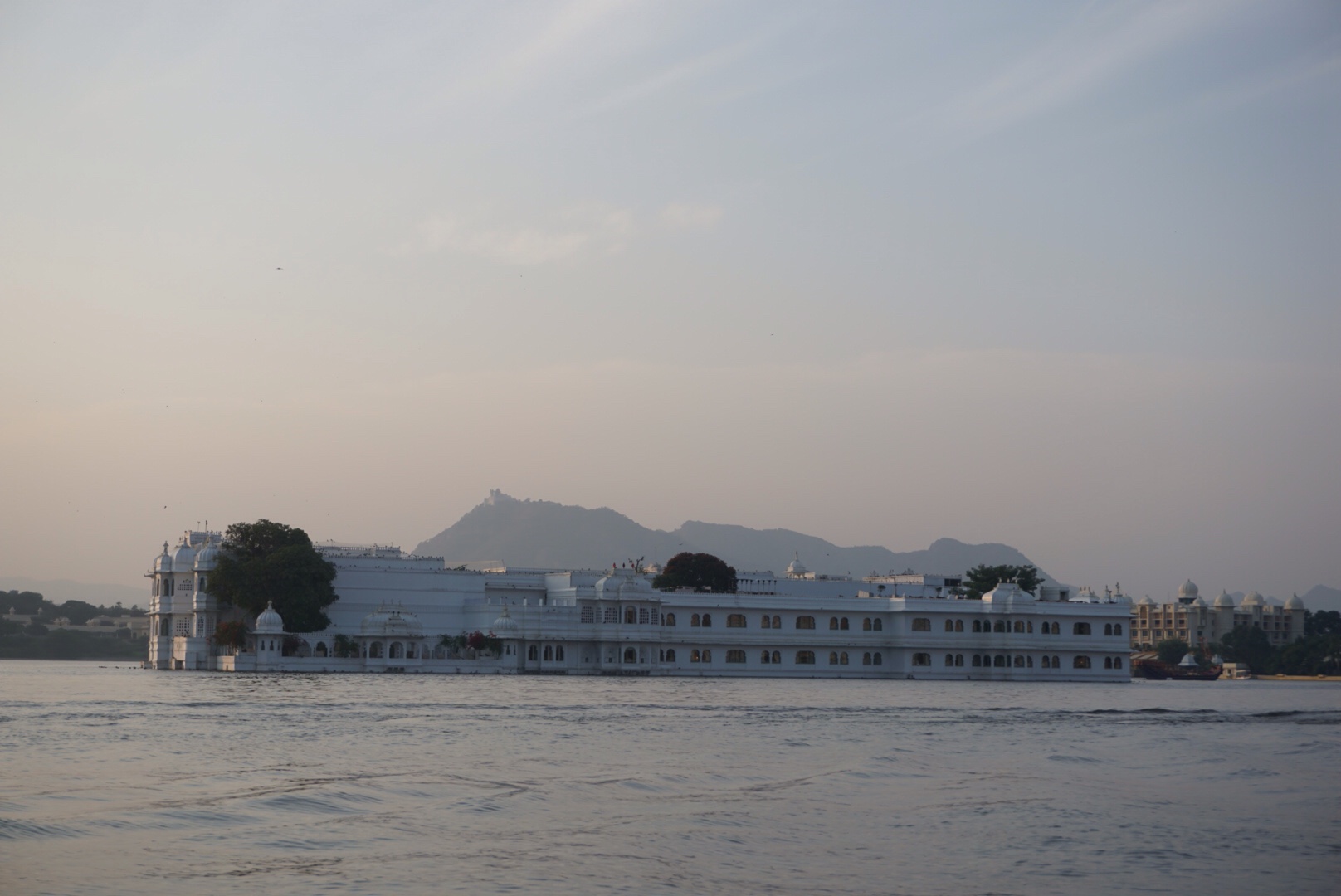
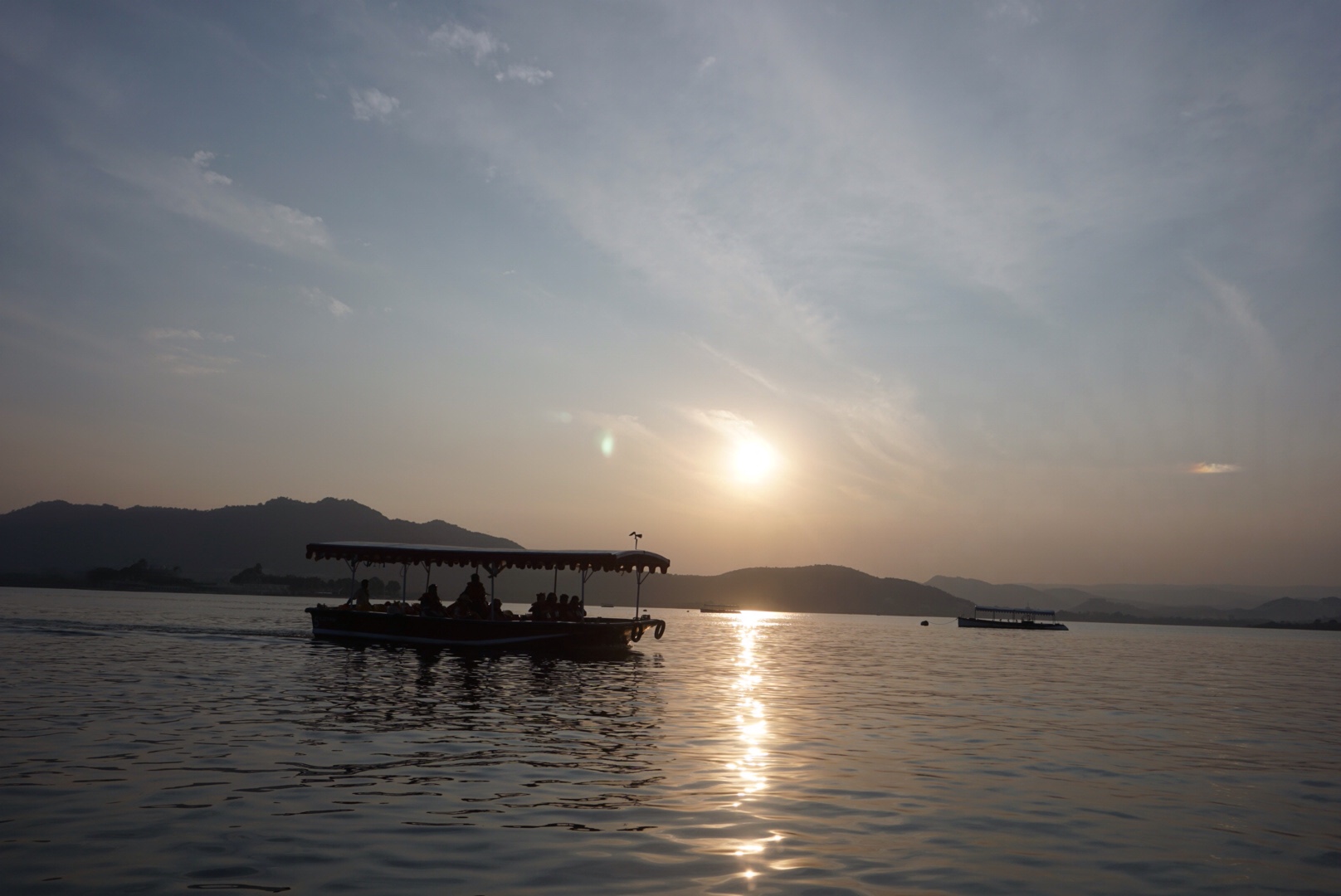
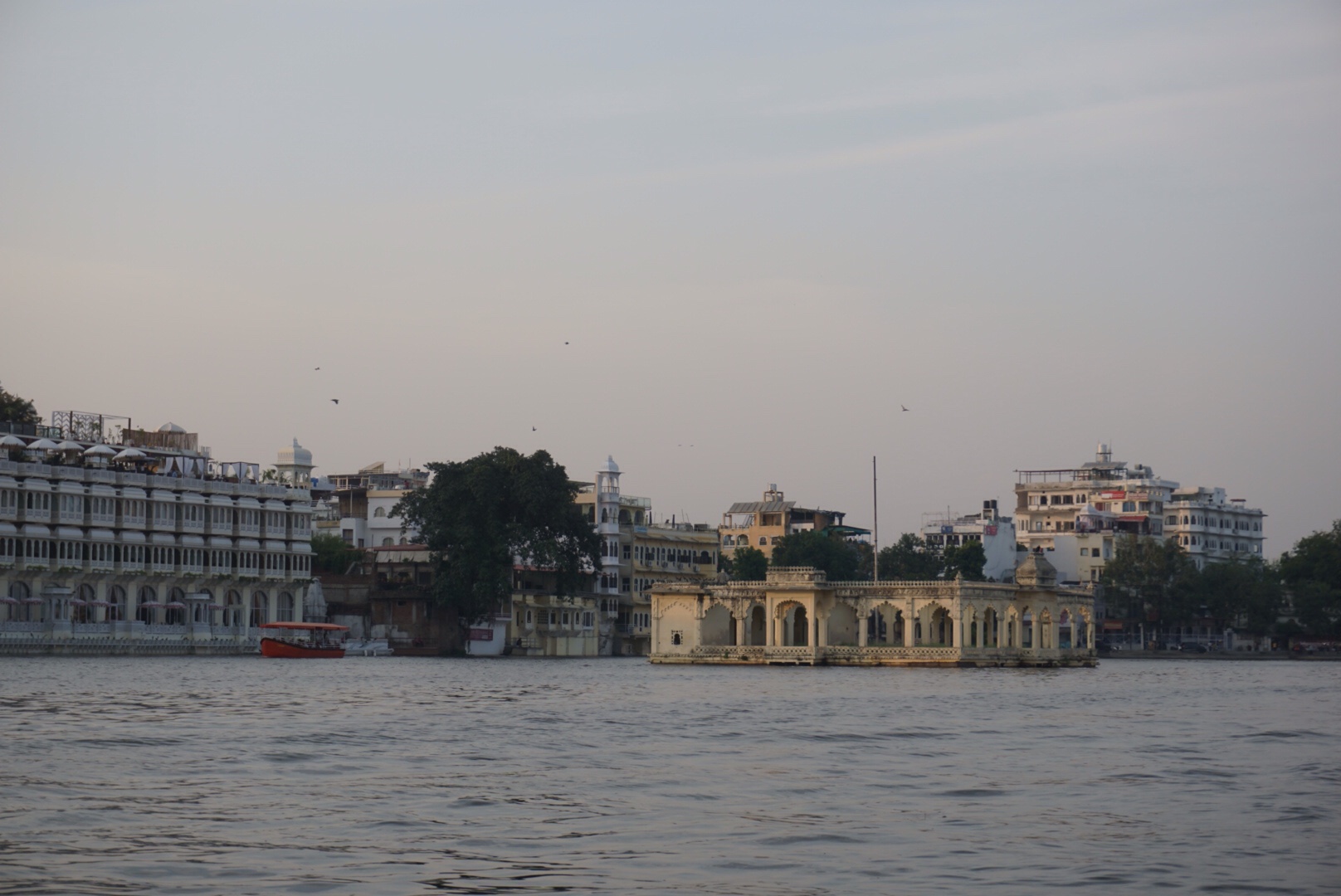
The third major city of Rajasthan that we visited, this city is dominated by the large City Palace that overlooks Lake Picholi. This man made lake, one of 7, is 3km by 4km in size and consists of several islands, one which includes the presence of the Summer Palace. High above the lakes, upon the highest hill can be seen the Monsoon Palace.

There is no shortages of palaces for the royals of years gone by.

Udaipur is a city that was established in the 16th century.

Chittorgarh

Is was a midday stop on a 8 hour drive from Udaipur to Bundi.

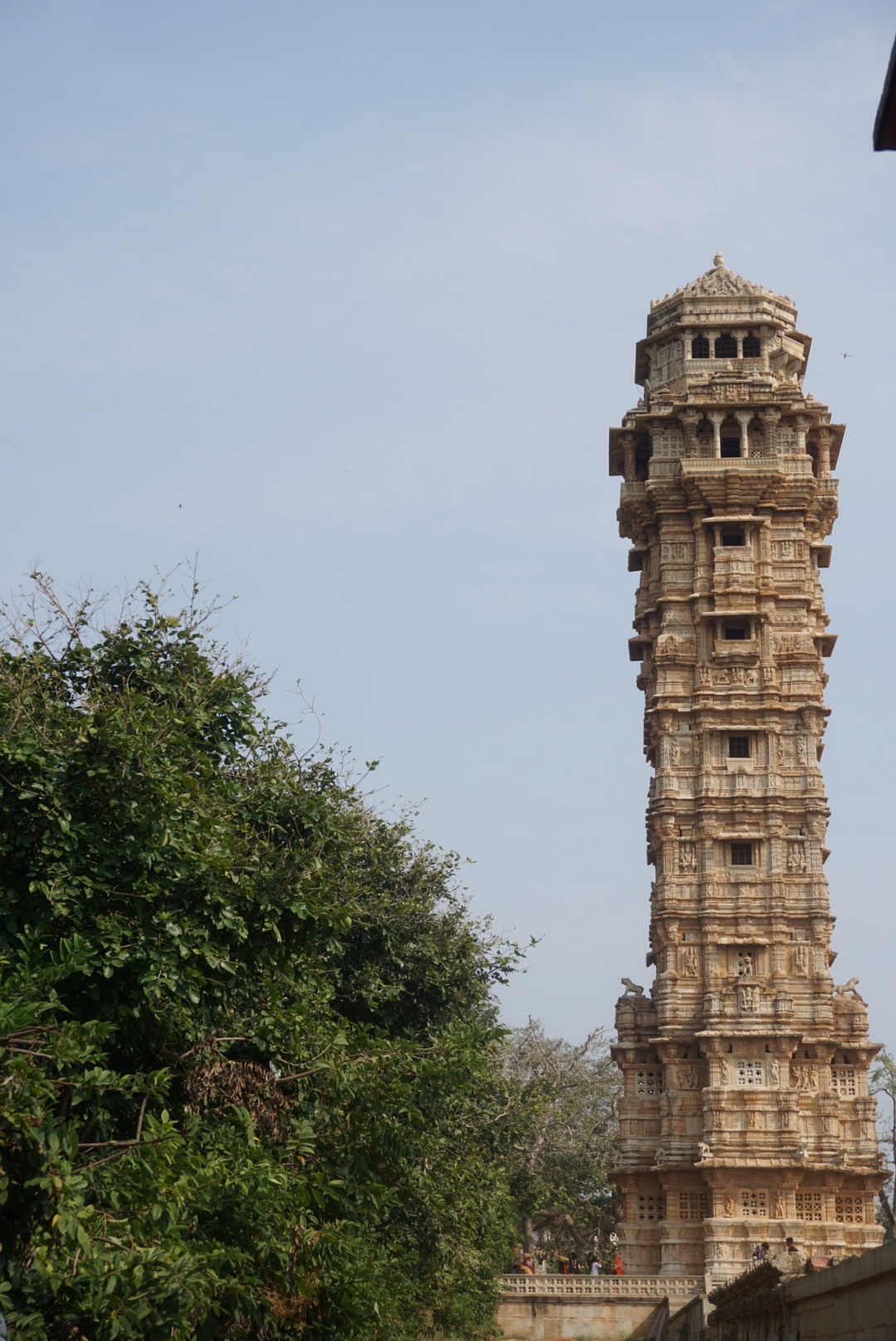
This is the largest Fort in the world and was known for its mass suicides upon the capture of the Fort of the women and children. Over a 1000 years old, during the 16th century, it was besieged several times and fell after the invading armies just cut off their food supply! All the food for the 90 thousand people in the Fort was grown on the outside of the Fort and was susceptible to being cut off.

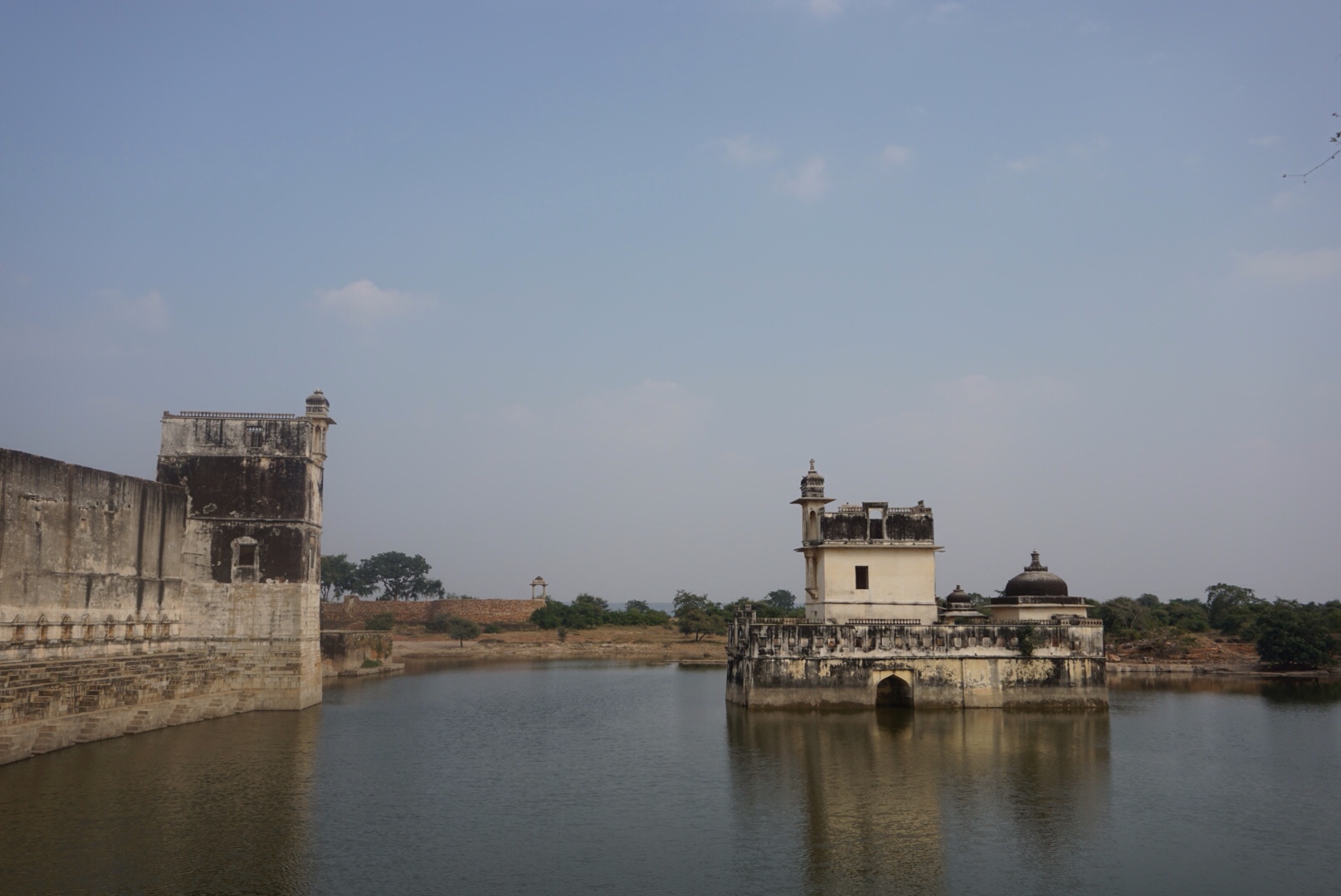
One story that was also retold here was that when the Fort was under siege the invading king wanted to see the queen as he heard how beautiful she was. Finally, starving, the king invited his invader into the Fort to see the queen, however via a ‘mirror’ in a tower while she sat on the balcony of the palace that sits in the lake. E invading king wasn’t too impressed and eventually took the Fort. The queen took her own life rather than be captured!

Jaipur – the Pink City

Jaipur is a relatively new city, but in the 18th century on the expectation of the maharajah, Jai Singh II, this city was built as the city of Amber was overcrowded and struggling for water. The state of Rajasthan is almost 60% desert.

So Jaipur was built and is northern India’s first planned city with wide roads, palaces, high walls and gates to enter the city. The palace sits magnificently in the centre of Jaipur and is still owned by the royal family of Jaipur. Generously they open the gates during the day to allow cars and vehicles to drive through the grounds to access the other side of the city, but the gates close at 10pm, probably all the tooting and honking of horns keeps them up at night.

A night visit to the Hawa Bazaar was an experience. This area is renowned for its silks, jewellery and we were later to find out, its carpets. Walking the almost one and a half kilometre stretch of the bazaar you walk past hundreds of tiny stalls who are all very willing to invite you in to just have one look! It was safer to walk on the road!

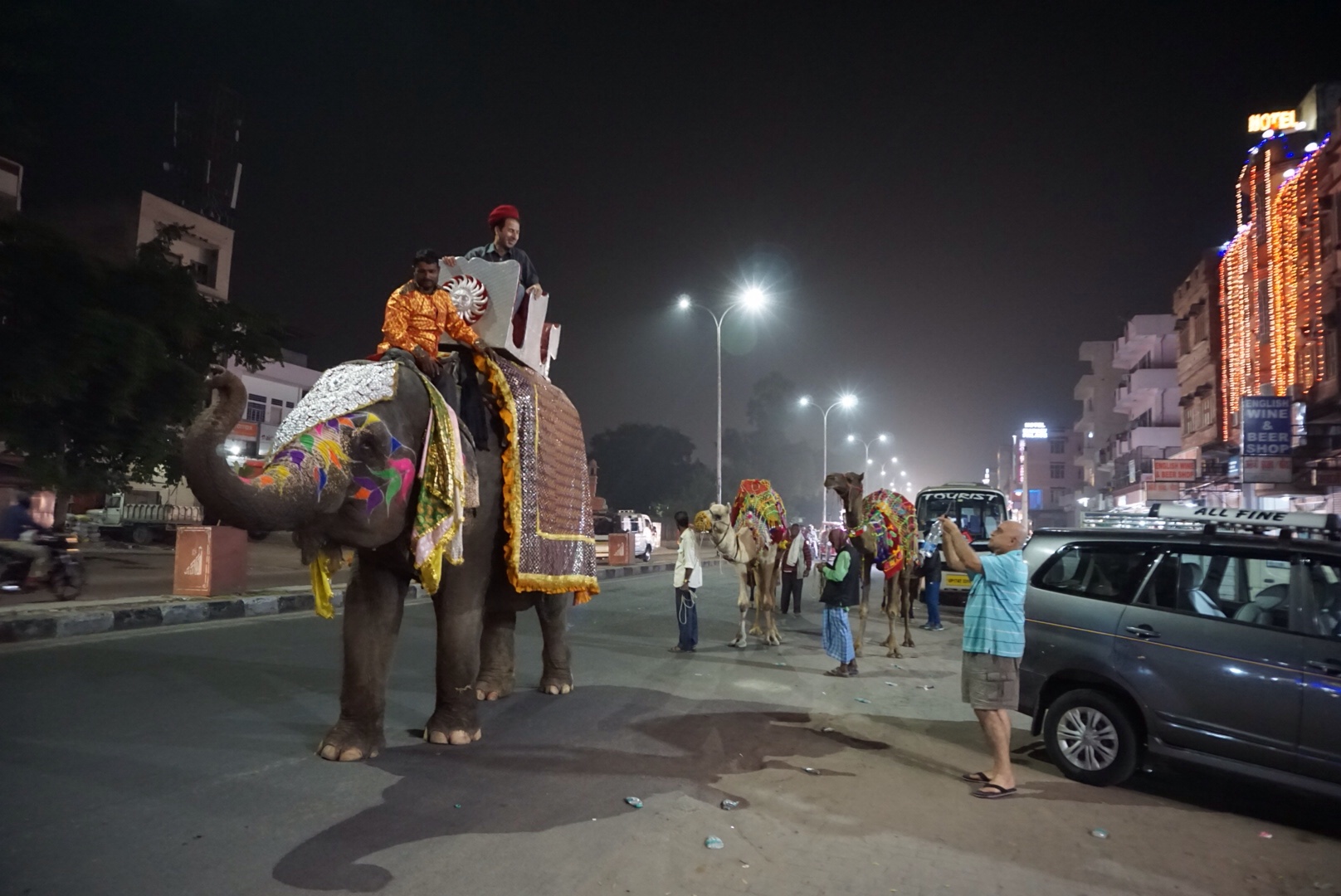
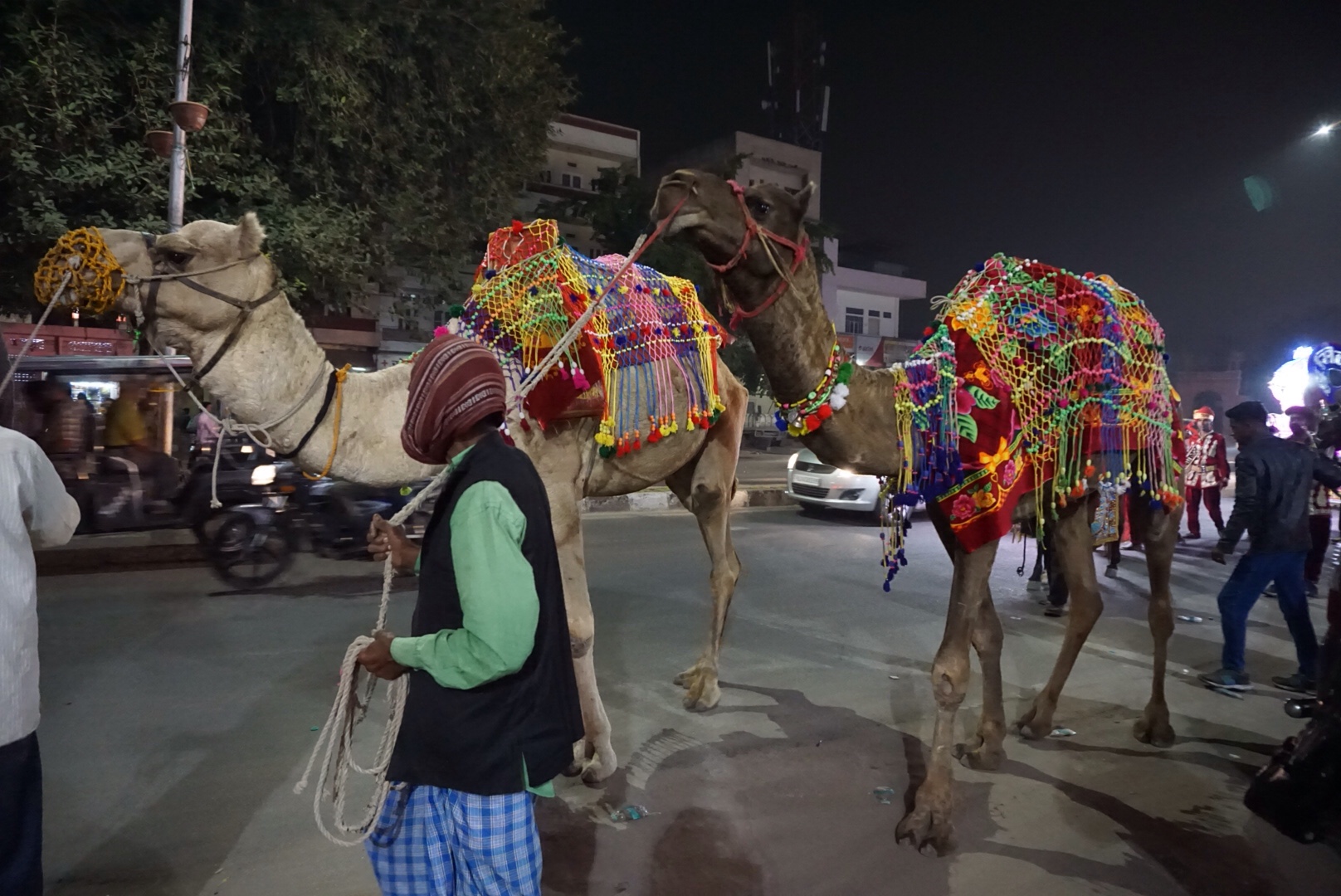
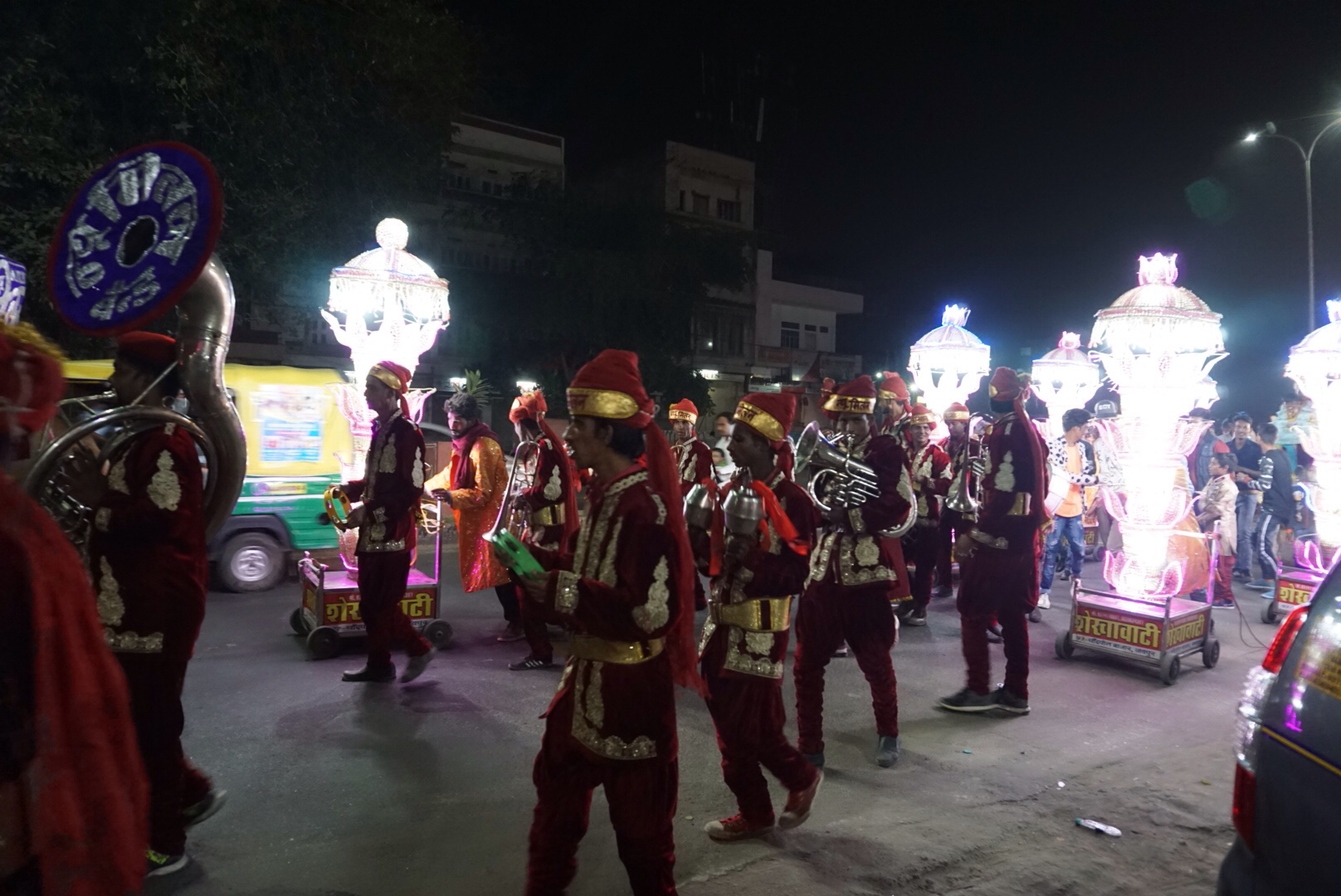
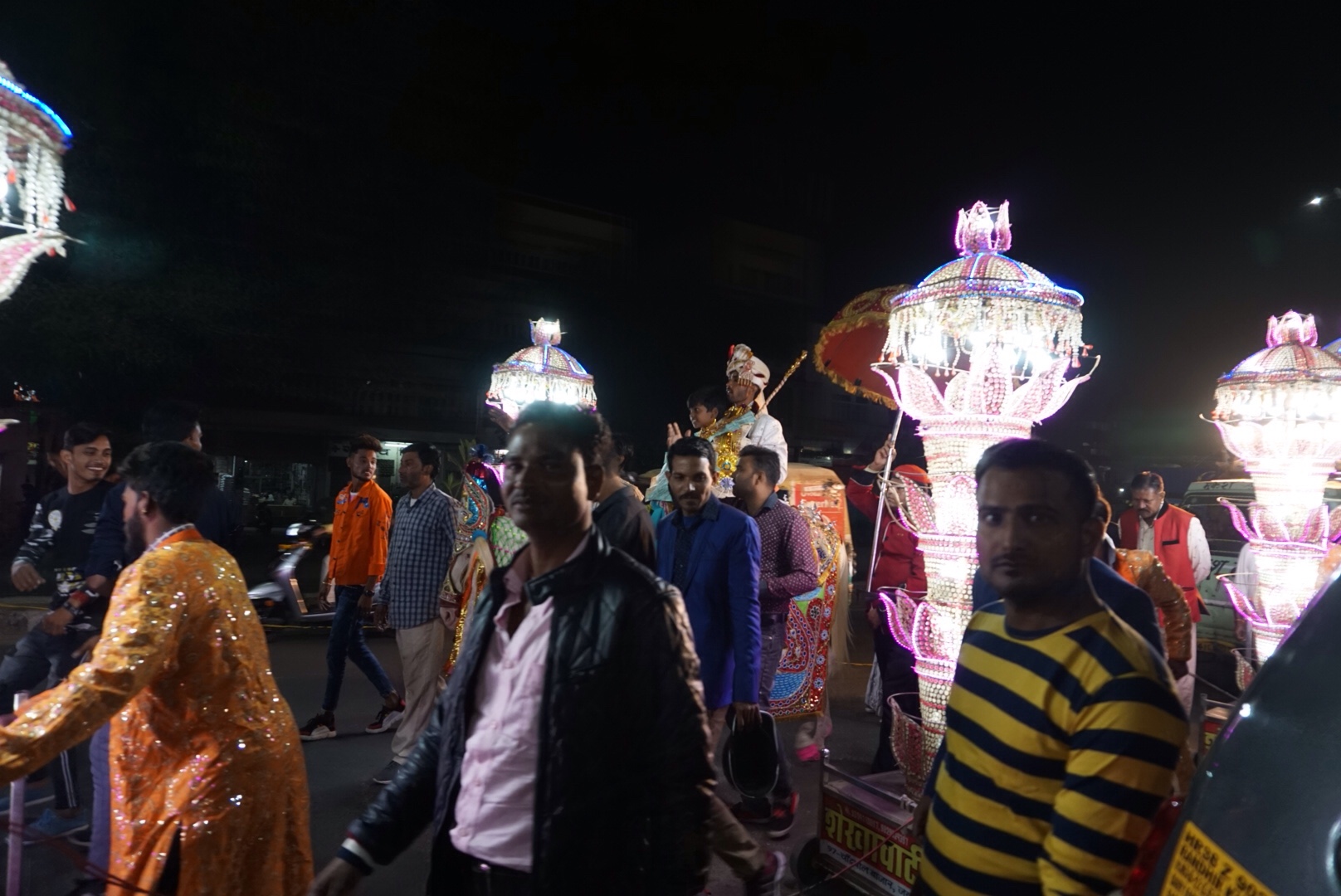
Heading to our hotel we came across a wedding procession. Elephants, camels, horses, band, dancing and a groom.

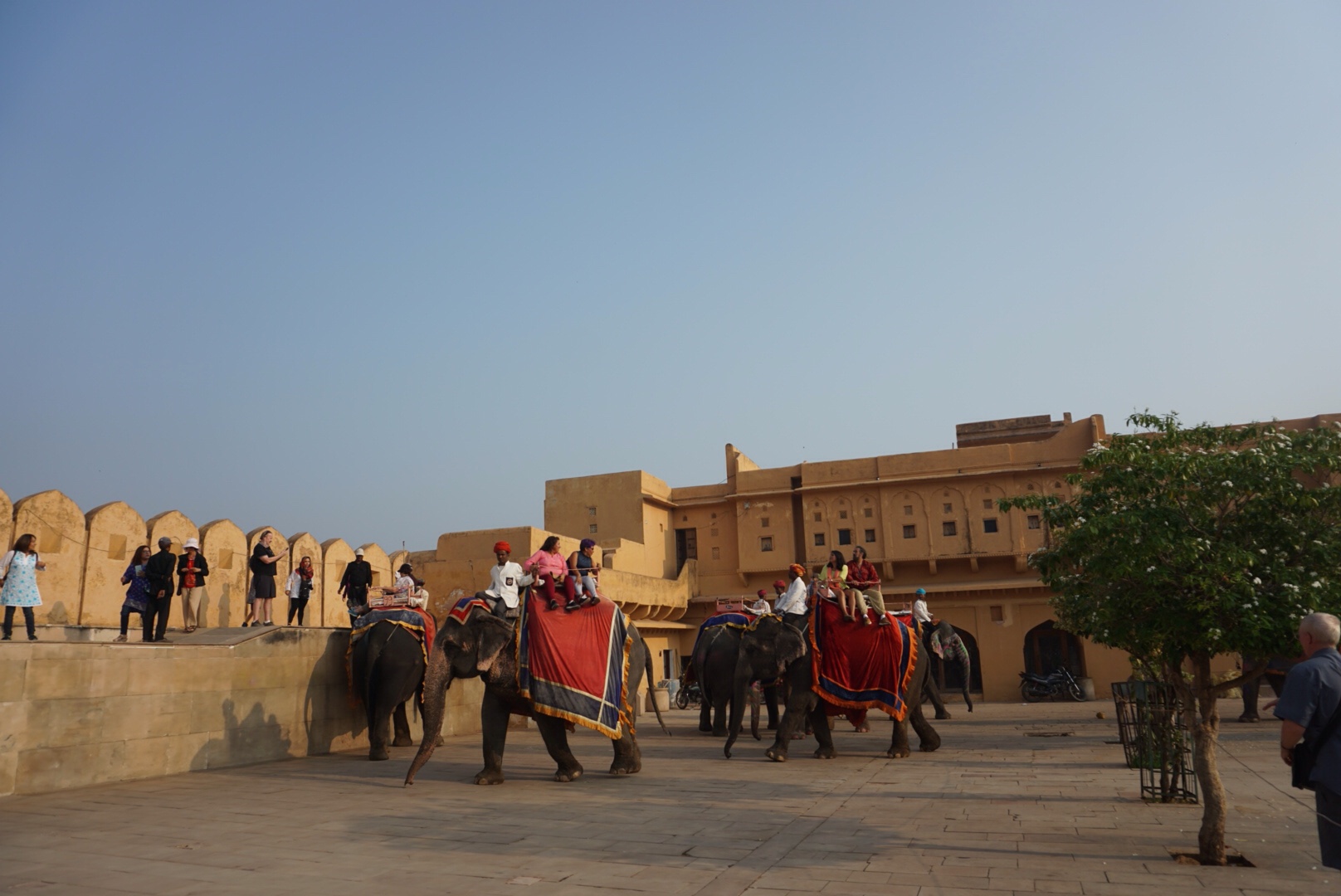
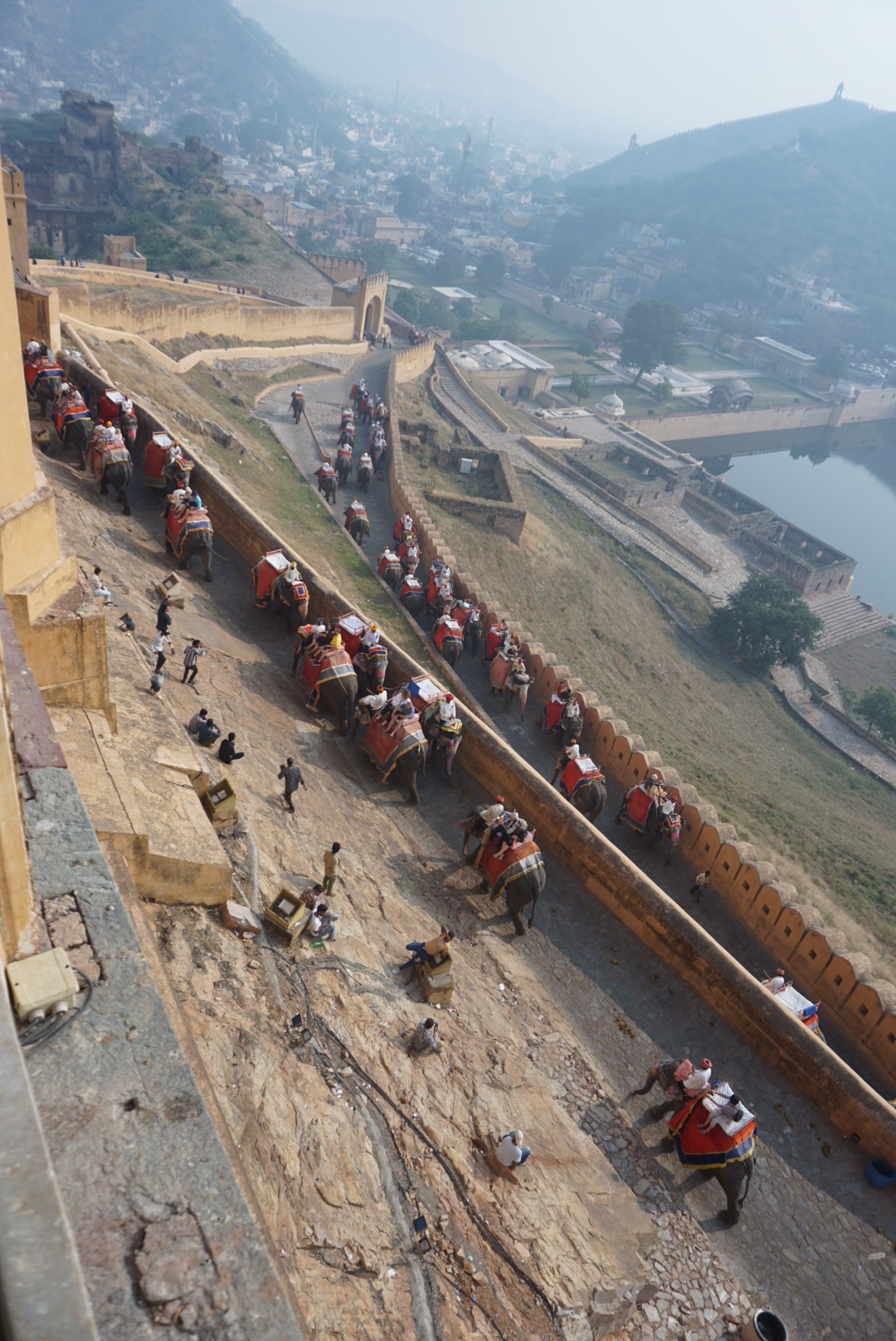
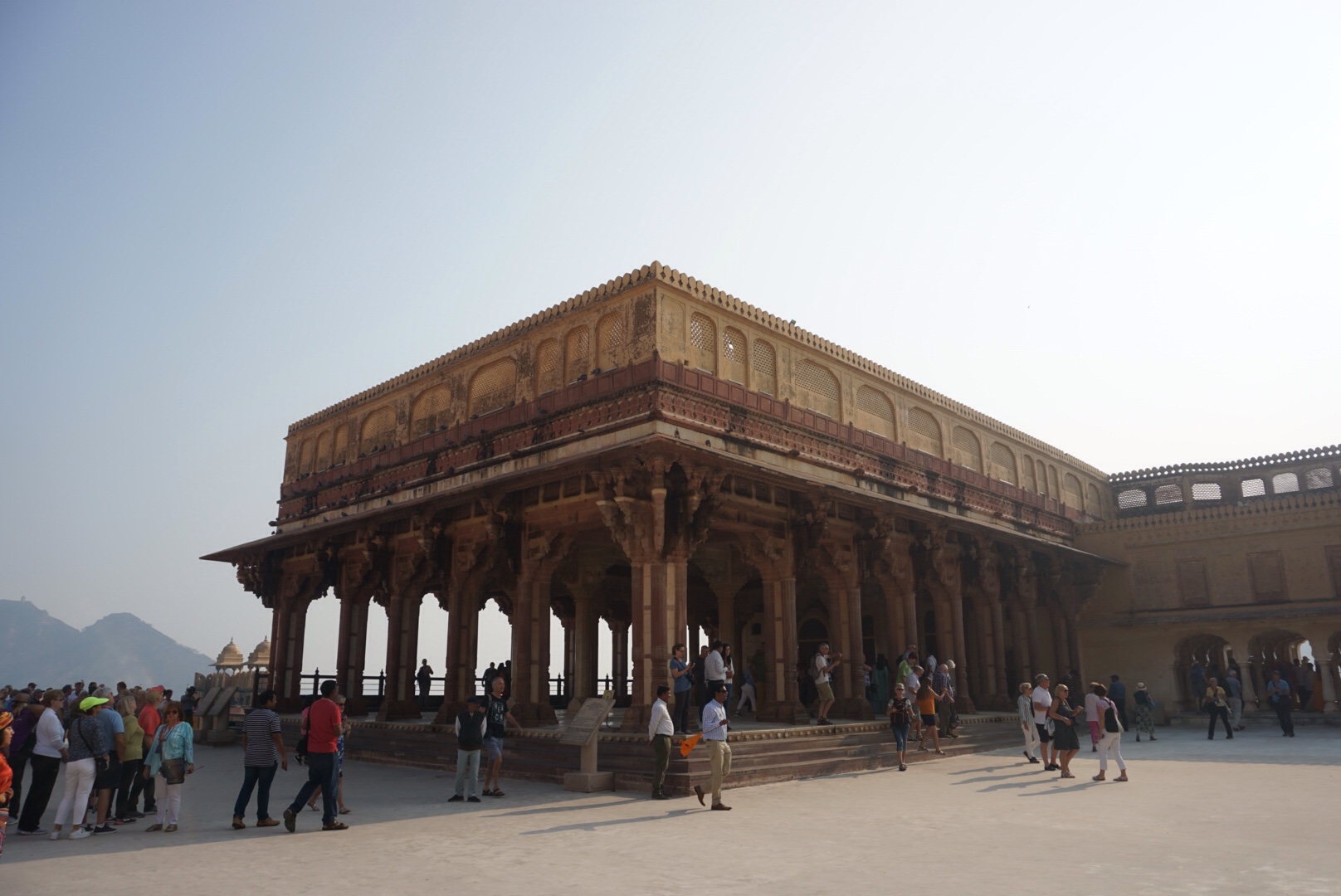
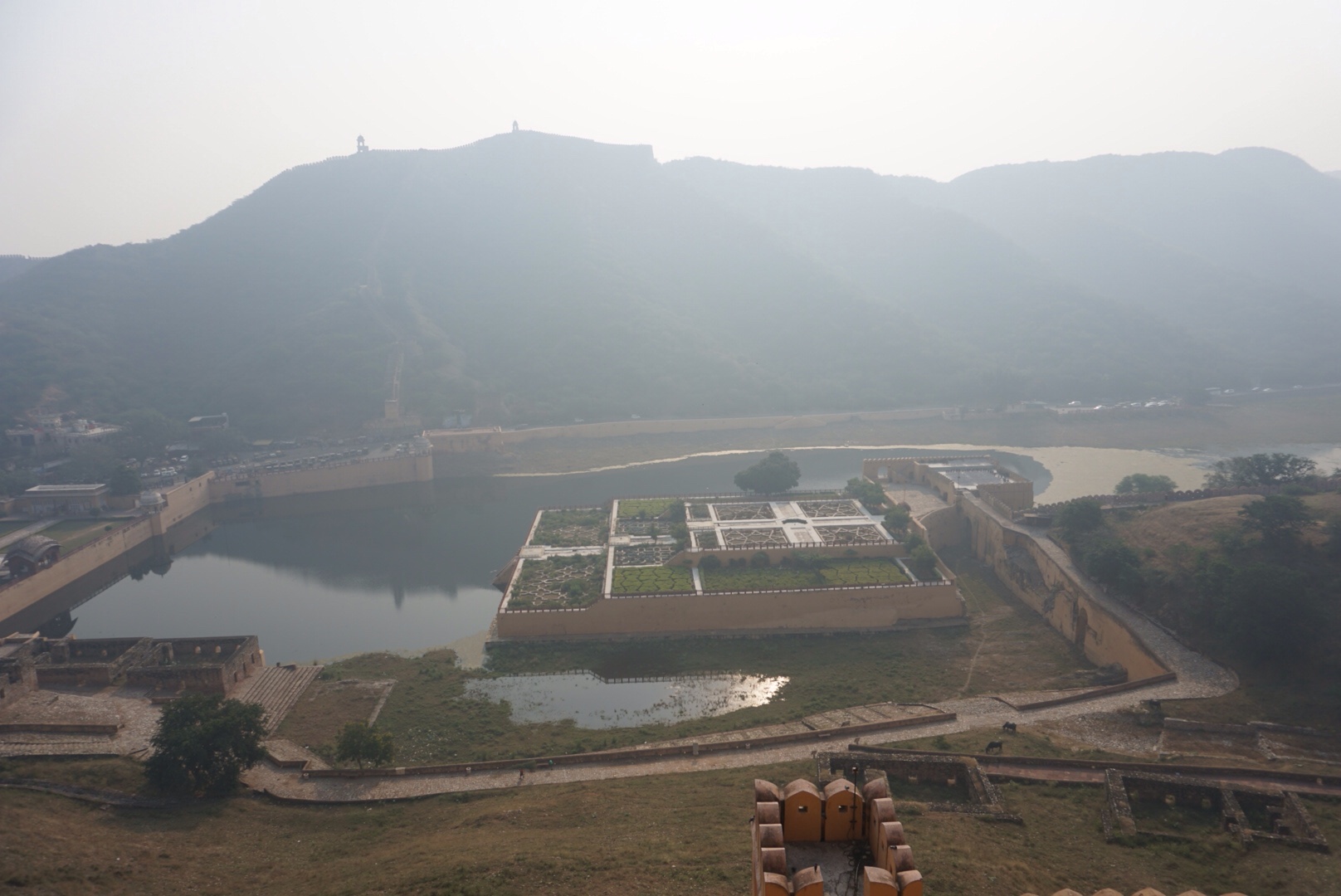
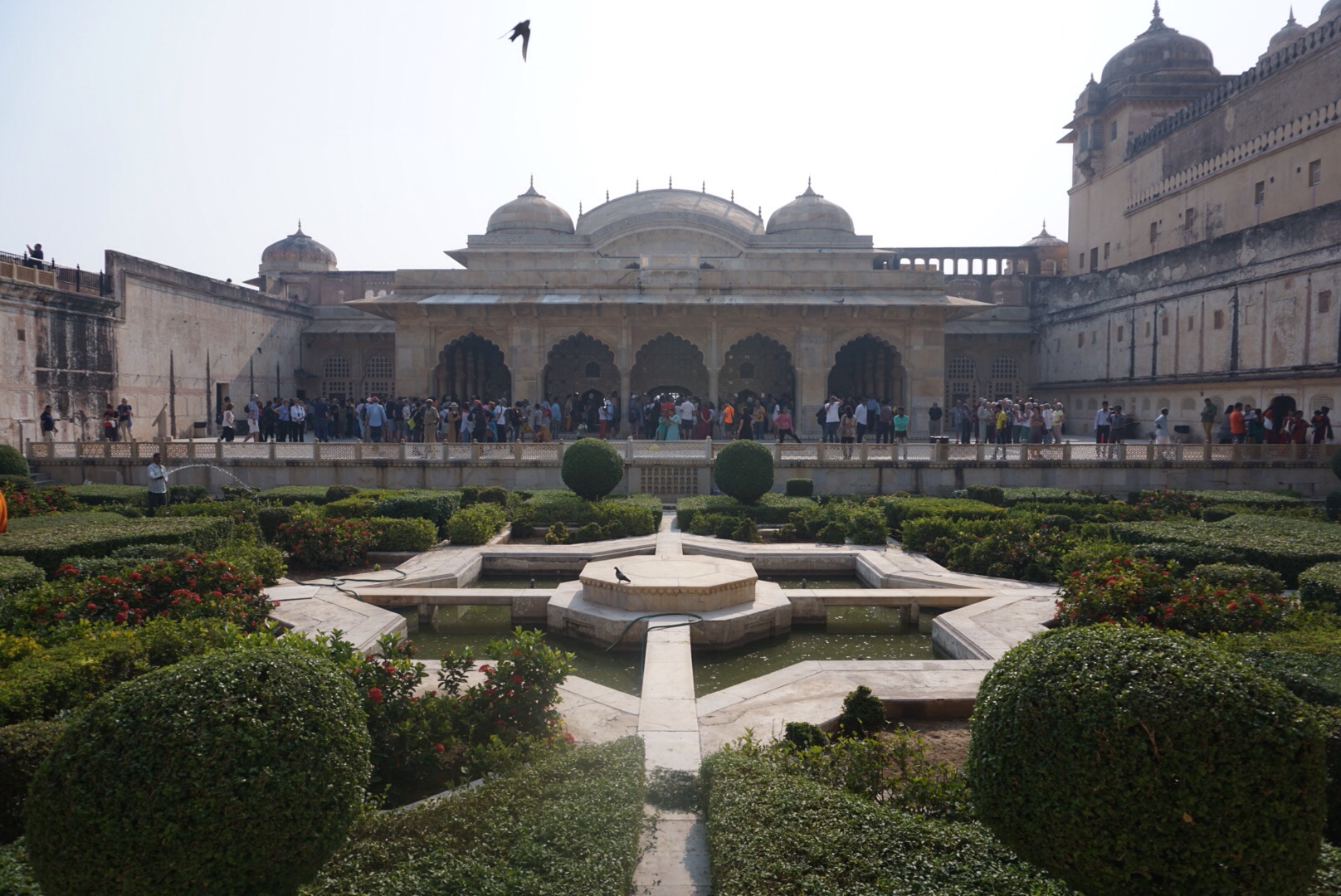
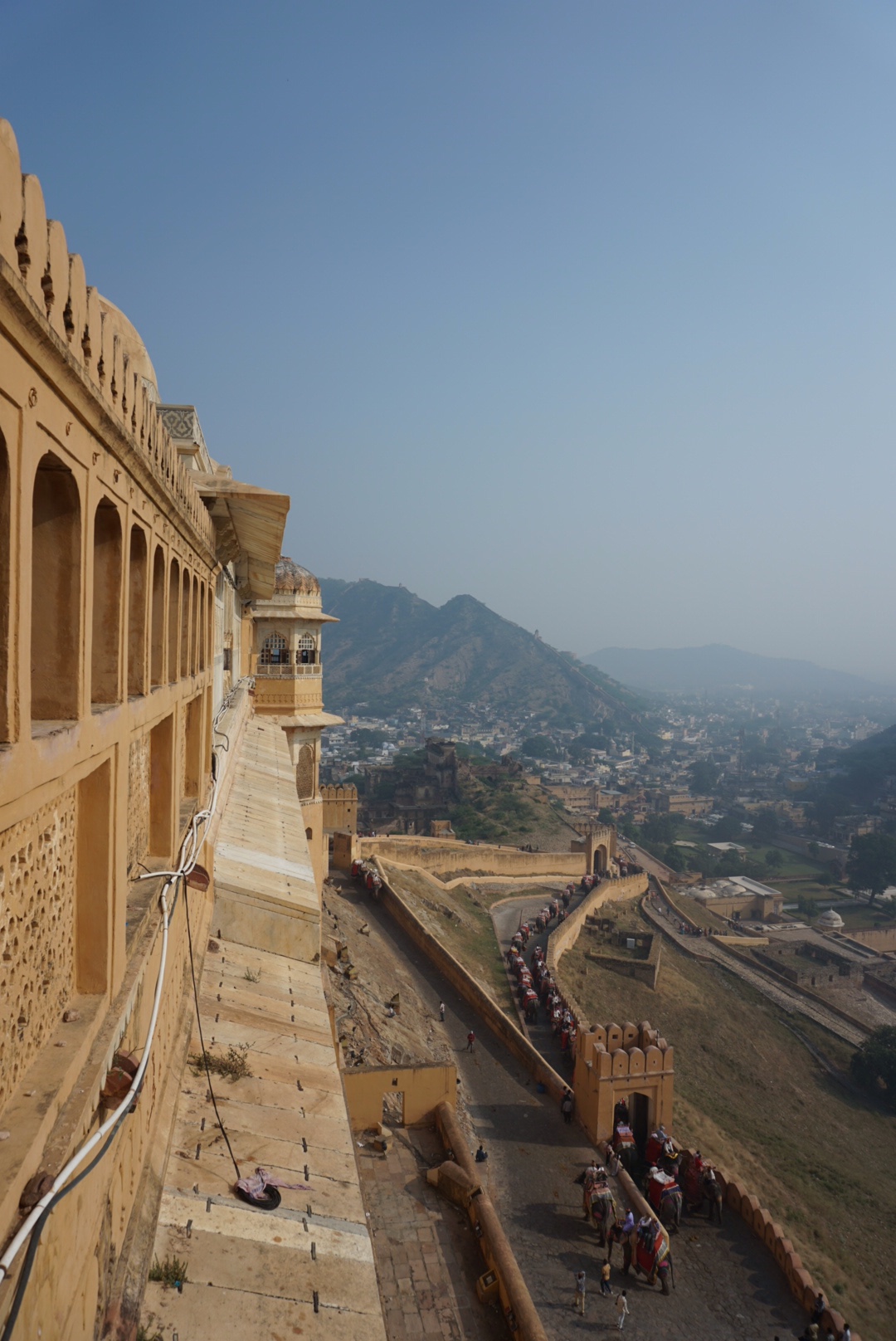
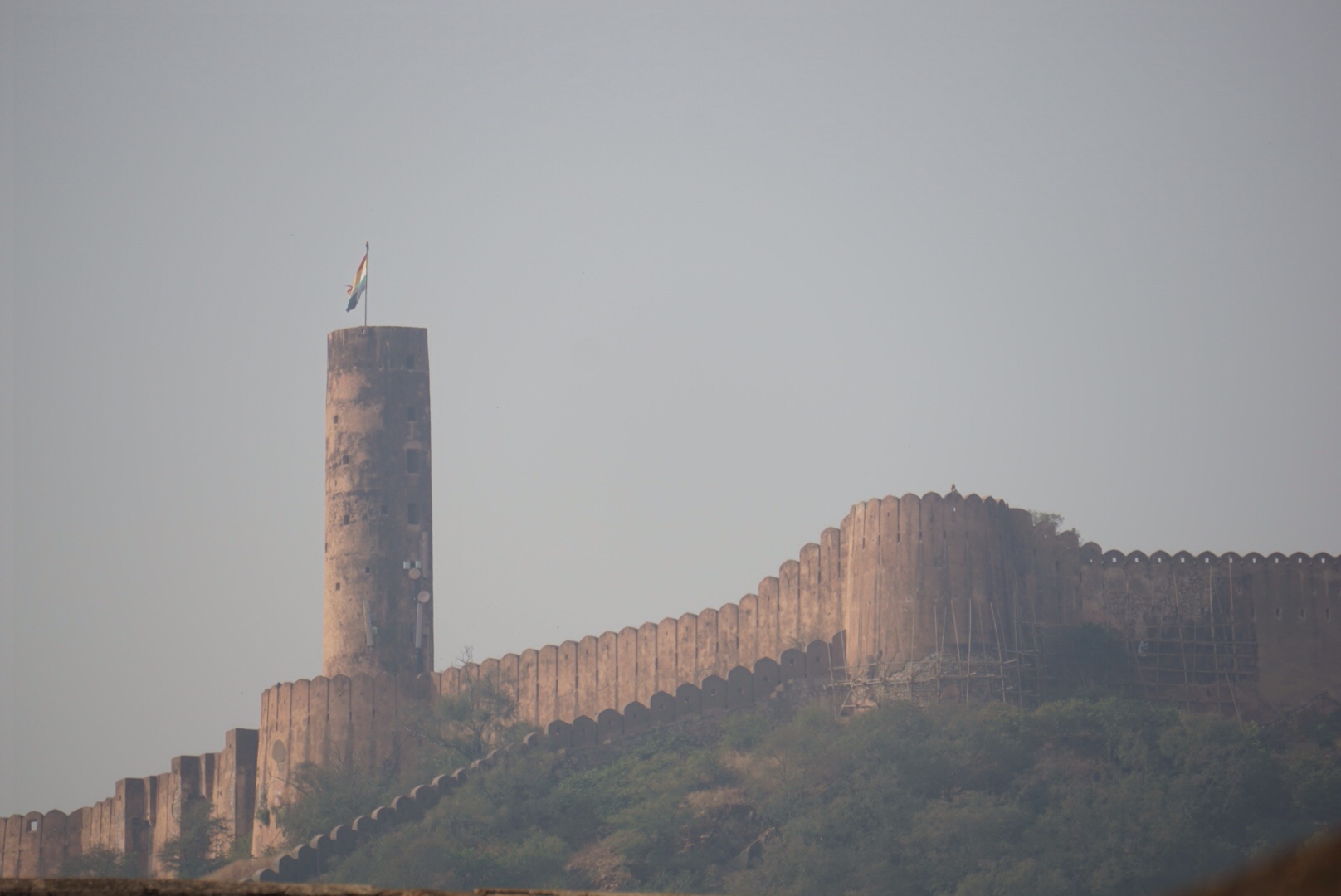
Morning saw us head to Amber Fort. 11kms from Jaipur and high up a hill, this Fort was constructed in the 16th century around the town of amber. The Fort consist of palaces constructed from red and yellow sandstone and white marble. In the back ground, high above it, is the victory Fort.

We didn’t do the elephant ride (animal welfare reasons) but headed up in 4wd instead.

The palace grounds are a maze of rooms, apartments, pavilions and courtyards for the royal family. The town, including the Fort are surrounded by a great wall, which can be seen in the photos on the surrounding hill tops.

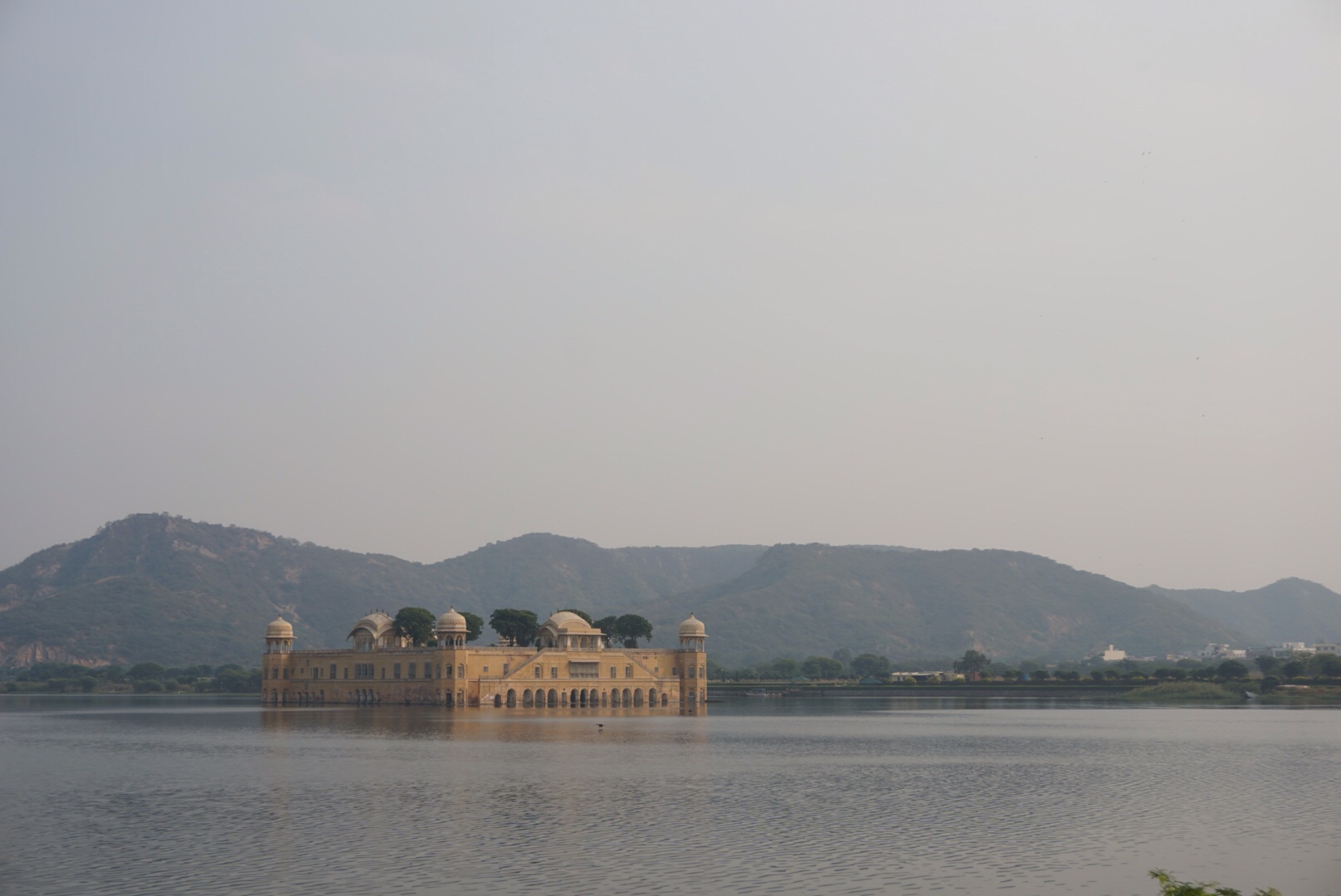
A quick photo stop at the summer Palace which sits in the lake.

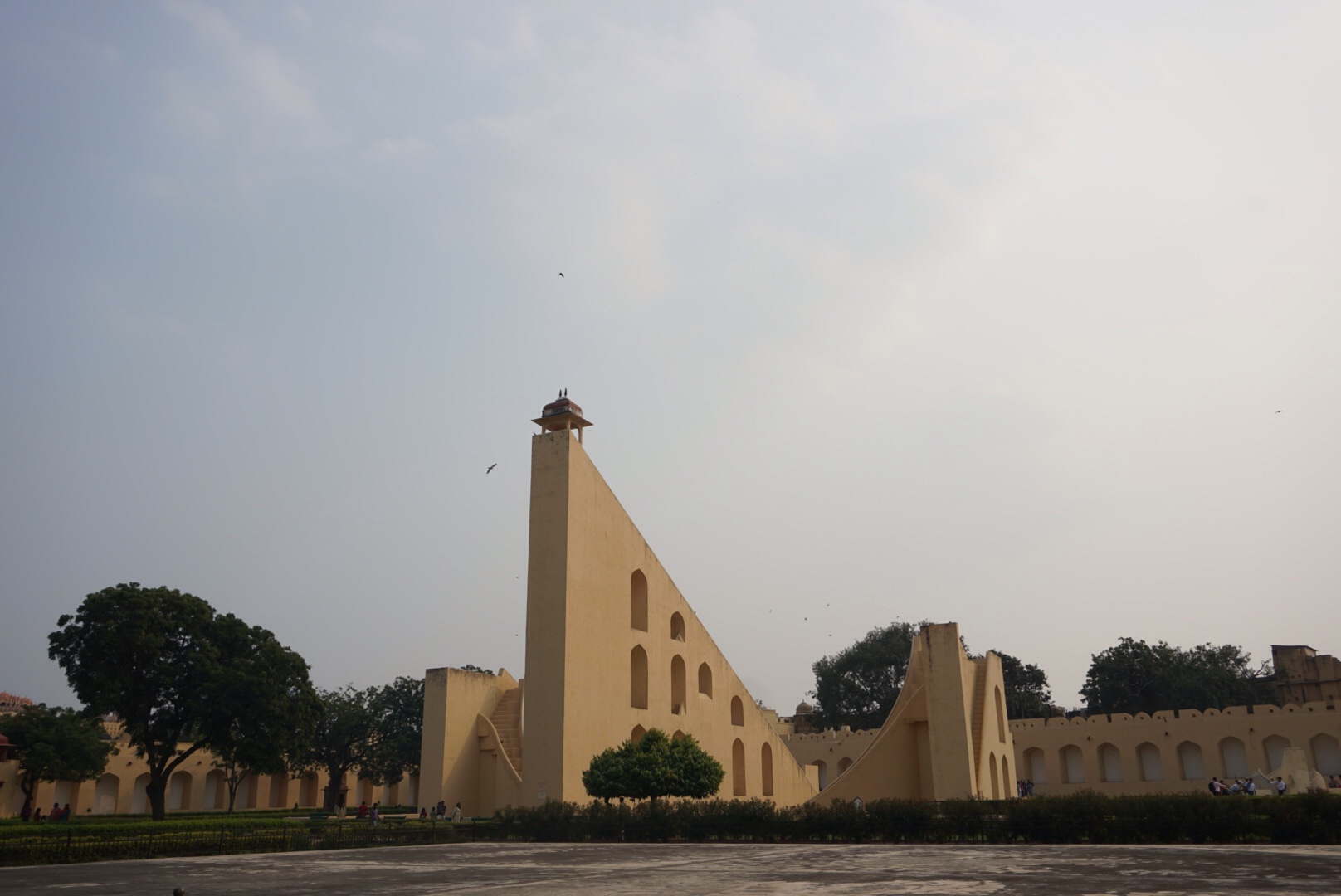
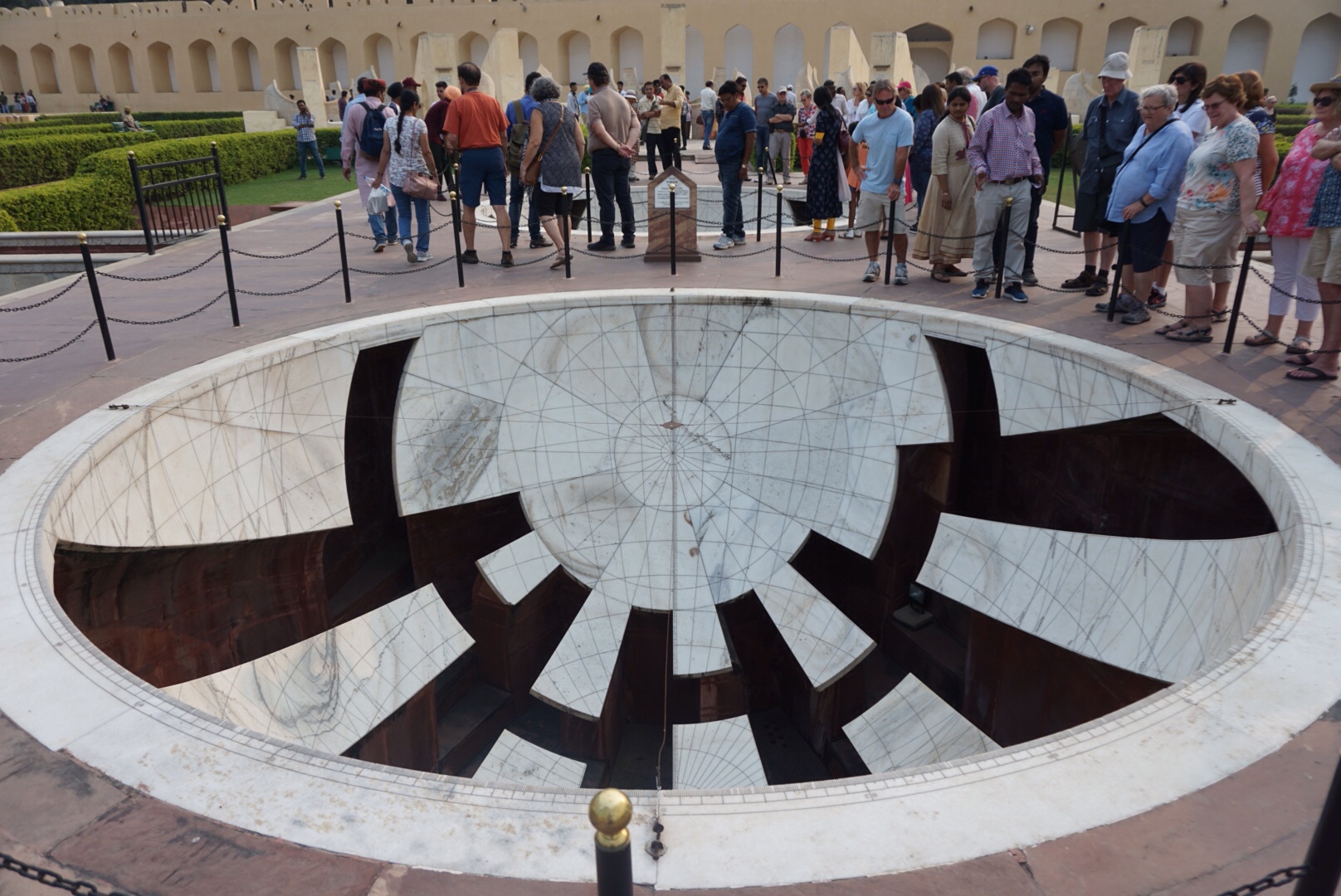
After lunch a visit to the Jantar Mantar, a 18th century observatory built by Jai Singh II to identify the local time, the Ian bodies and the constellations. There are 5 of these in total, and I visited the Delhi one when there.

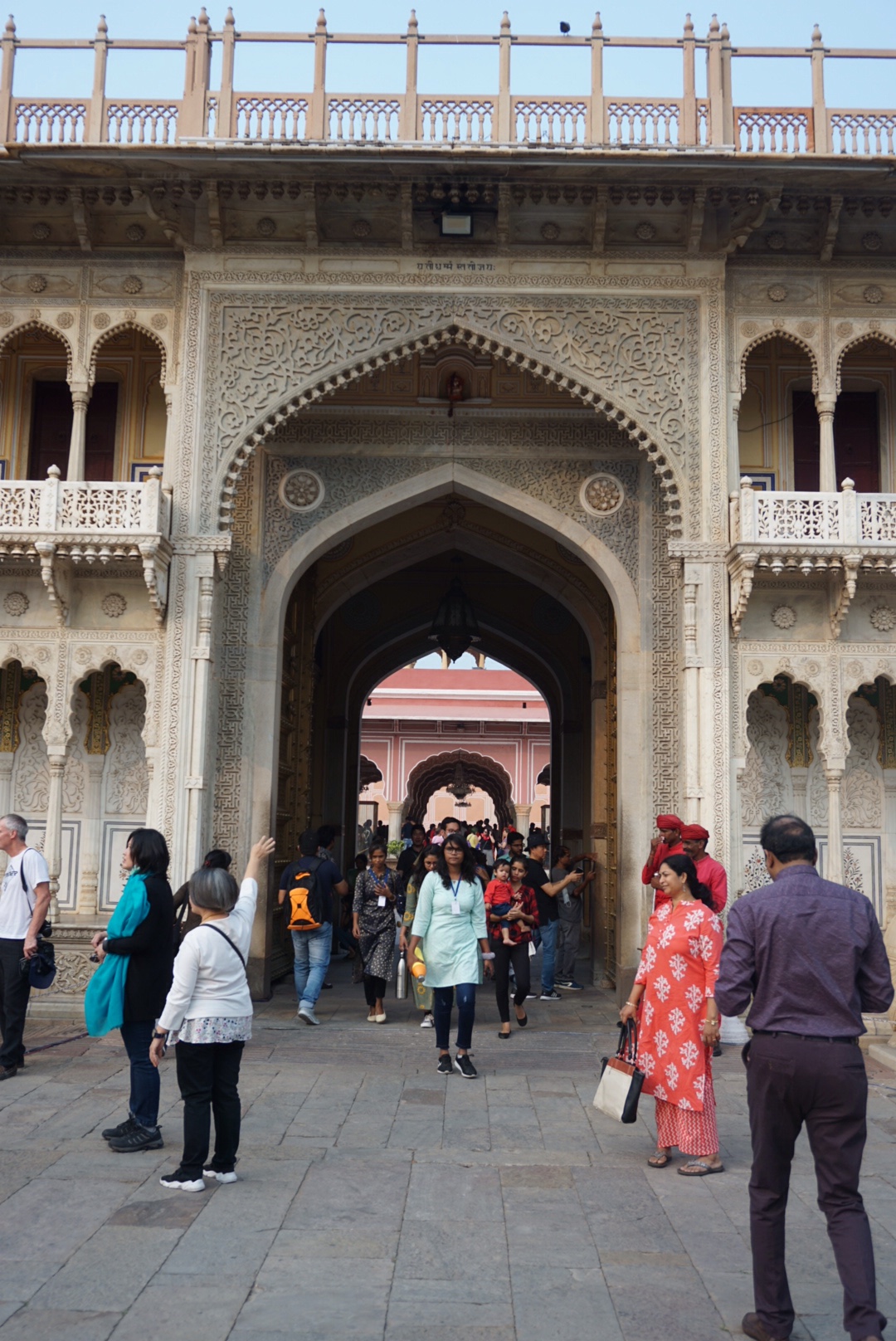
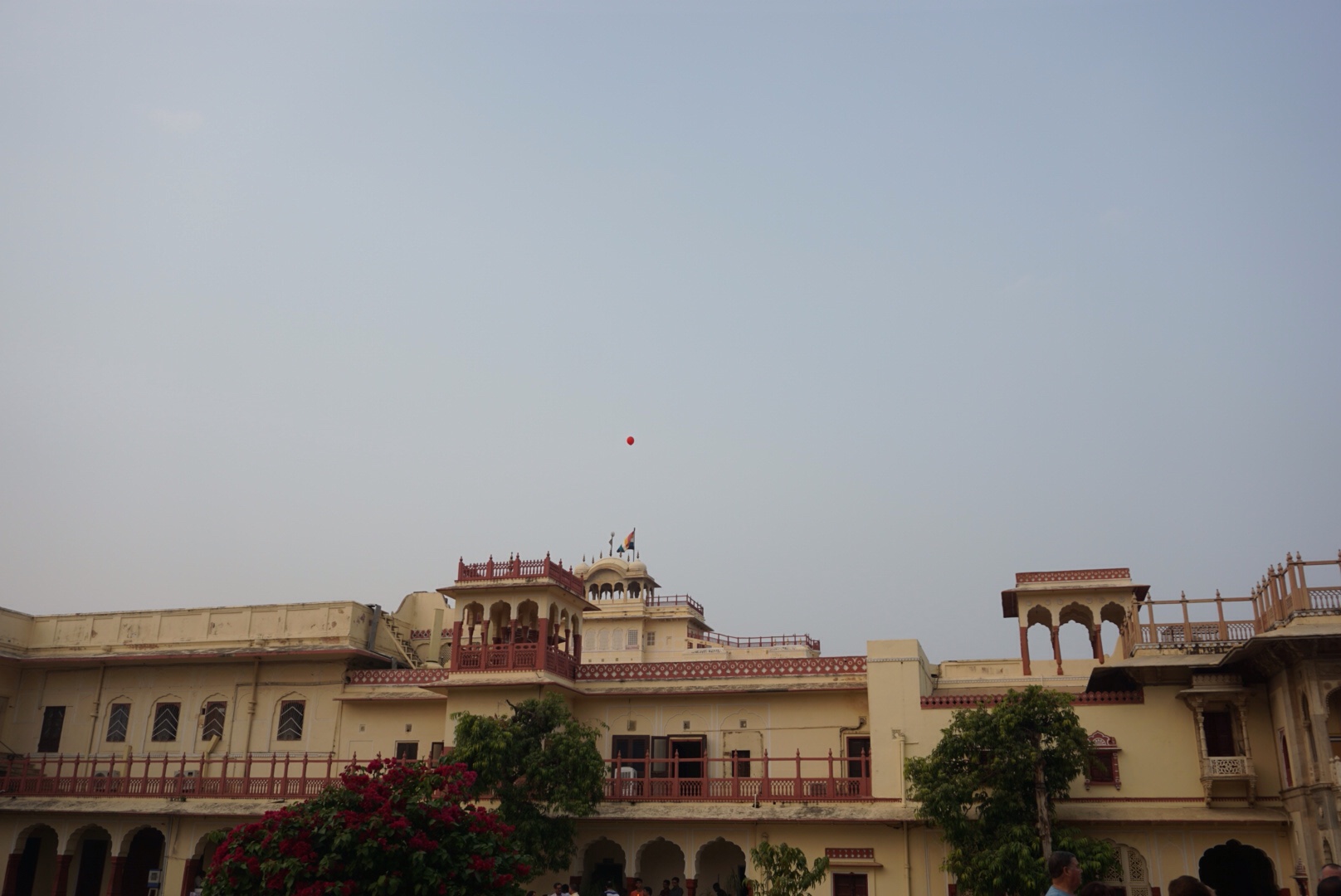
Final sight seeing for the day was at the City Palace, which I think is still in some offical use. Right in the centre of the old city (which is walled and gated) it too is a complex of courtyards, gardens and pavilions. Originally built by Jai Singh II, it has been expanded over the years. It’s museum housed original garments of some of the previous maharajah but nothing from the current, 20yo polo playing, jet setting young royal who oversees a family fortune of between $700 million and $2.8 billion.

Finally, why is it called the pink city? Upon the request of the maharajah the old city was painted pink as a sign of welcome to the Prince of Wales, later Edward VII, on his official visit to Jaipur in 1876. As a consequence, it has since been maintained as pink and is protected under local laws.

Agra

To many the best known place in India is the Taj Mahal. It was amazing, but there is more to Agra than just The Taj.
The journey to Agra from Delhi is about 180 km but took over 4 hours to complete as buses are unable to drive at speeds greater than 40km/h, even on many parts of the motorway. However if you saw most buses on the motorway you could understand why this is an acceptable speed limit!

We were able to quickly leave a waking city of 23 million people and reach the motorway. As we snaked our way through the massive city of Delhi, we could see the homelessness were starting to arise and men in shirts and trousers were in dilapidated buses and auto rickshaws.

As we ‘sped’ into the country side, our view from the bus was quite hampered by the persistent smog that has engulfed much of the north of India. But what could be seen in that reduced visibility was a countryside that showed many sides to India. Farmers tending to their cattle and goats, others ploughing fields and some wandering into paddocks, not sure for what reason, with a couple of camels. What was not evident was permanent, and sound, structures for habitants. Many small mud and reed constructions laid between the motorway and the paddocks. People were working hard in the fields too; ploughing paddocks with bullocks, making bricks from the beneath them or carting reeds by donkey along the road. The motorway is punctuated with toll booths, which are indescribable.

As we approached Agra, the outskirts was littered with unbelievable filth; built up besides small building, choking waterways and scattered across the ground in front of small businesses. The small buildings, either permanent brick and cement, or semi permanent, timber and tarp/corrugated iron, each have a purpose. A line of motor bike repair shops, food outlets, farm supplies or construction materials. So the busyness and dirtiness of these areas then makes sense, in many parts, as this is the normal practice of working. It is just done here in the side of the road, not in some 150m2 light industrial complex!

Agra has a number of key visiting points. The Taj Mahal and the Agra Fort were the two we were going to do.

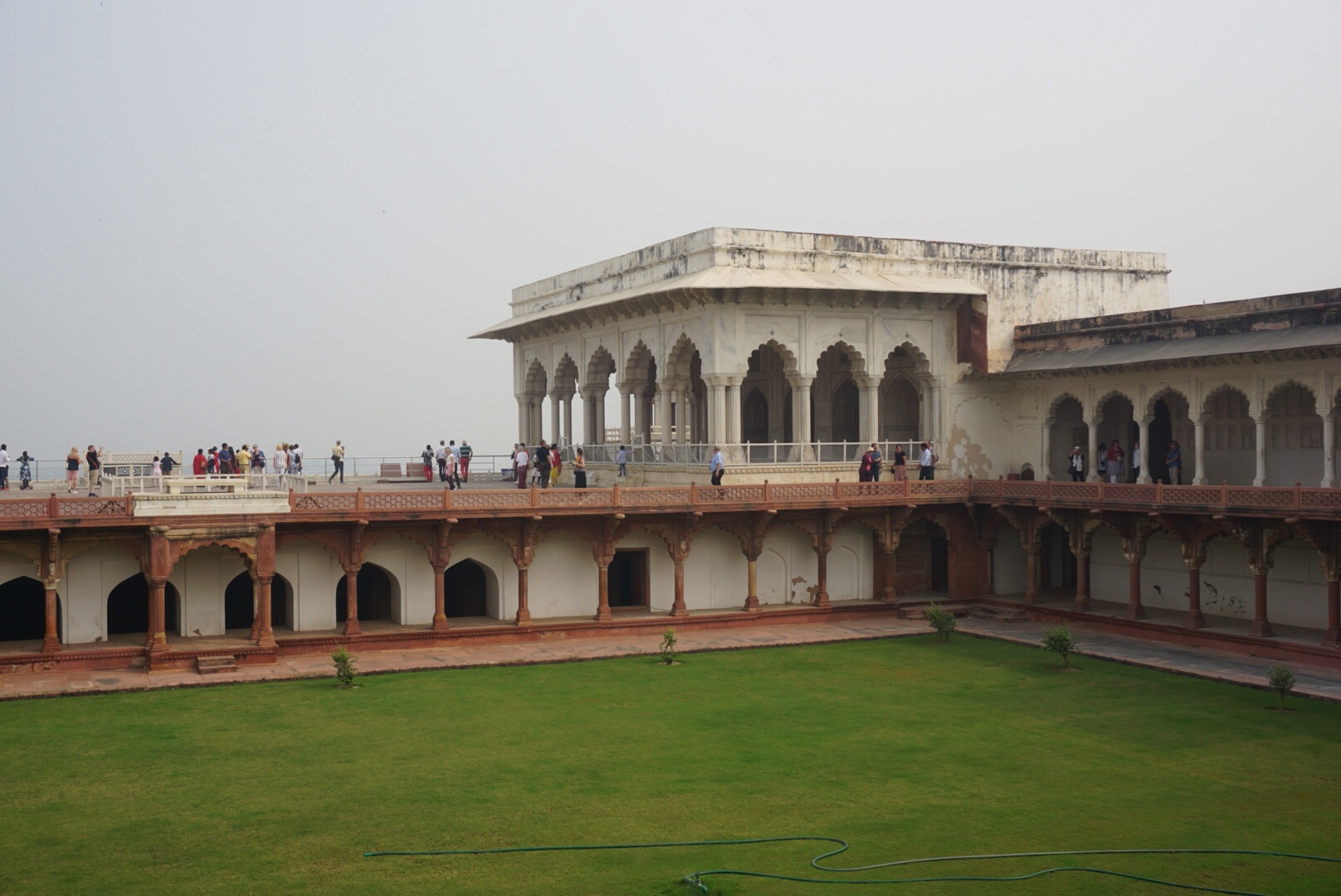
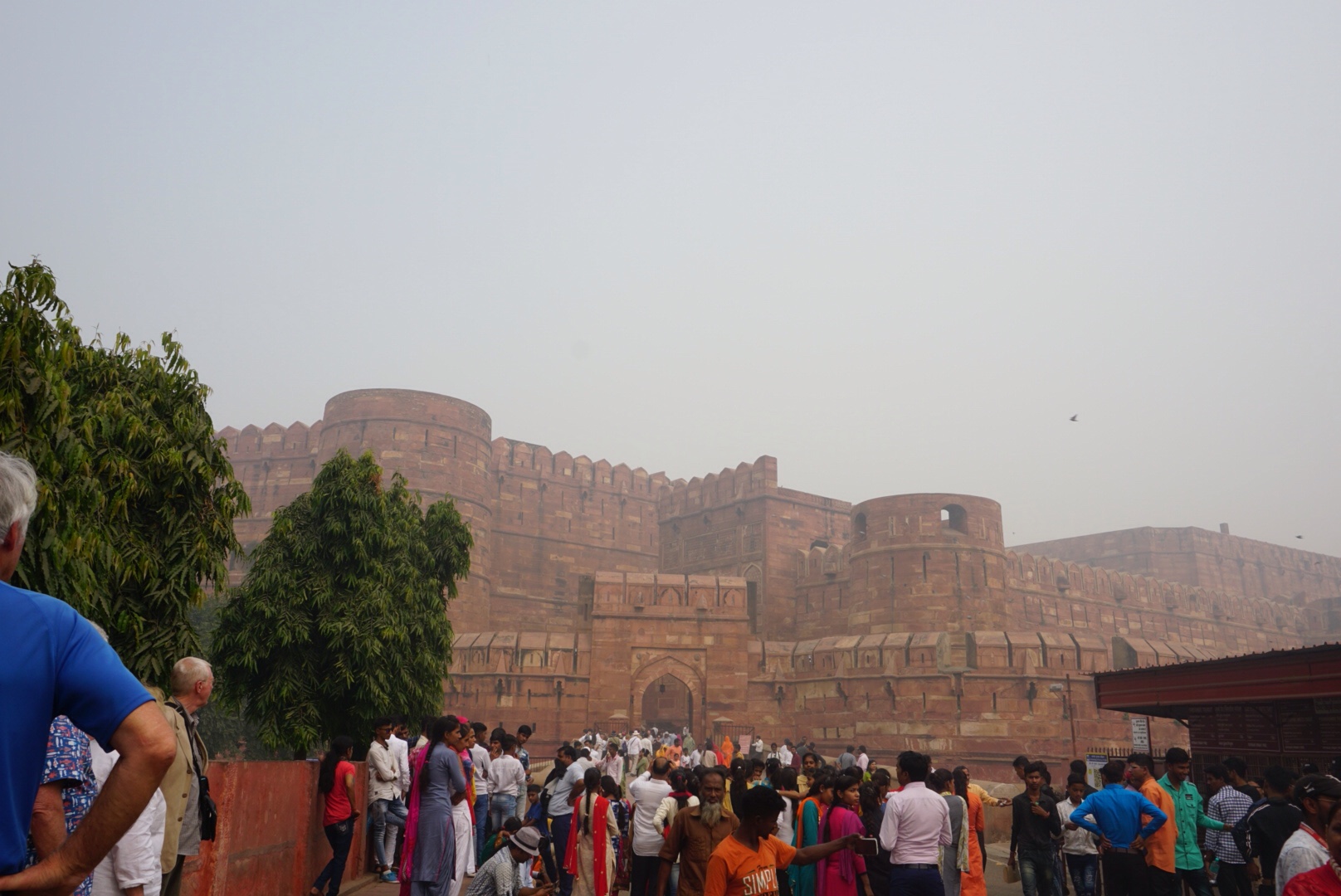
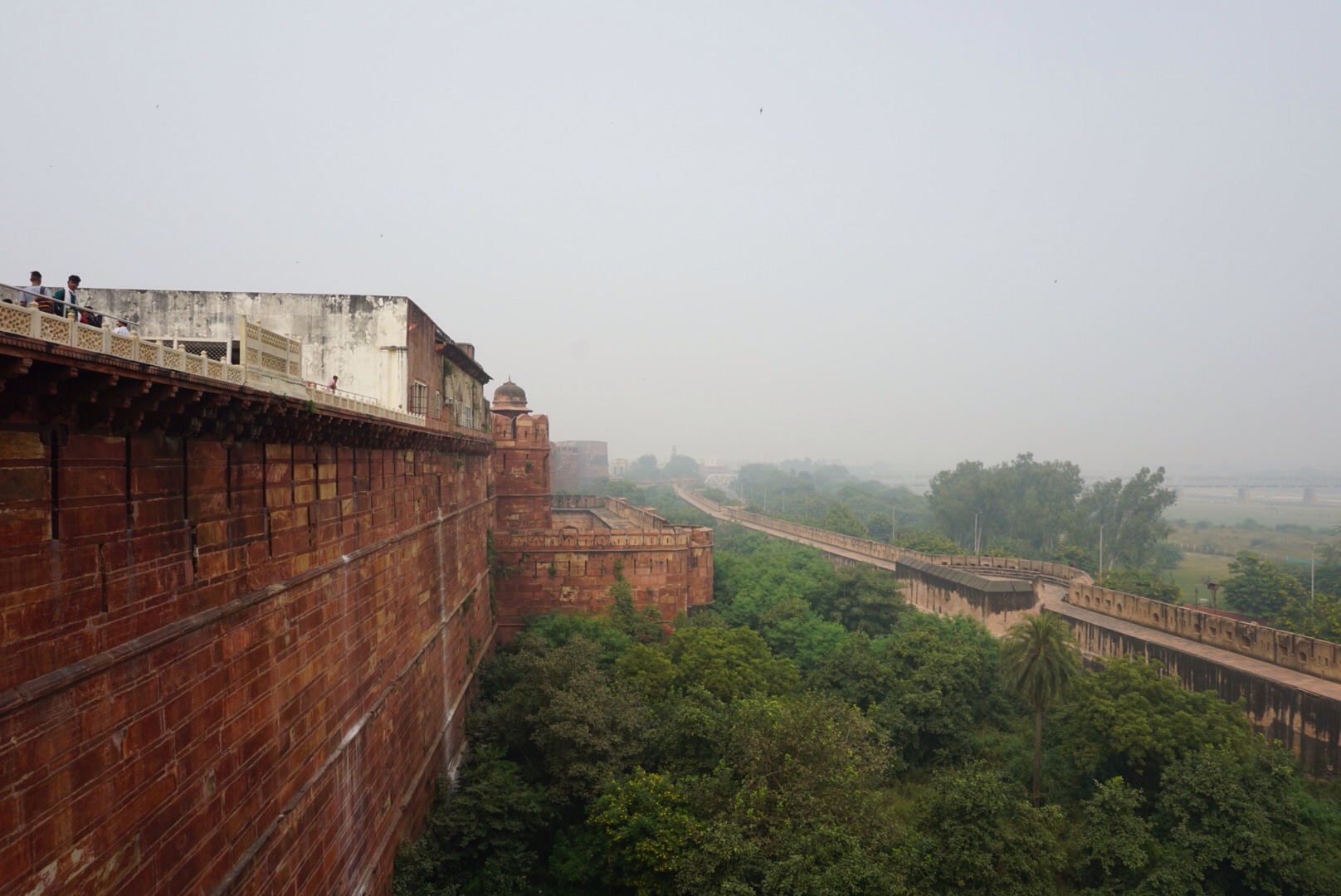
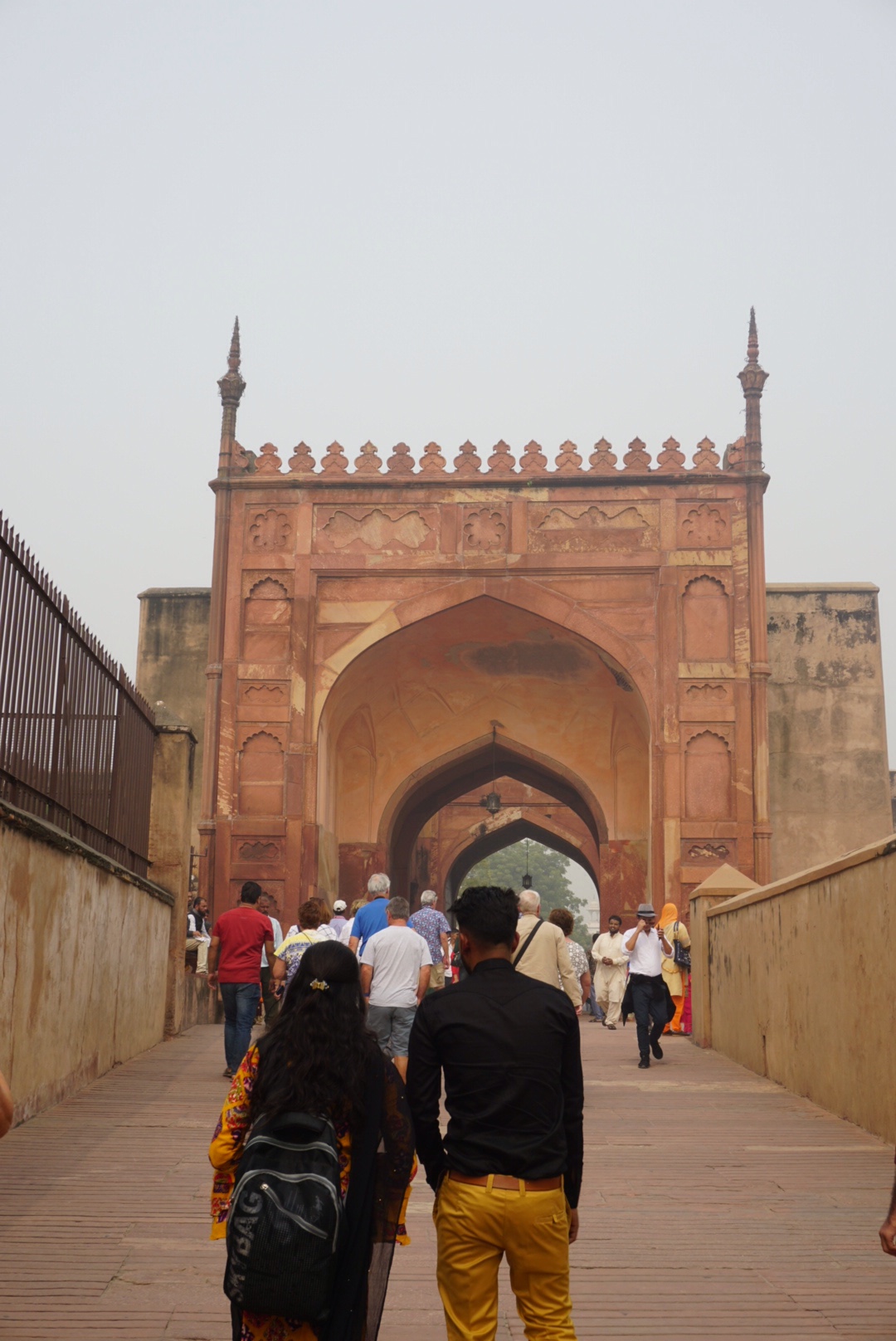
Firstly, the Agra Fort. A Mughal Fort built in the late 1500s by emperor Akbar, it is constructed from red sandstone and sits above the city along the Yamuna River. Oringially built as a Fort, it was transformed into a palace by the son and mostly the grandson of Akbar. The grandson, Shah Jahan, preferred white marble in construction and the back sections are visibly the additions during his dominance over the Fort and the city. However, the Fort unltimately became the prison for Shah Jahan when his son cracked it and over threw him!

The walls of the Fort rise some 20 metres above the surrounding ground and form not one, but two moats. The outer moat was water filled with crocodiles and the second most was a dry moat, with lions and tigers. The 2.5km walls were never captured by invaders and consist of a plethora of buildings for prayer (Moti Masjid and Nagina Masjid), for governing (Hall of Private Residences) and for shopping ( ladies bazaar).

From the Agra Fort I was able to get my first glimpse of the Taj Mahal.

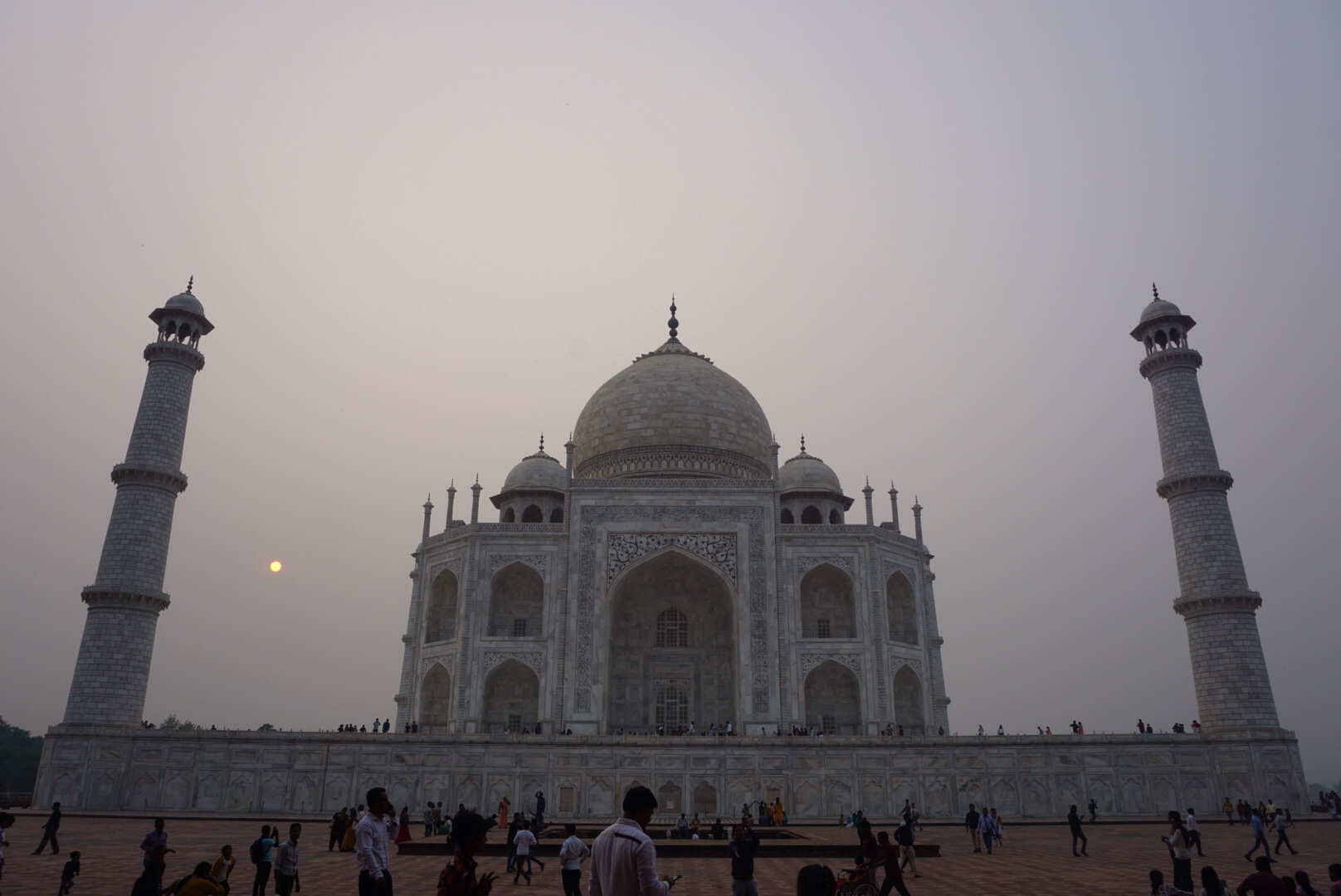
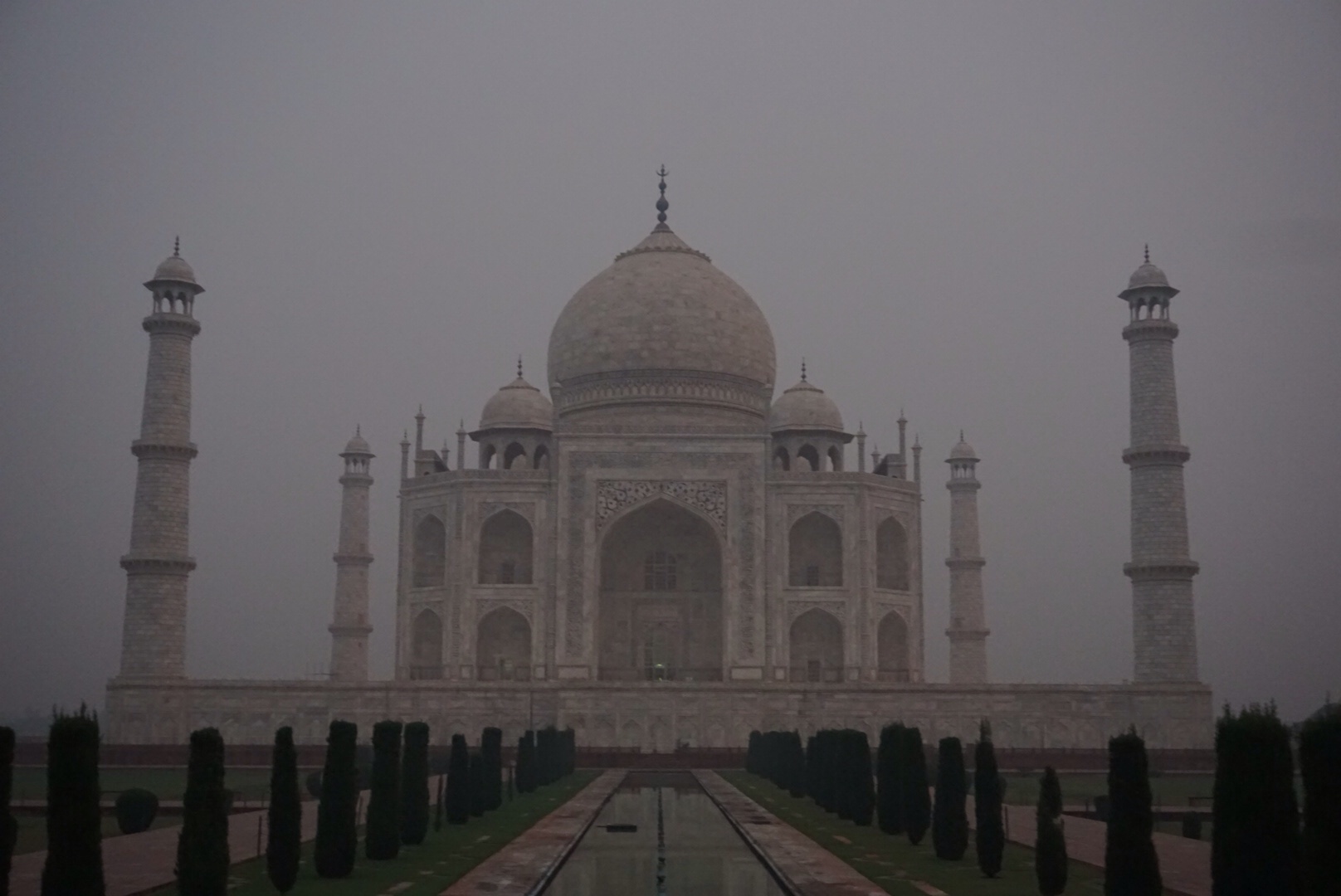
I visited the Taj Mahal twice, once in the late afternoon during free time and secondly, before sun rise.

The Taj Mahal was constructed following the death of Shah Jahan’s third wife during her 14th child birth. She died not in Agra and was buried at her place of death for about a year. Heartbroken, Shah Jahan, commenced the construction of the Taj Mahal as a mausoleum for his beloved third wife whose body was brought back and laid to rest where the Taj now sits.

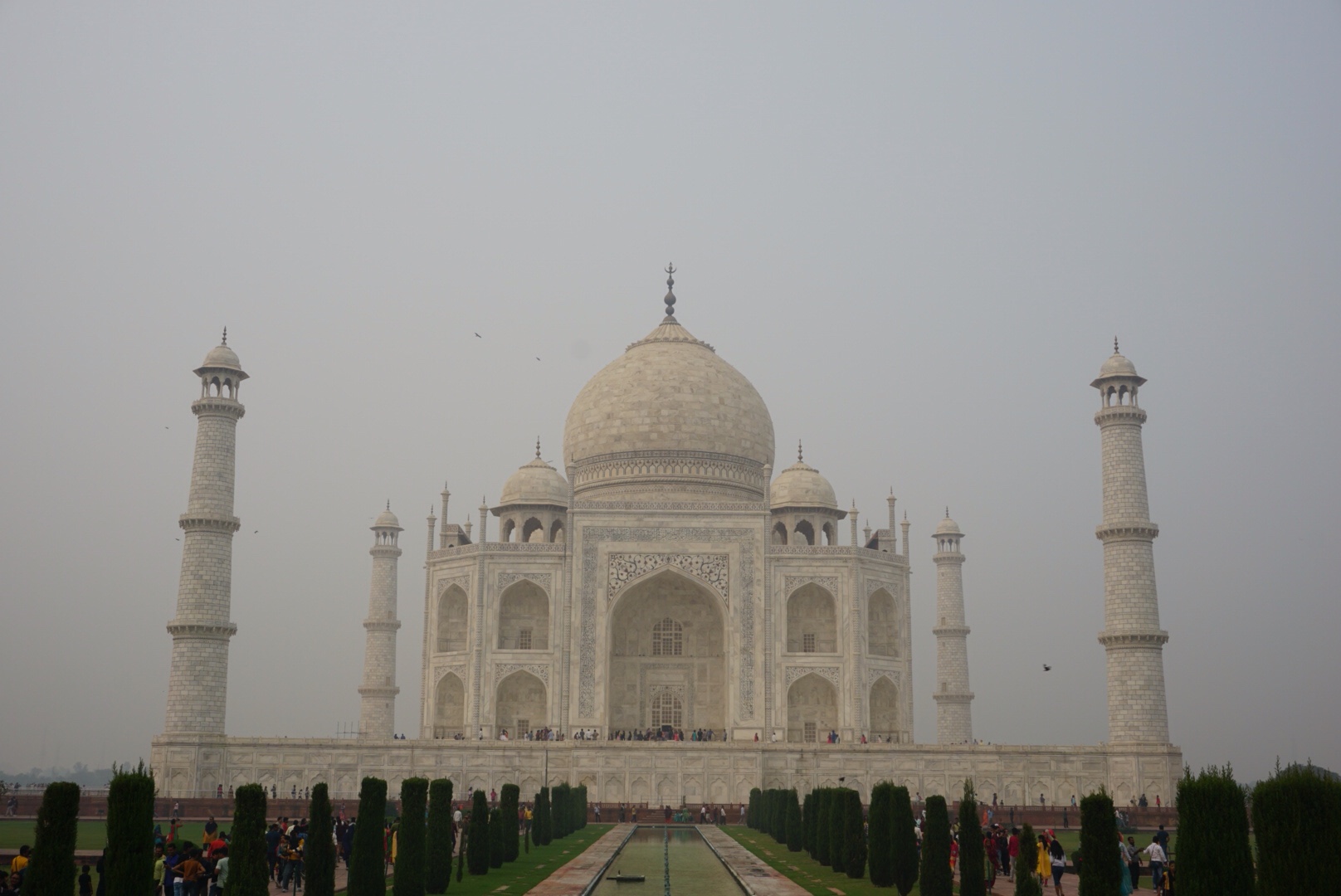
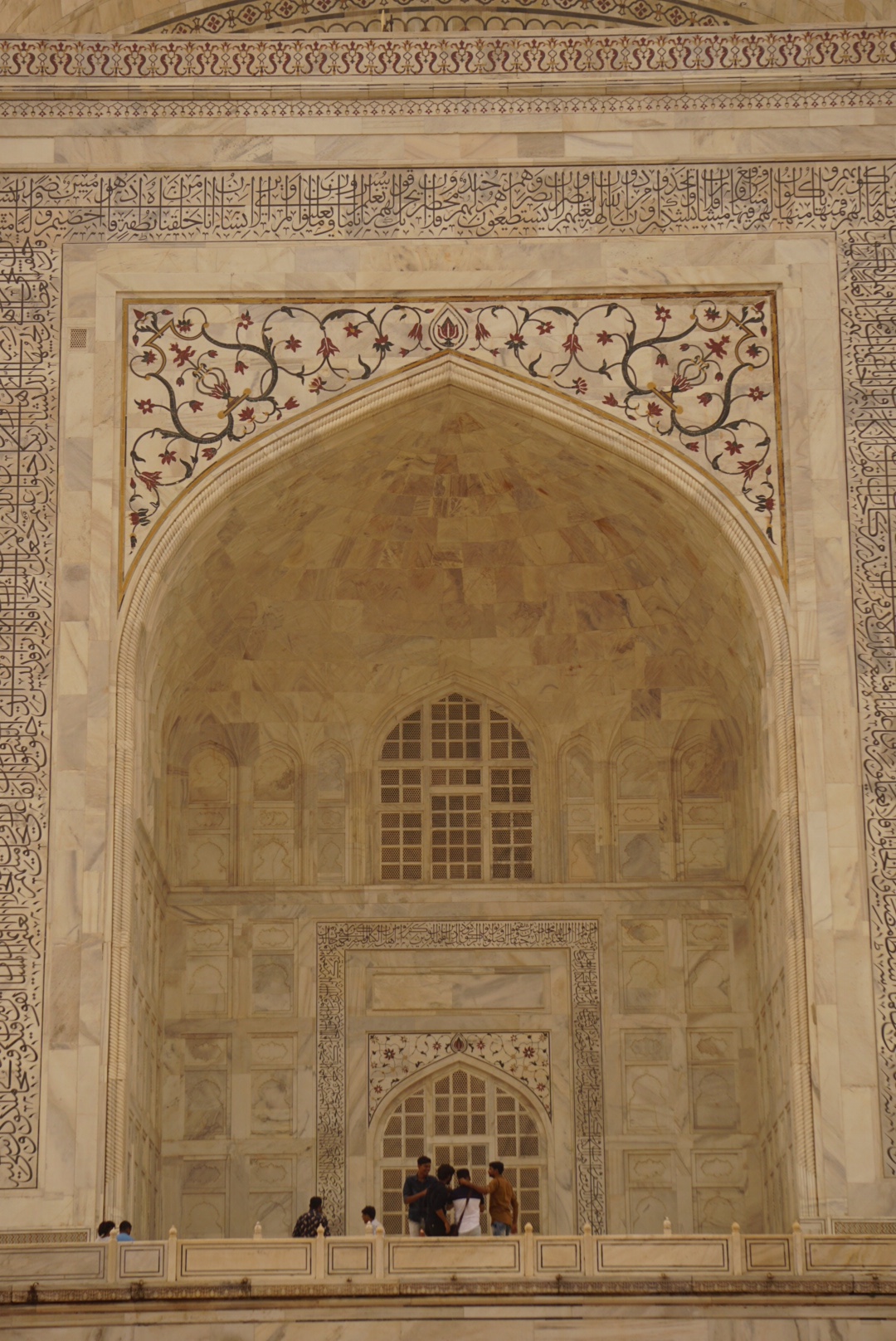
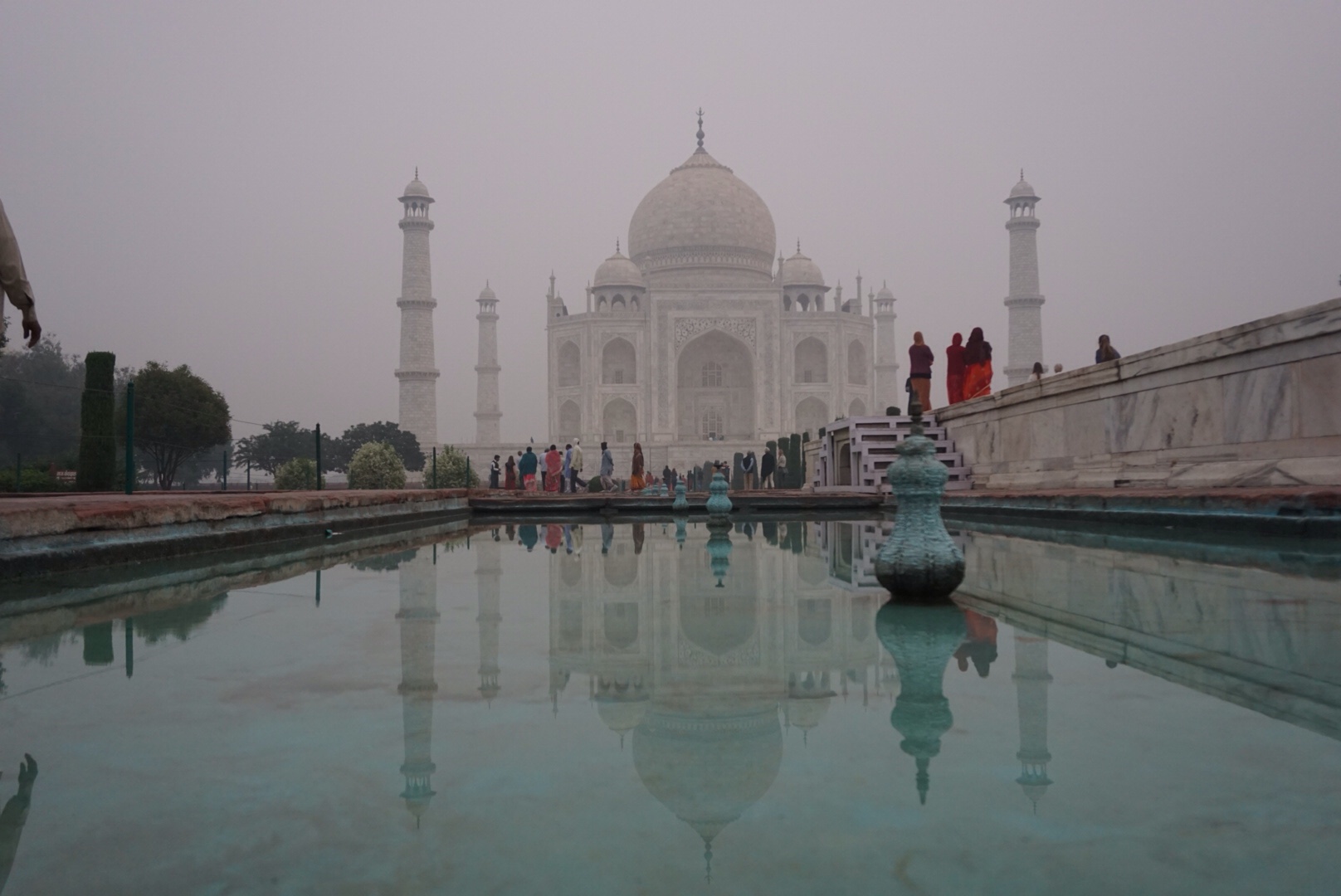
The splendour of this place is magnificent. Rising high above the Yamuna Rive behind it, the pristine white marble of the 8 sided building that was built as a sign of the love and grief shown by Shah Jahan for his wife.

You are instantly drawn towards the opening of the mausoleum with its large Arabic script inviting the deceased to enter paradise, but all the while advising those who wish harm what would happen to them.

The grounds are traditional in that they consistent of 4 gardens, a common Mughal trait, where each are divided by a constructed water way.

The symmetry of the entire complex, not just the Taj itself, is incredible. But there is one abnormality to the symmetry, and that is the Tomb of Shah Jahan which sits of centre inside the mausoleum. As you enter the mausoleum, you walk past the steps down to the cript where the bodies of the two lovers are placed, 10 feet below the inside surface of the Taj. Into the mausoleum proper and a 8 foot high white marble lattice surrounds the 2 tombs. The marble is decorated with dozens of different gemstones and other precious stones which glow when under light. As you walk around the lattice, you look up and ponder the great expense and effort that was put into building such a monument for one person. You snake back out into the outer corridors of the mausoleum and come out the back of the Taj overlooking the Yamuna River and look across it and see the foundations of what would have been a second tower, but this one in black marble with the two connected via a bridge. This was never completed as Shah Jahan was relieved of his position as emperor by one of his sons who imprisoned him in Agra Fort. His son did show him compassion however allowing him to be buried besides his wife.

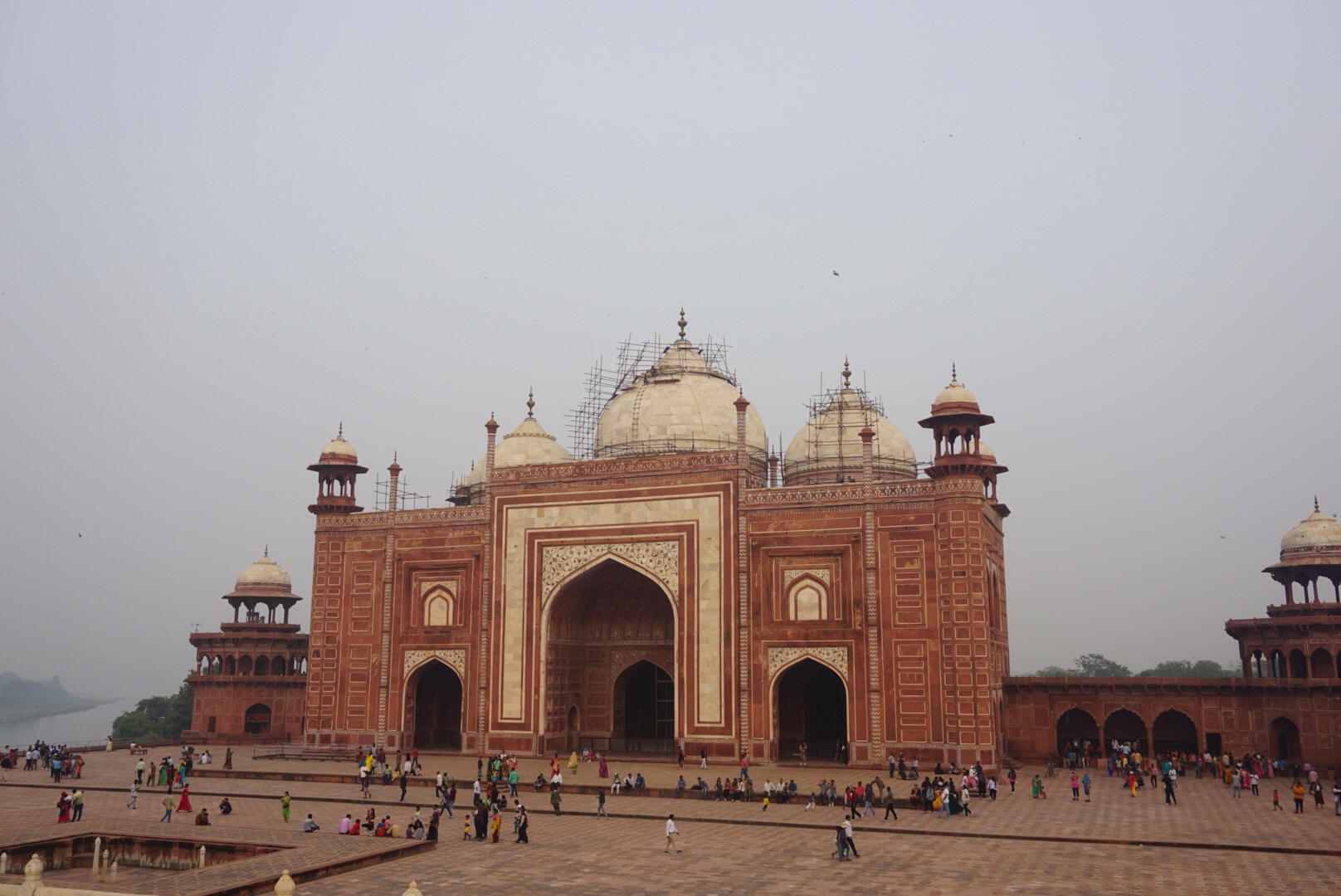
Two great mosques also sit beside the Taj, with only the left one being consecrated due to its positioning towards Mecca.

When visiting the Taj in the afternoon it is jammed packed with locals and foreign visitors. So after some confusion and debate, our trip to Taj was changed, allowing me to go twice, once in the afternoon with another couple and again in the morning for sunrise. Arriving at 5:20, I was first in the queue for the 6:02 opening!

And the morning was different. Foreign tourists mostly and therefore less people. As we got this so early, it was possible to photograph the monument without others in the photos and the local guides will take you around to e best spots for photos

The Taj Mahal is simply breathtaking and something that all should try and see once.The Taj Mahal before sunrise!

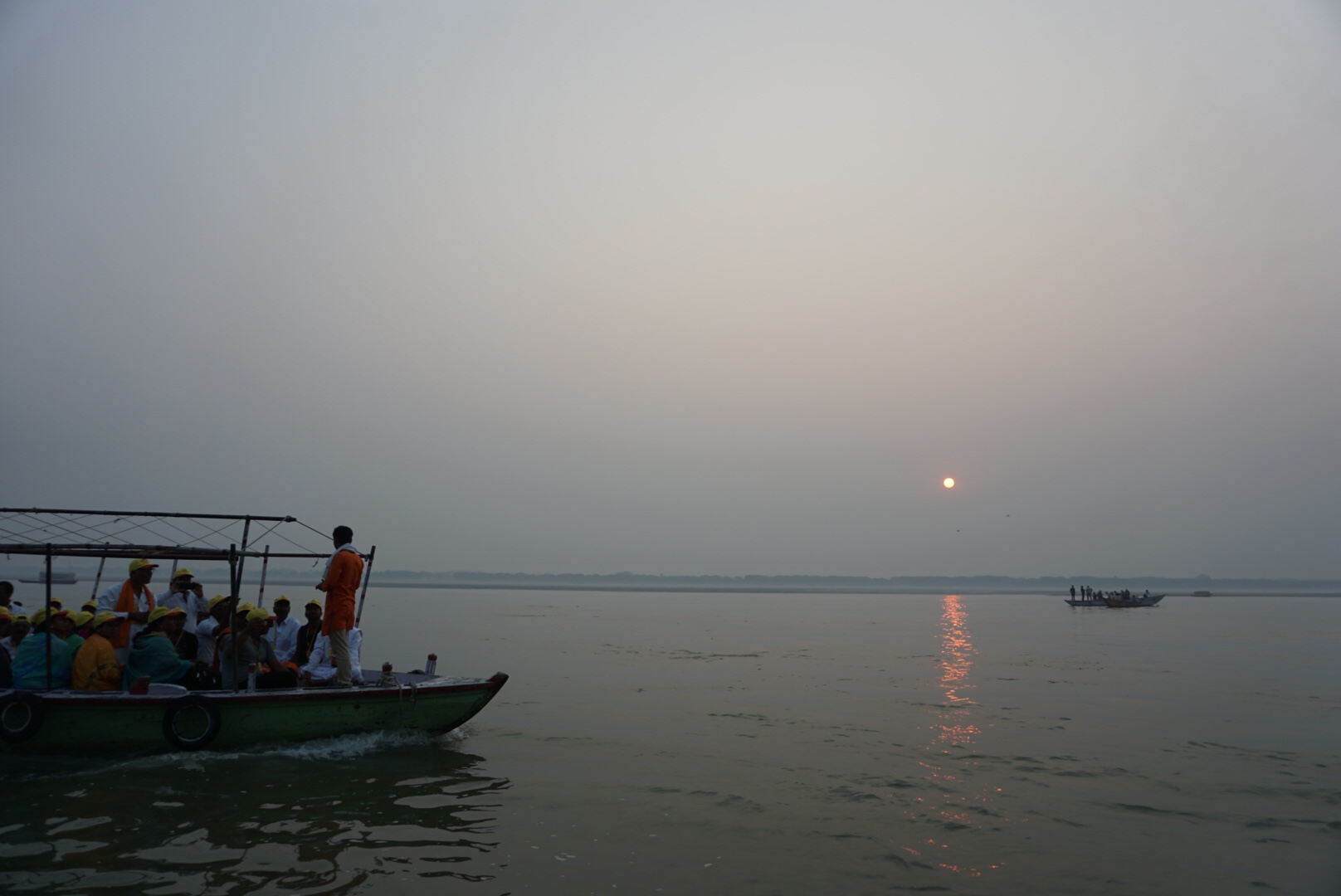
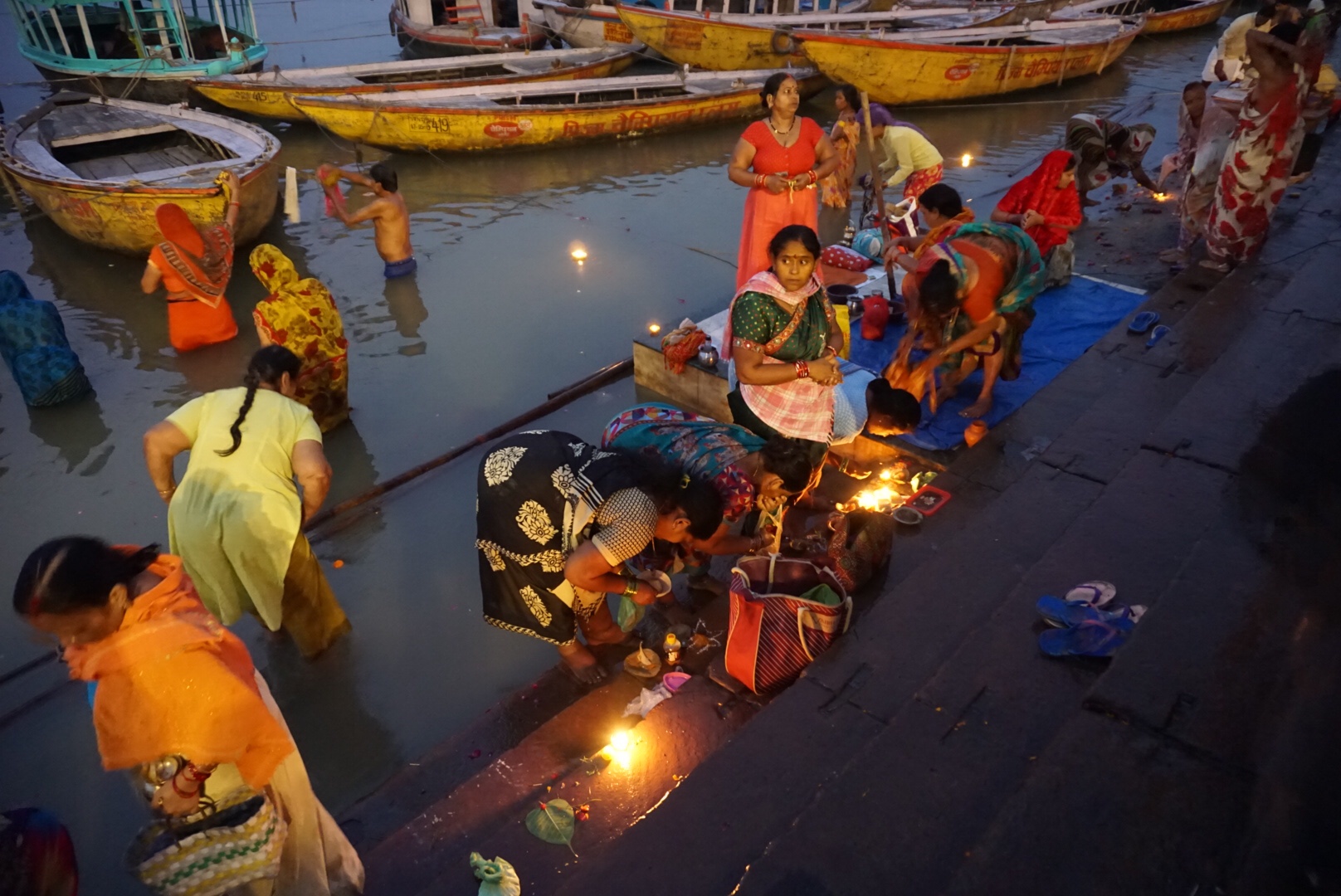
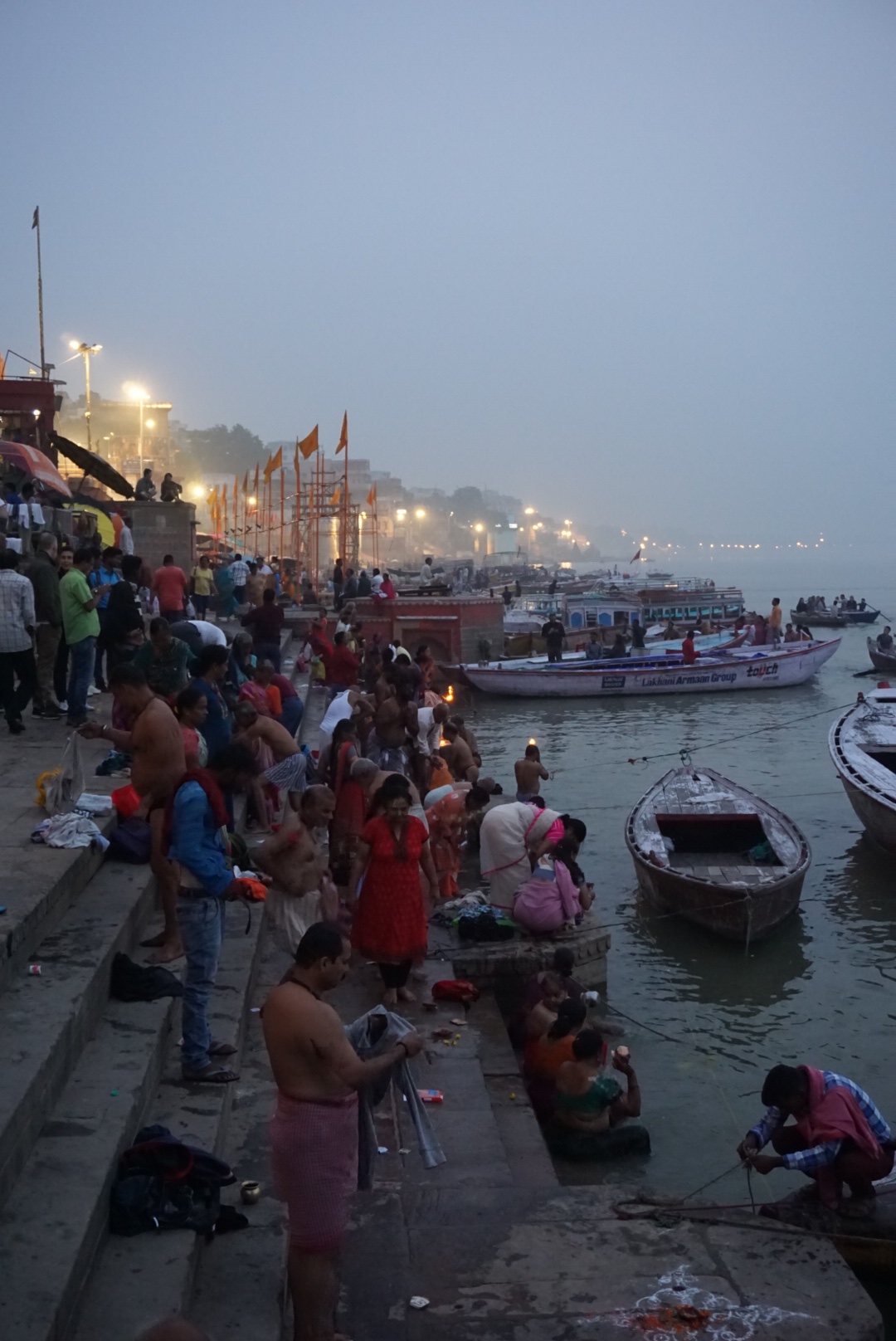
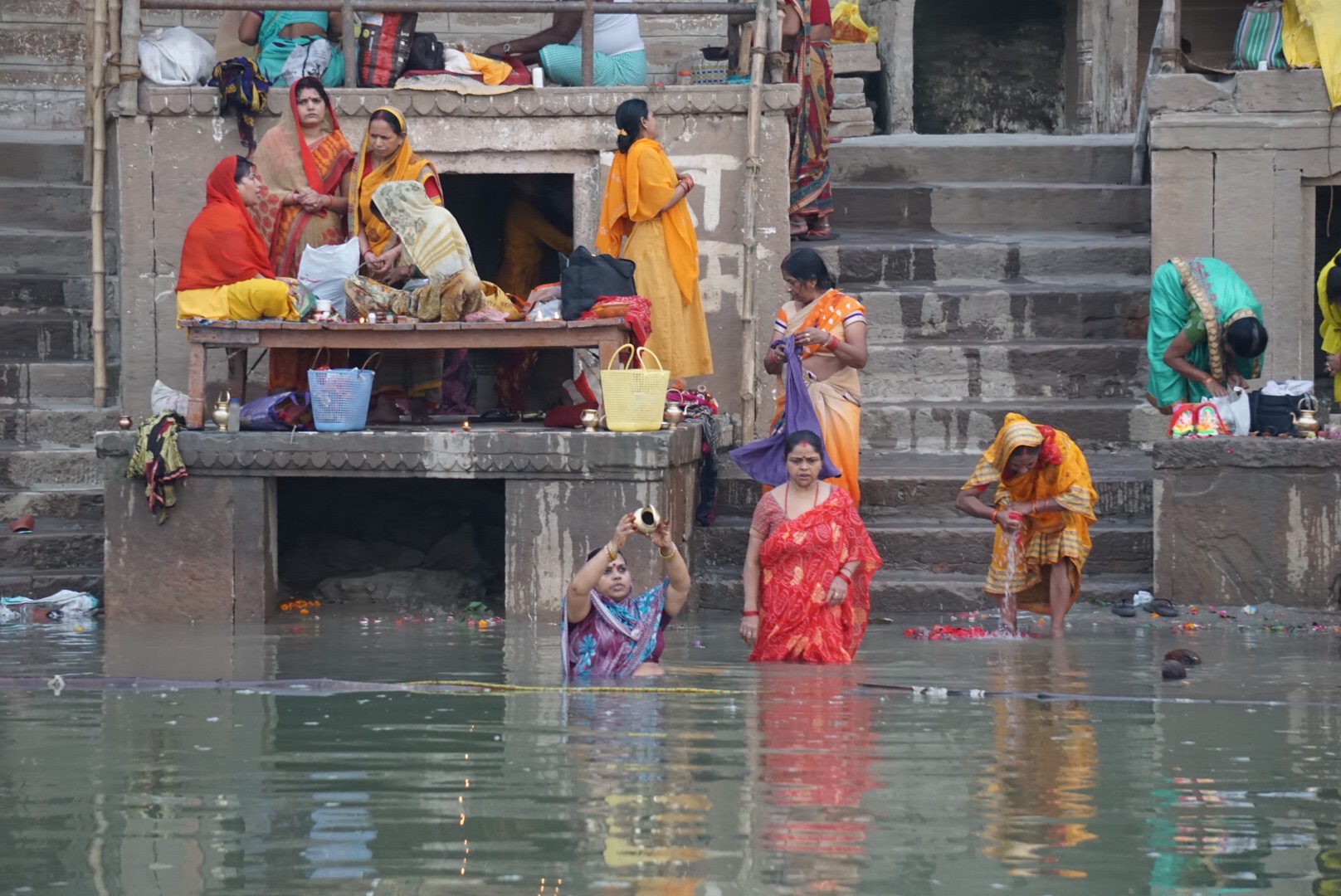
Sunrise on the Ganges

As we leave the hotel at 5am, the tooting has already started on the roads but nothing like yesterday. Rollers are down on businesses and the hawkers and wanderers are not our and about yet. Where yesterday it took us 60 minutes to venture down to the river, this morning it is only 10.

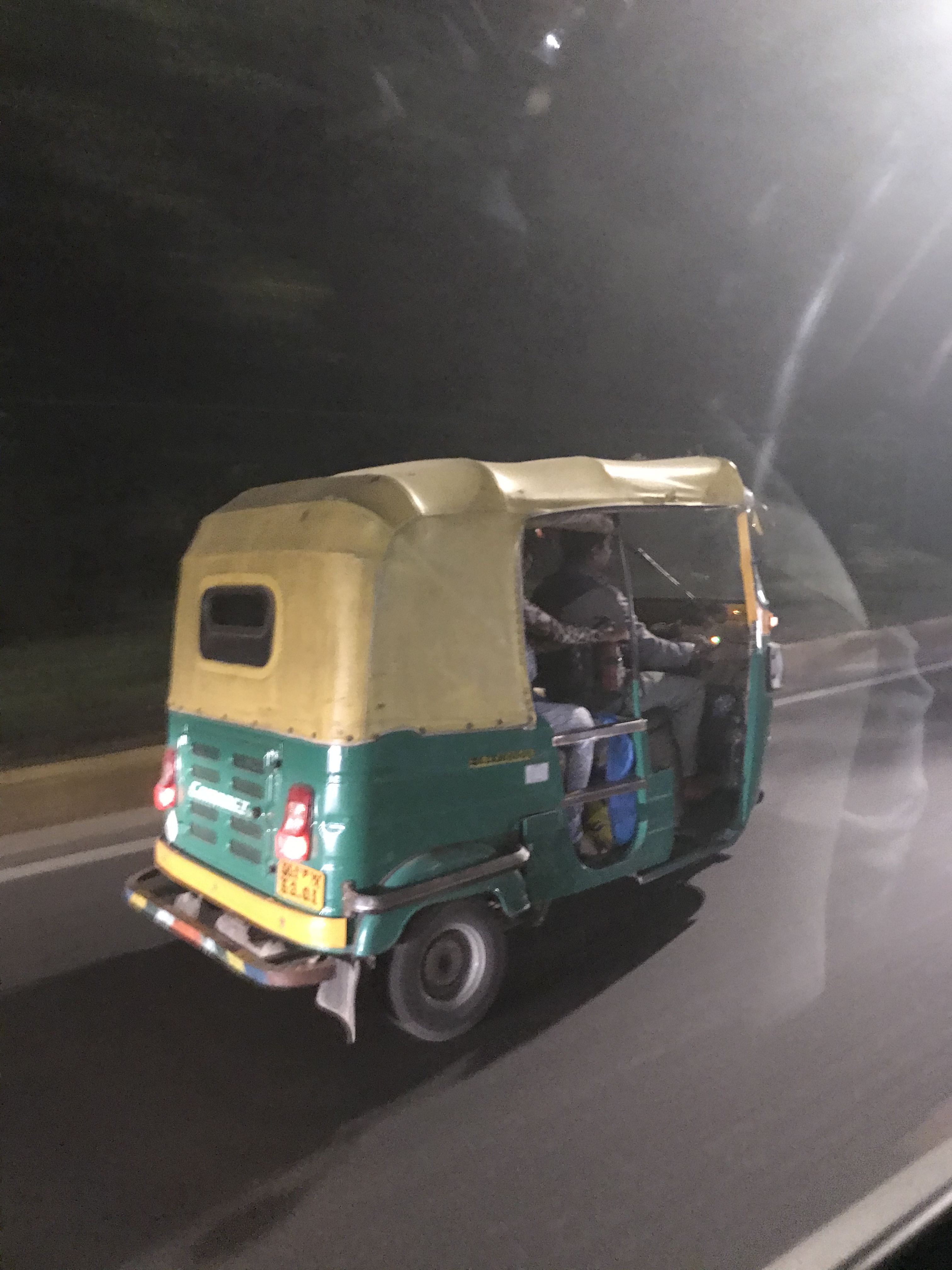
But there is some movement in this holy city. Cows are starting to move as well as the dogs as they look to survive anotther day amongst the crowds, traffic and rubbish. Traffic police man what will be chaotic intersections and the auto rickshaw s are taking people to where they need to be.

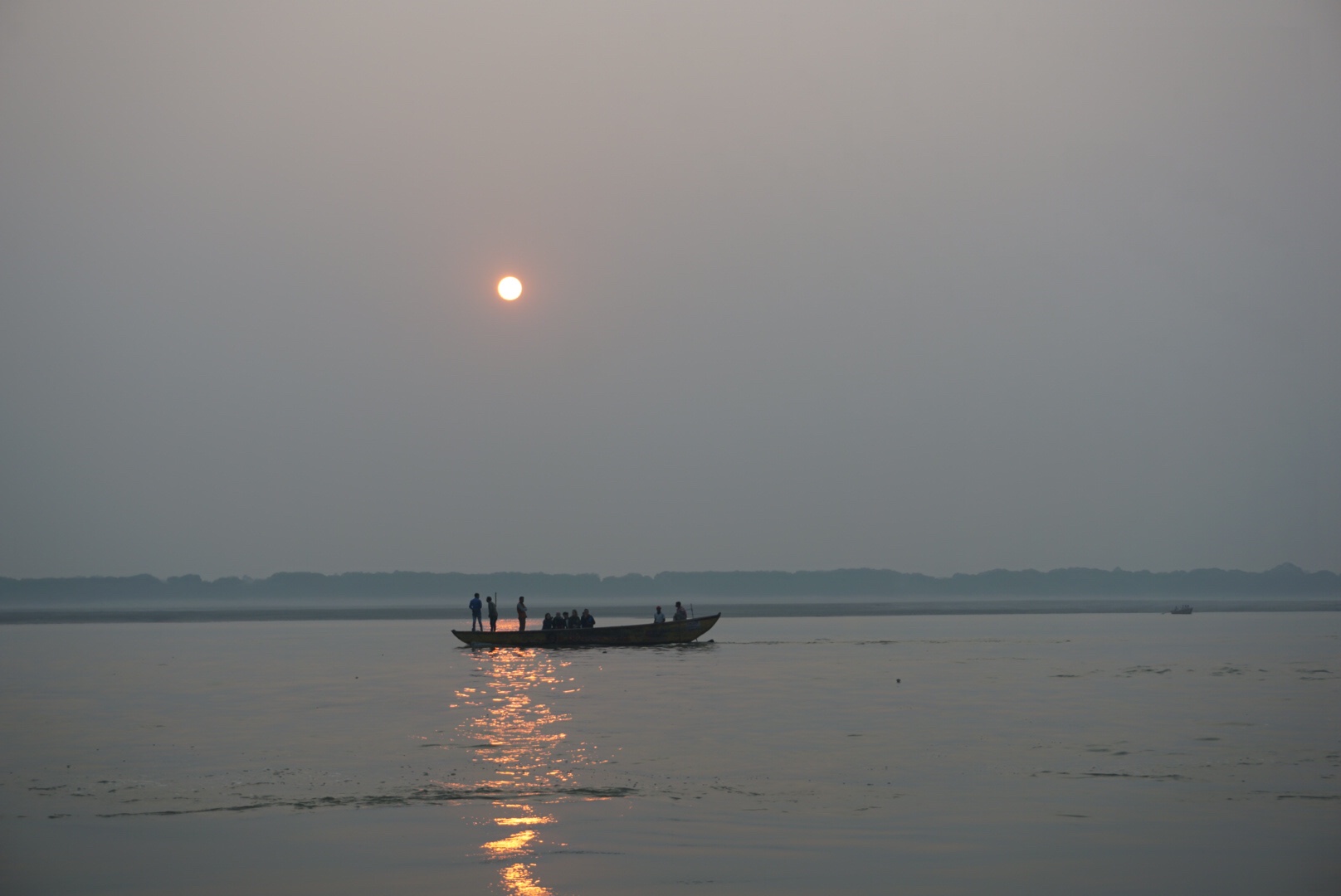
we are heading to the Ganges to view the sunrise! To witness the long rituals of awakening the gods for the day is something that many will see on tv but not in person.

At just past 5:10, a row of vendor carts are starting to make their way along the road to their place of business for the day.

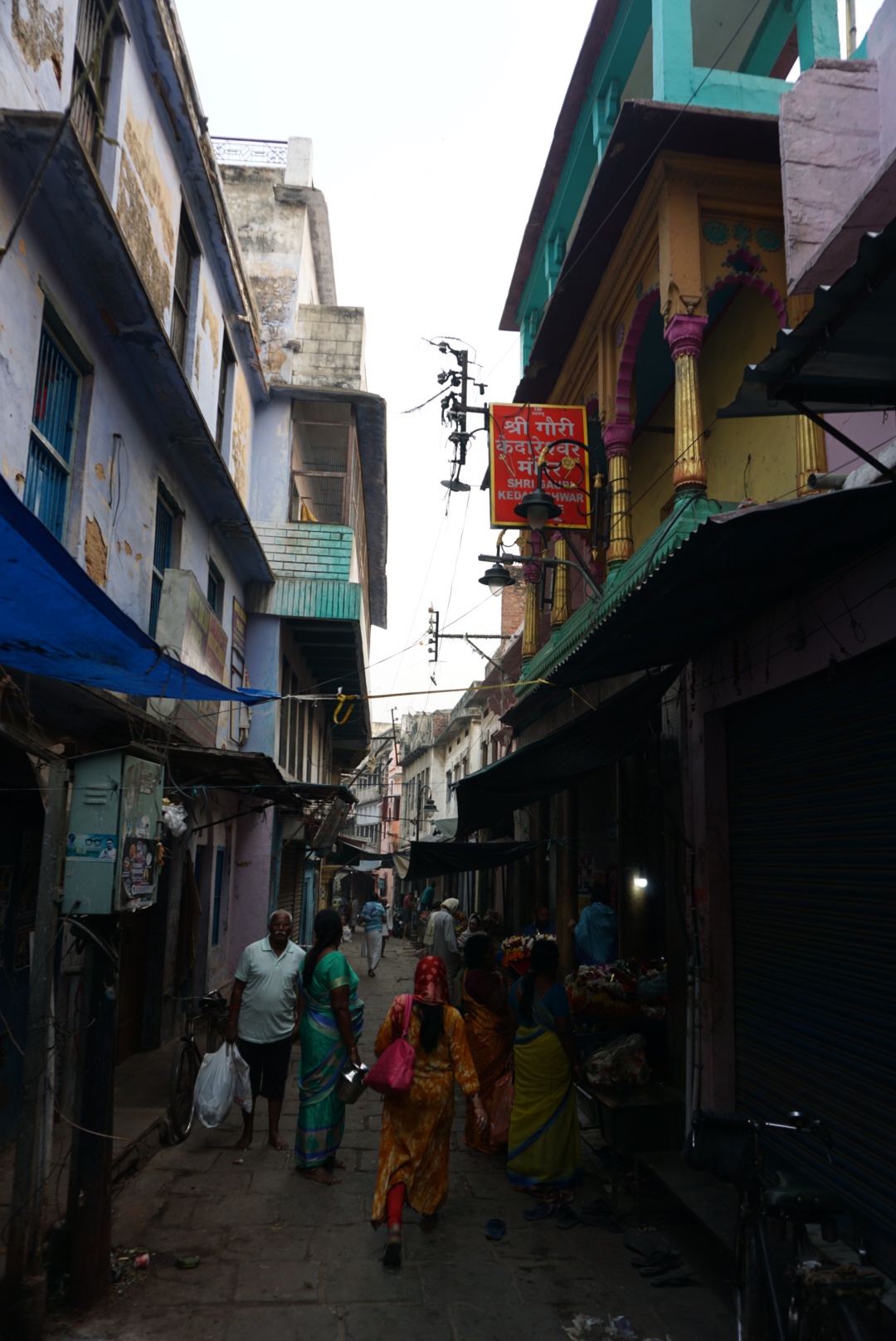
Venturing off the bus and walking through the streets of Varanasi we walk the back lanes stopping for Masala Chai and toothbrushes. people were heading towards the river.

As we walk down the steps to the river men and women are already making their way up, well before sunrise, having had their cleansing and praying to the gods for the day ahead.

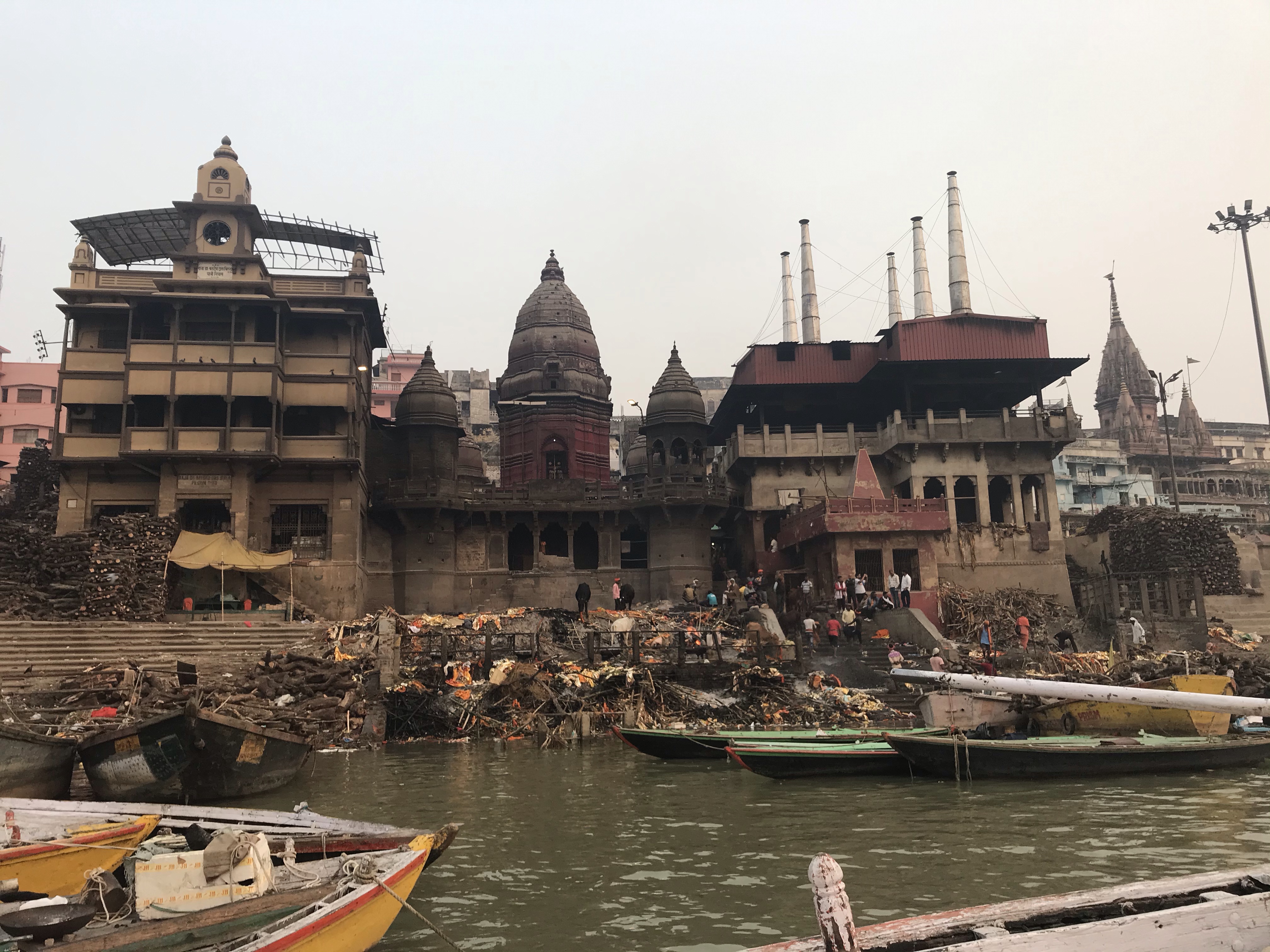
Along the river we cruise to view the different ghats and see the all along thousands making this daily ritual for locals and a lifetime pilgrimage for others.

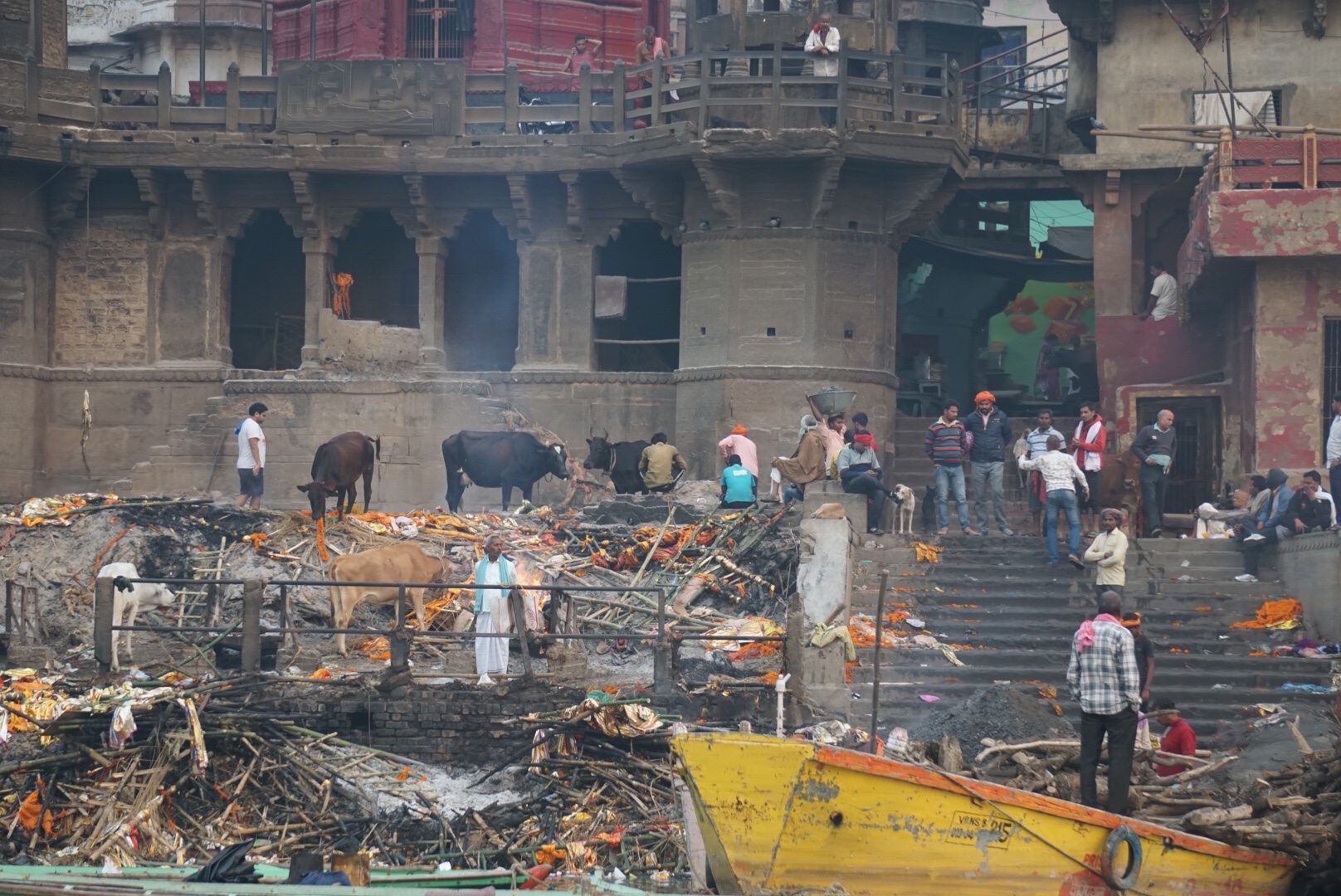
Upon the cremation ghat was the ritual of cremating the body of a loved one while others stack the firewood for the day’s piles that will be required for later cremations. Cows wandered through the ashes from last night’s piles looking for food.

As the sun rose slowly over the river and the Holy City, more and more people came to the river, carrying bottles, cups or some other container so they can take river water back to either loved ones or back to their temples for others to pray with.

The back streets now are coming alive. Vendors are opening, washing and ironing being done and streets being swept. But at each little shrine through these streets people will pause or at least acknowledge the shrine’s presence.

A second day sightseeing in Delhi

After yesterday’s approach to familiarise myself with Delhi using the hop on hop off bus, today I took the bull by the horns and decided to go freelance and use the taxis and the auto rickshaw.

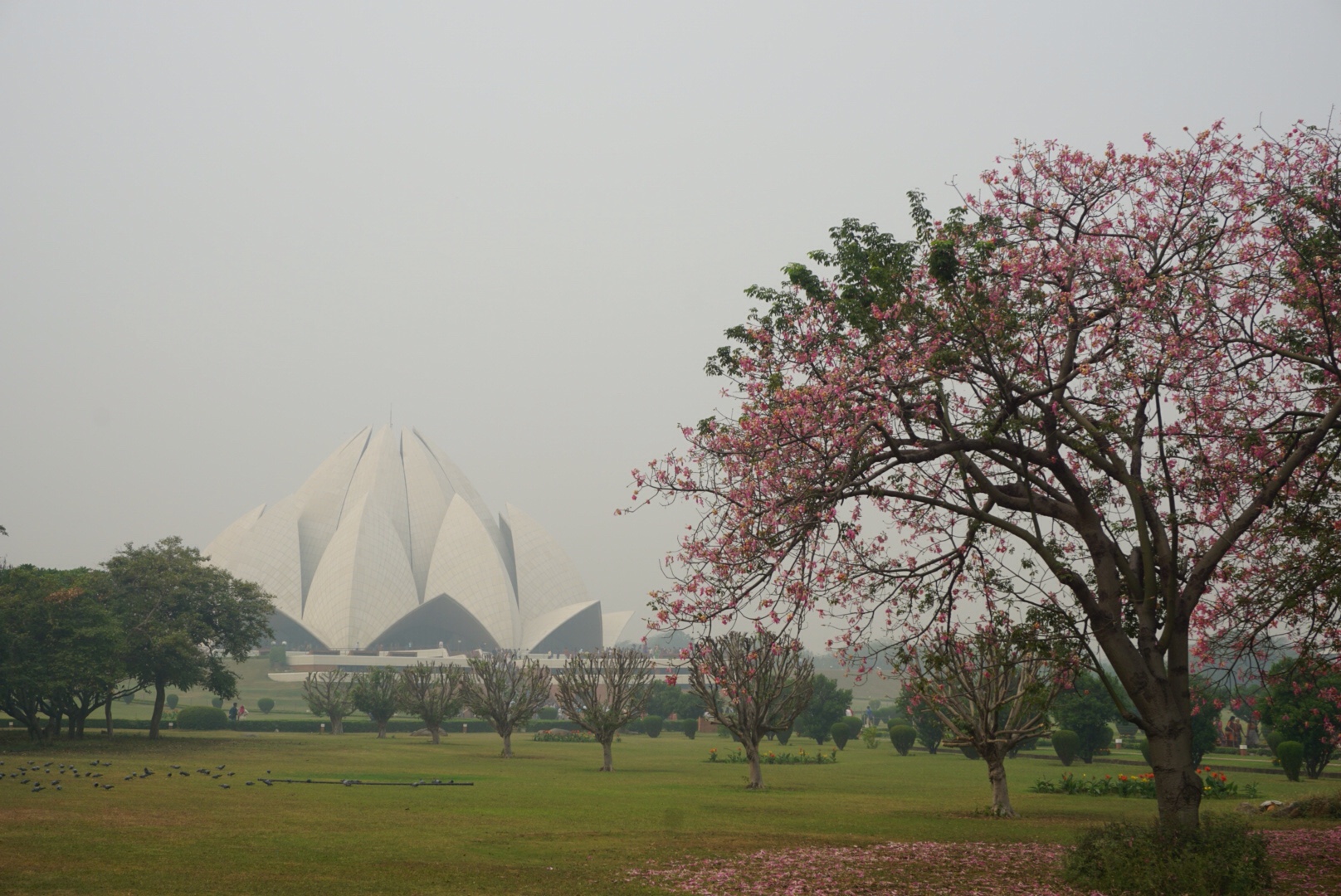
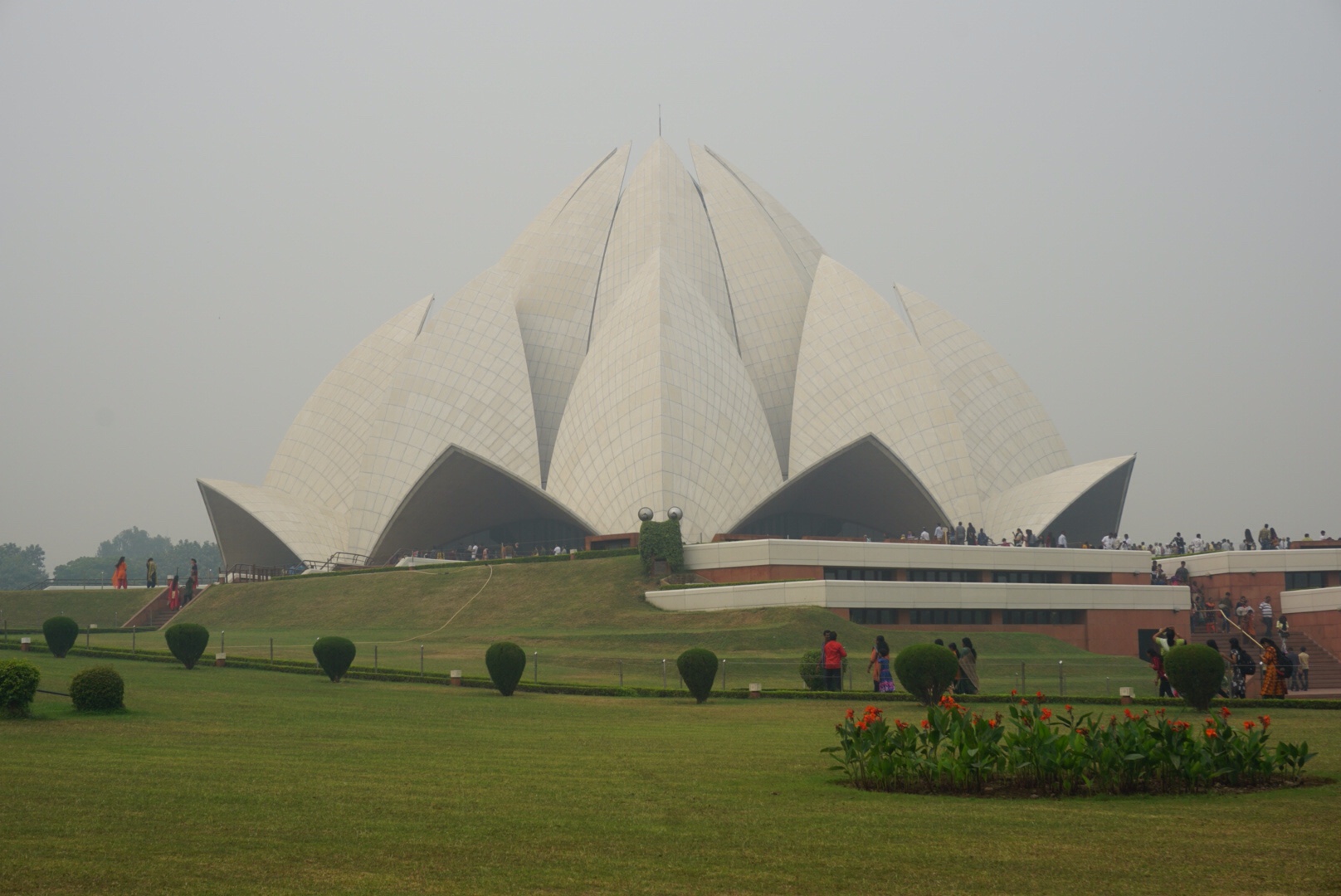
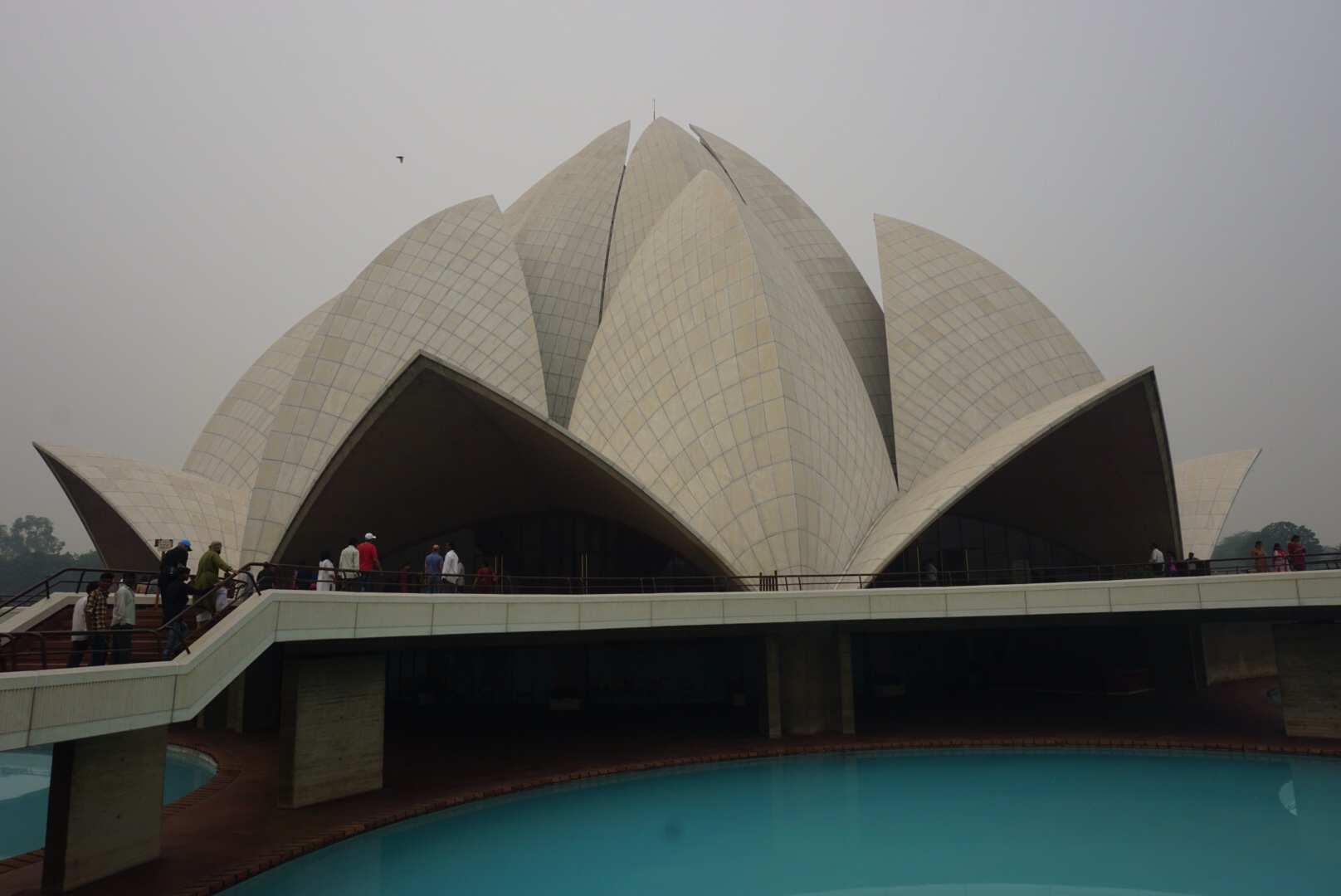
First stop was Lotus Temple, a Baha’i house of worship that was dedicated in 1986, so a recent addition to the city. It seats 2500 people under an enormous lotus flower structure. It looks very much like the opera house with its sails. There are 27 of these petals are marble clad. The inside was amazing but no photos allowed. It’s roof reached high above, 30 plus metres. Entering the gardens was an experience, as everything is. Basically 6 lines of people were trying to funnel into a gate for one person. Every now and then, the security officer would yell at the patrons something about waiting or which queue to break off into after entering the gate. Upon entry just about anywhere important, there is screening and frisking. You break off into lines for men and women or if the place is important enough, you can take the foreign visitor line. While this line is usually much, much quicker, you have paid a premium compared to the locals (10 times more). Having said that, the groping, the arm holding and invasion of ones personal space was for free here.

Back in Sukhchain’s taxi and heading towards Humayun’s Tomb. But Sukhchain was very considerate and thought I needed to go shopping first at Delhi Haat. I didn’t think I needed too, but Charlotte is now the new owner of a lovely silk and Kashmir scarf. As I jumped back in the taxi, old mate Sukhothai, was placing something in the boot of the car. Might have been fleeced here!

So upon arrival to Humayun’s tomb, Sukha was happy to be paid and left me to me here, which I was very happy about.

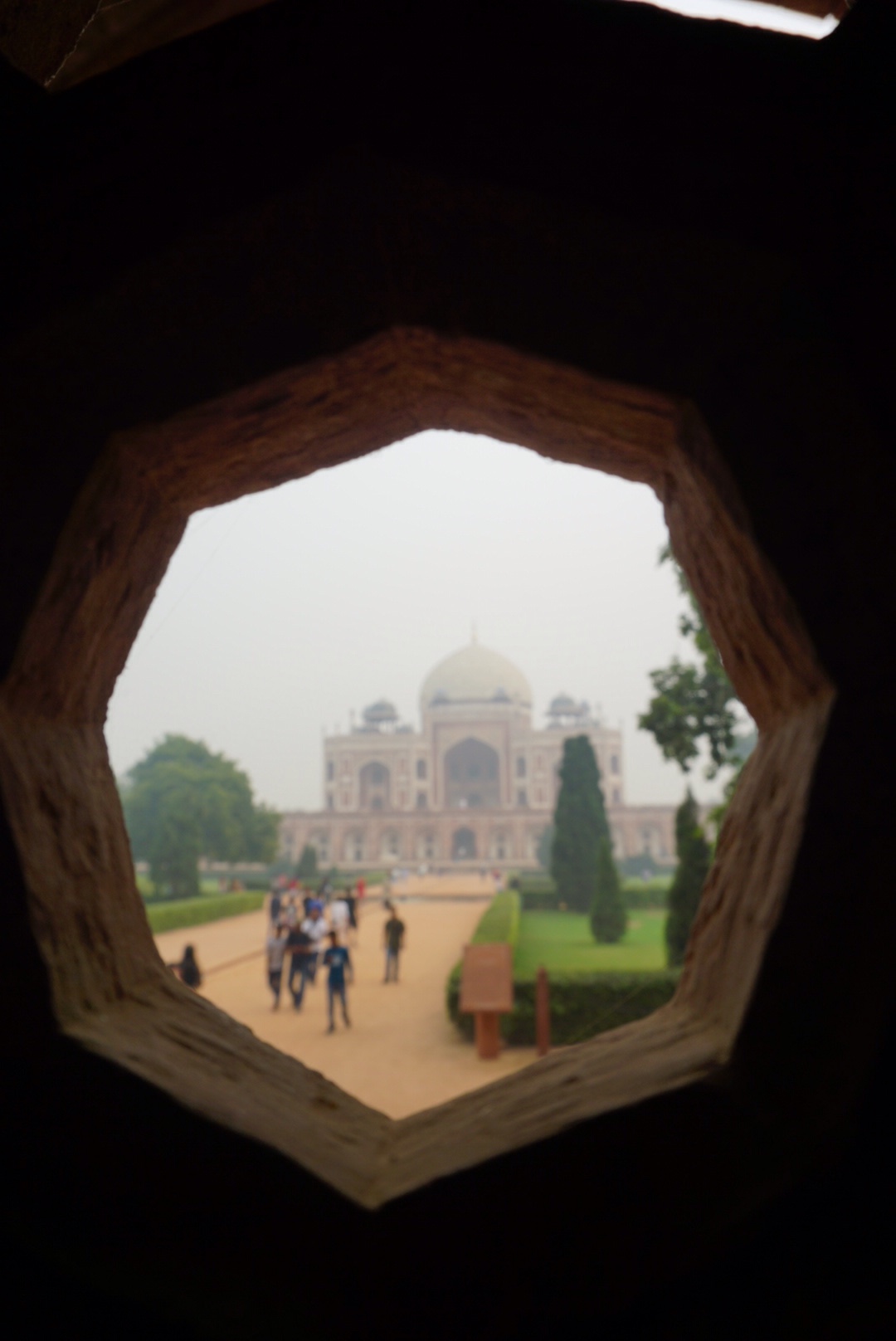
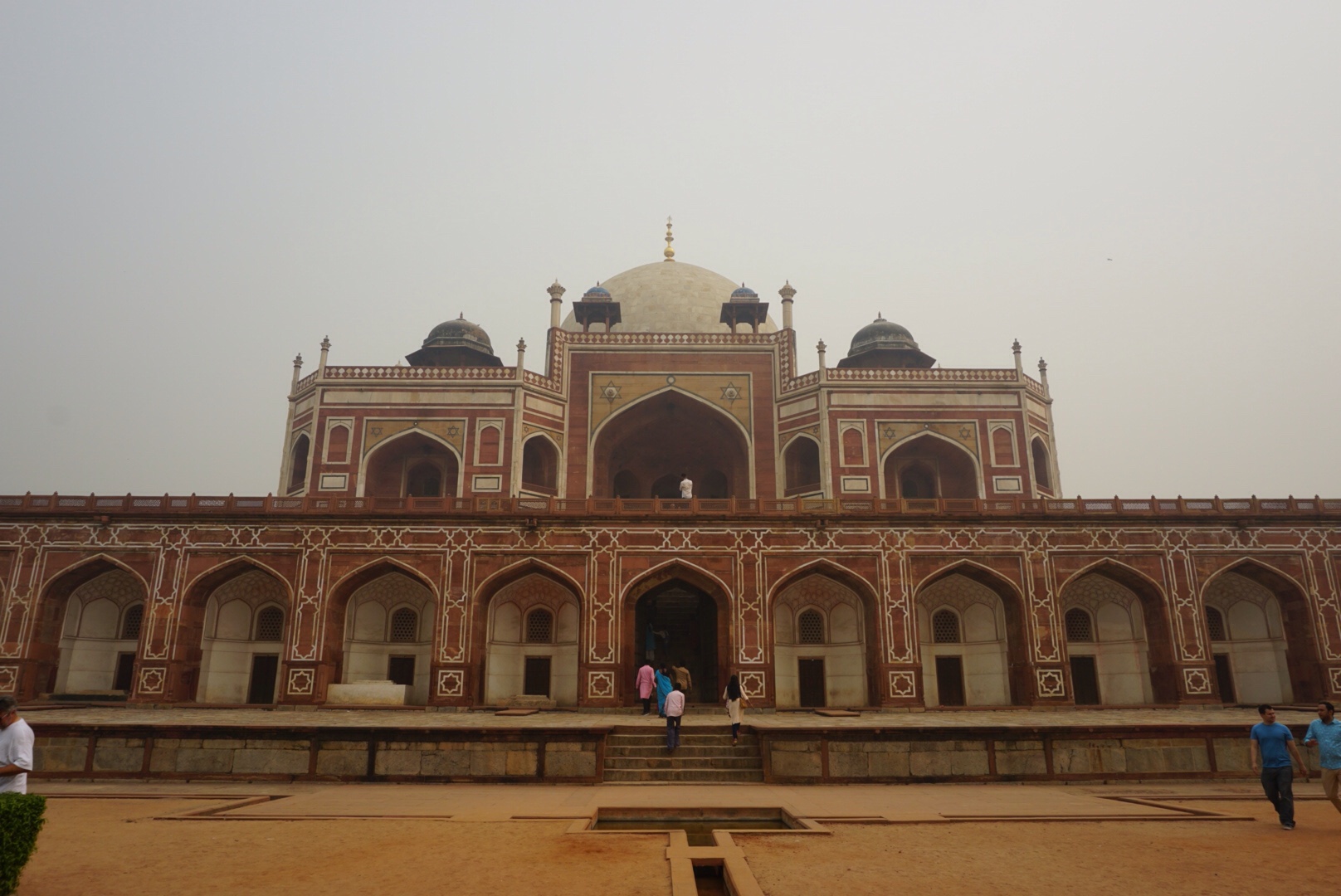
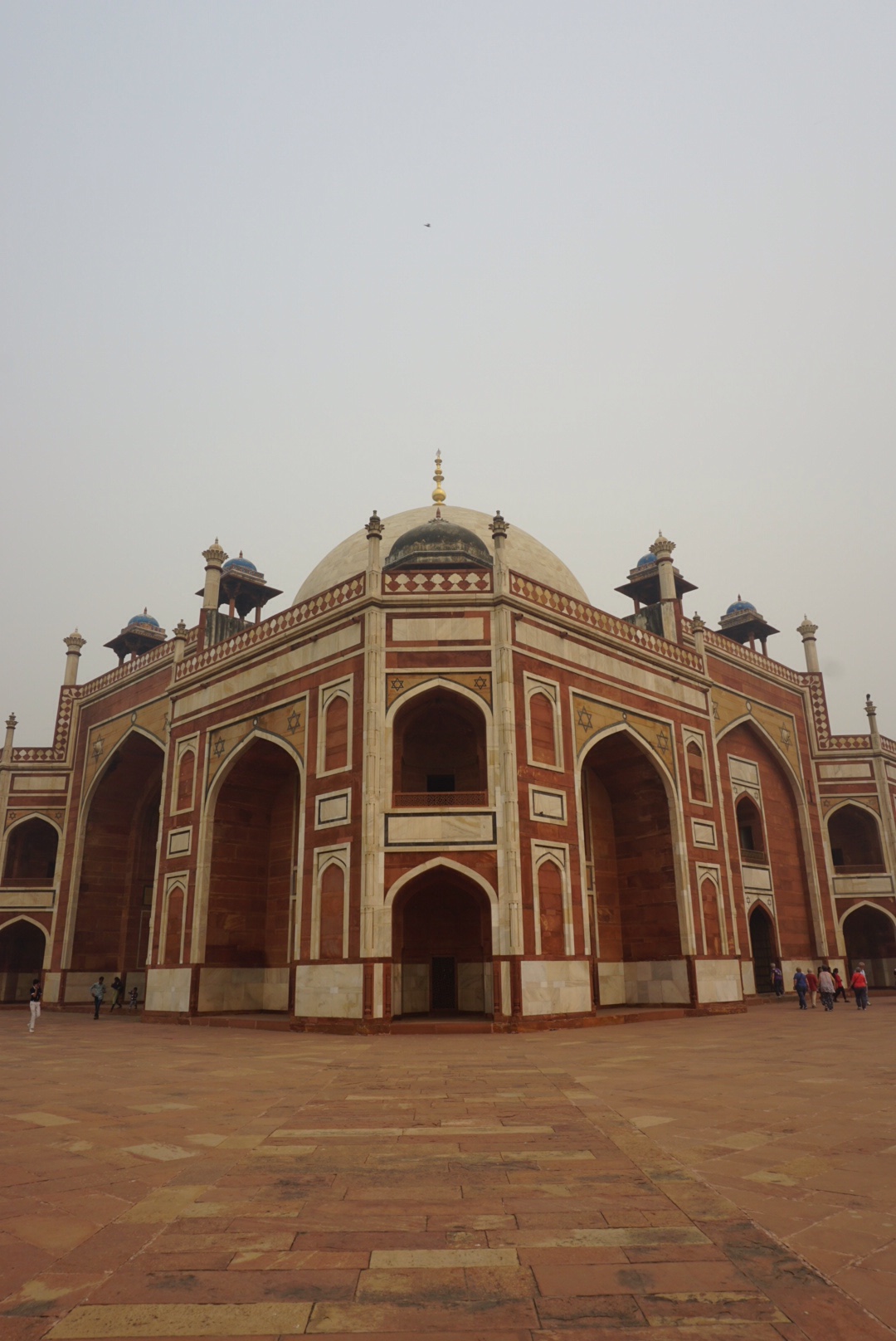
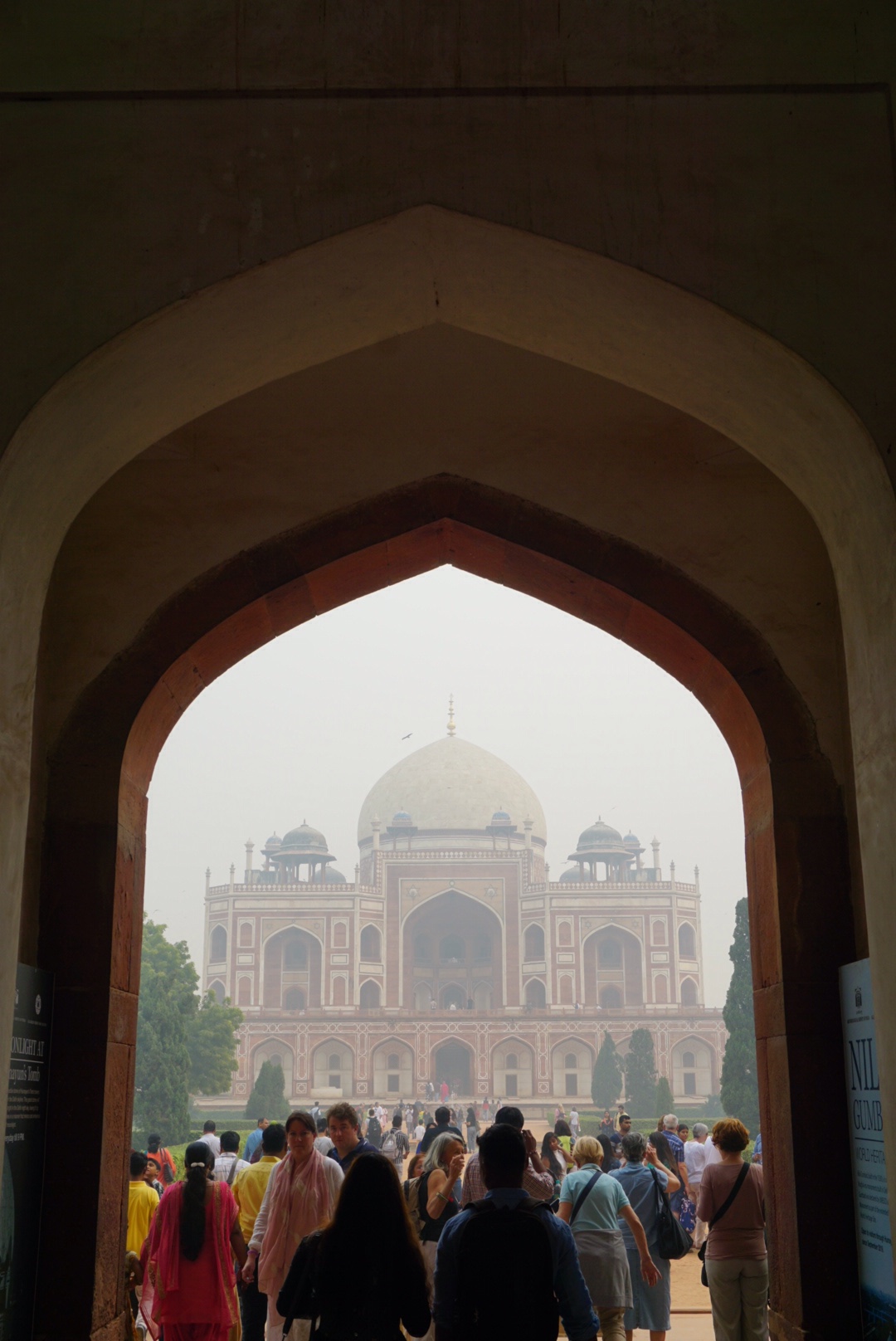
Humayun was a Mughal Emperor and was commissioned in 1570 by his first wife and chief consort. Not sure if the others were consulted or not, but this place is massive. It is a type of garden tomb with 4 water canals leading into the main building. It was the first of its type in India. It is constructed on red sandstone and is a UNESCO world heritage site. The Mausoleum was inspiration for the Taj Mahal but was certainly far more extravagant than his fathers in Kabul.

About 120 family members are entombed here. The entire area of the gardens was over 100 acres.

As I walked out of this place, I meet my new best friend. Not sure what his name was, but many don’t recall the names of their one night stands!

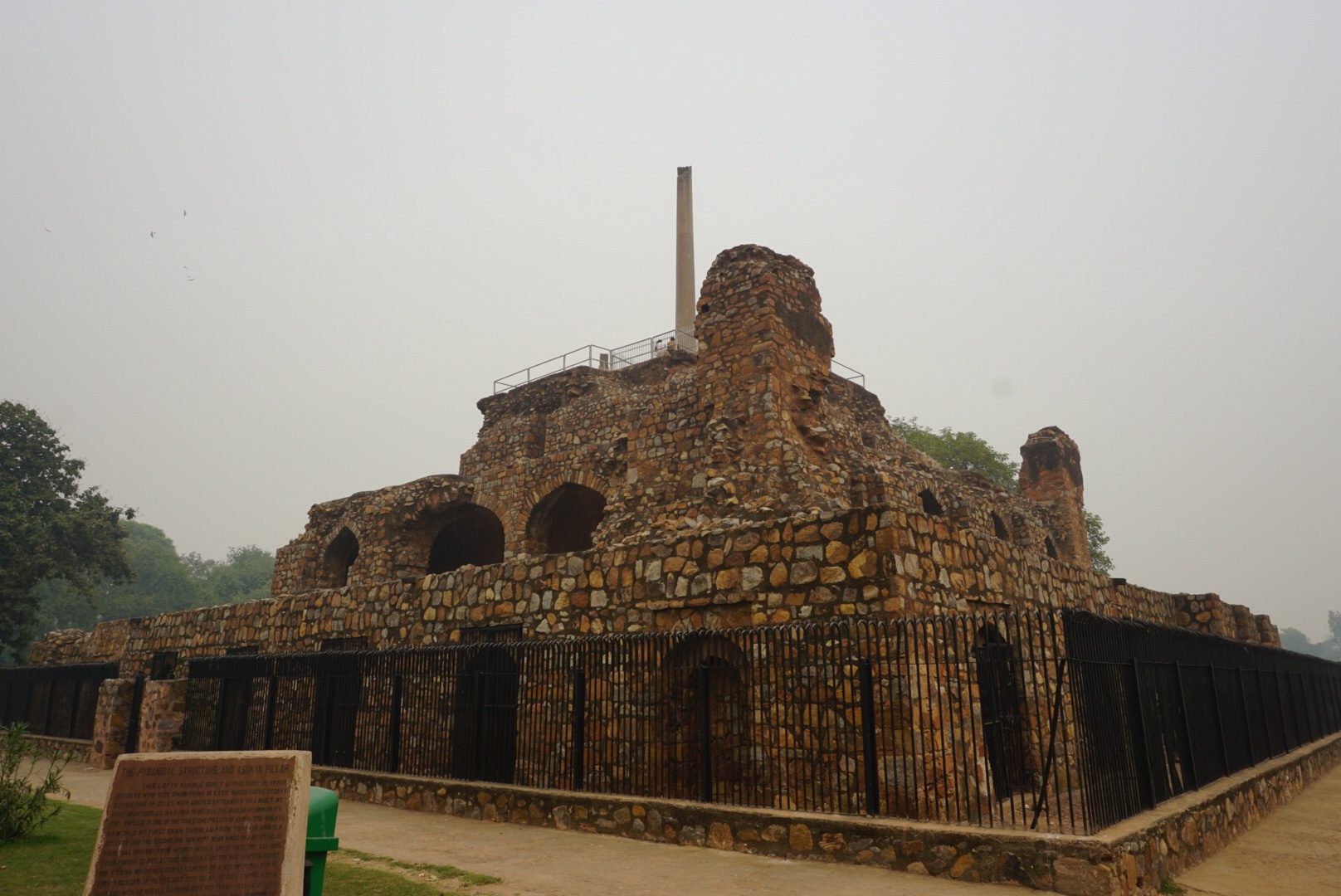
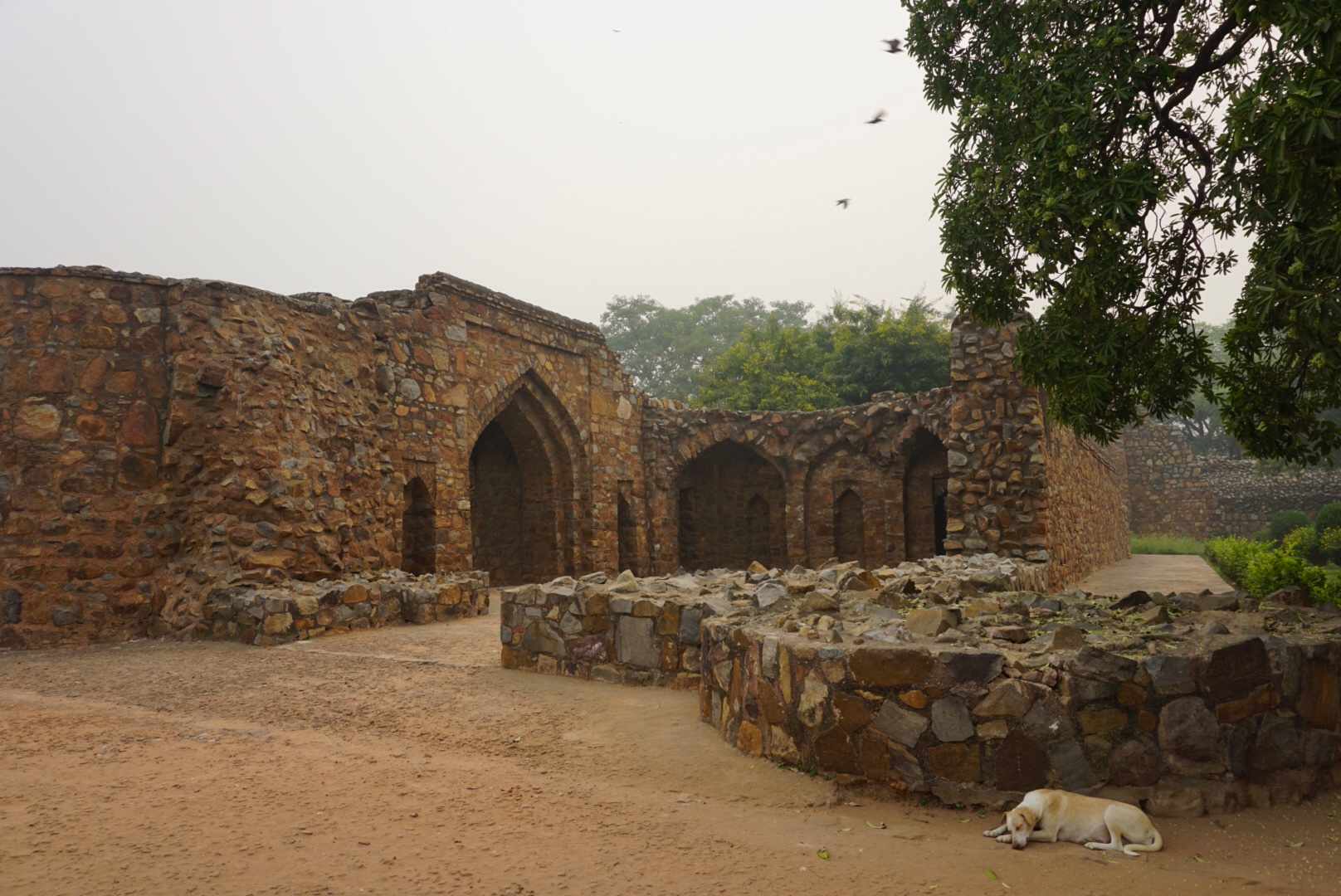
Old mate wanted to know if I needed a ride and I said let’s go to Kotla Feroz Shah, 14th century ruins of the fifth city of Delhi built on the Yamuna River. These ruins are the remnants of the fortress built by Sultan Feroz Shah Tughlaq. The Ashoka Pillar which sits in the middle of one of the ruins dates back to the third century. This place was much quieter and many of the visitors were Muslim.

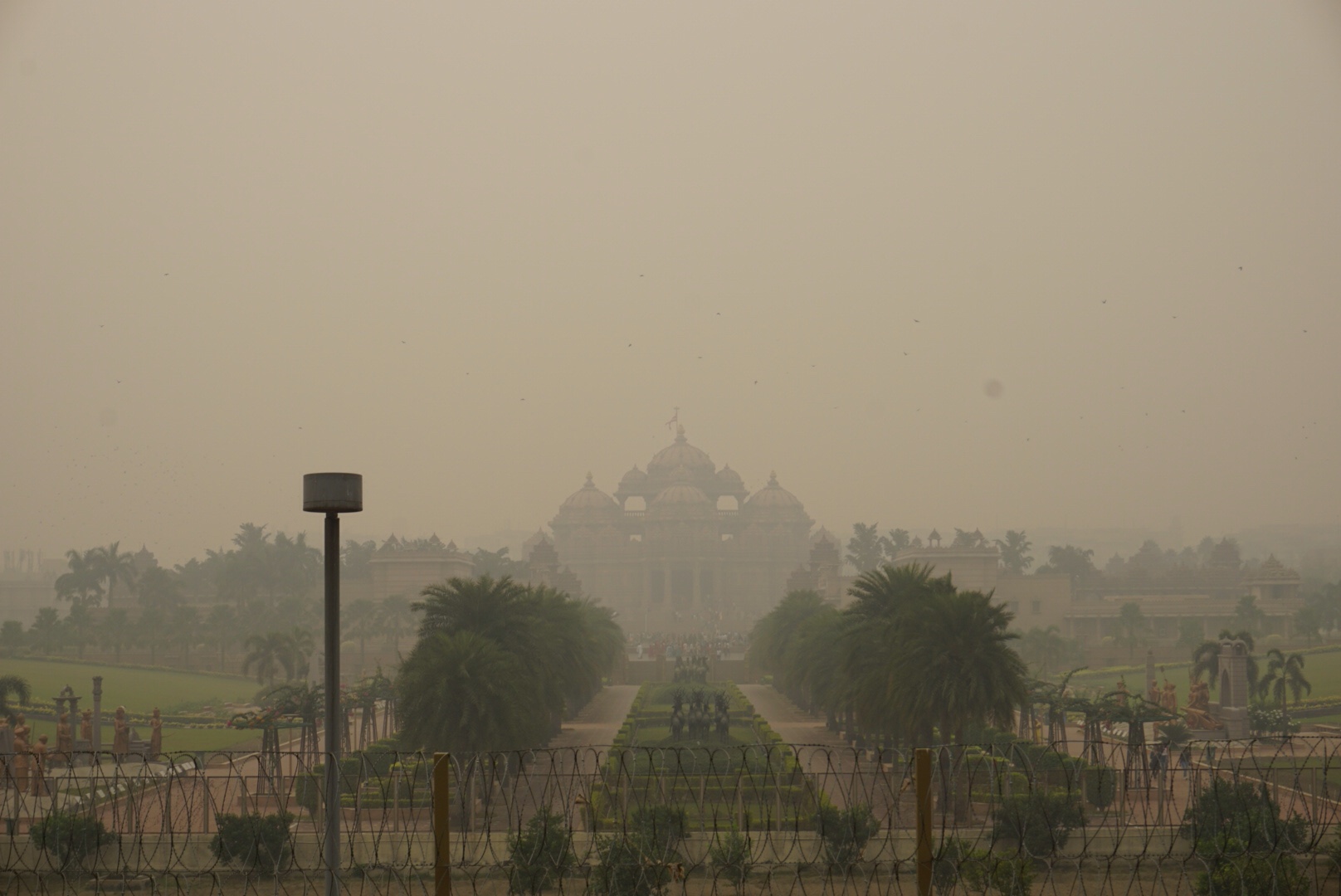
From here on, old mate advised where to go to next. And we we off to Swaminarayan Akshardham. This was the only photo I could get as there are no cameras, phones, bags, etc inside the monument president.

This place was over the river from old and New Delhi, in the suburbs, ext to the old commonwealth games village. The poverty en route to this extravagant place was incredible. The Hindu temple was only opened in 2005 in honour of a 19th century person who was chosen by a god to lead his people.

It was a magnificent structure, made from sandstone and marble, it contained no steel in its structure. But I couldn’t help but think come back in 20 years and it will be starting to crumble like everything else in Delhi.

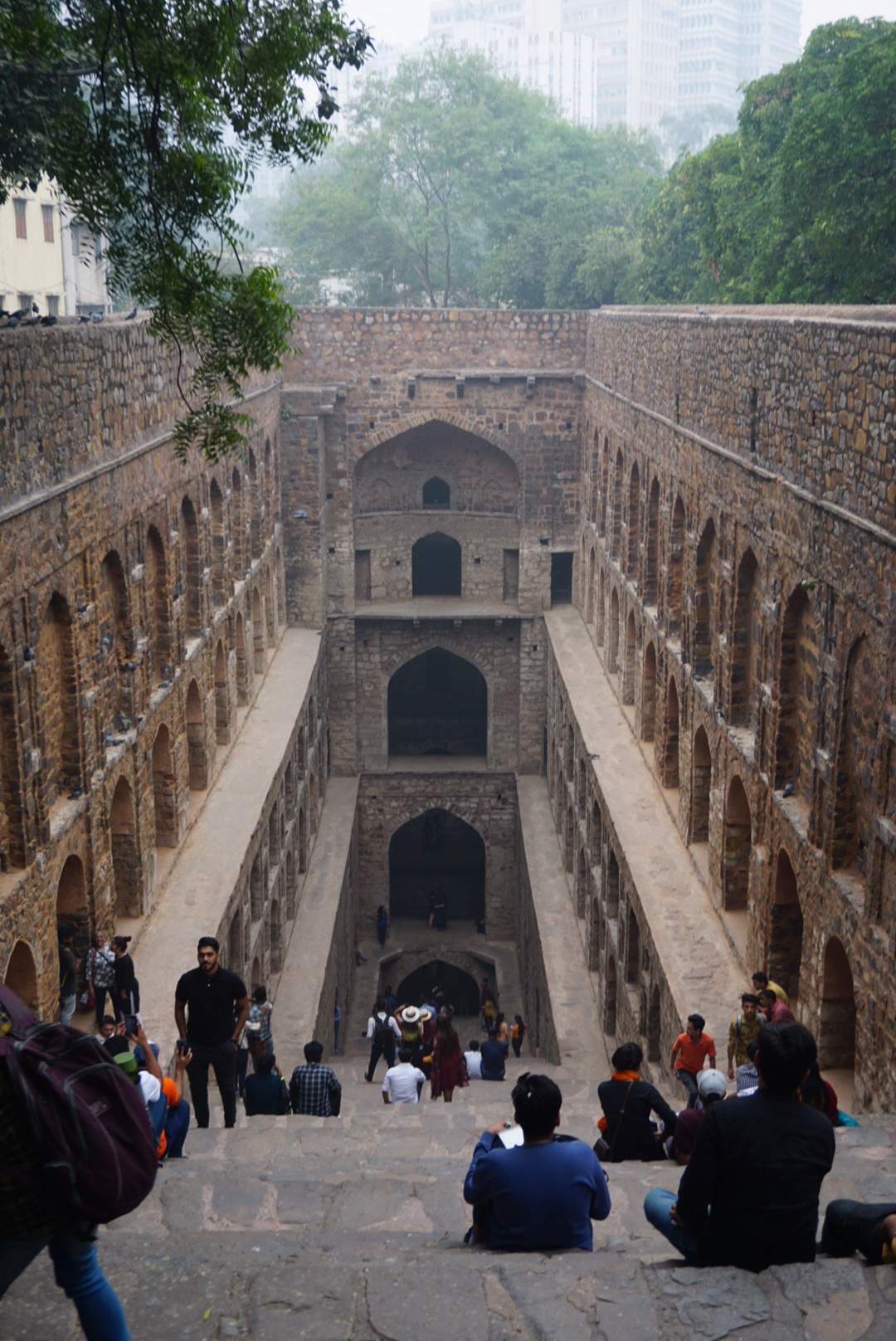
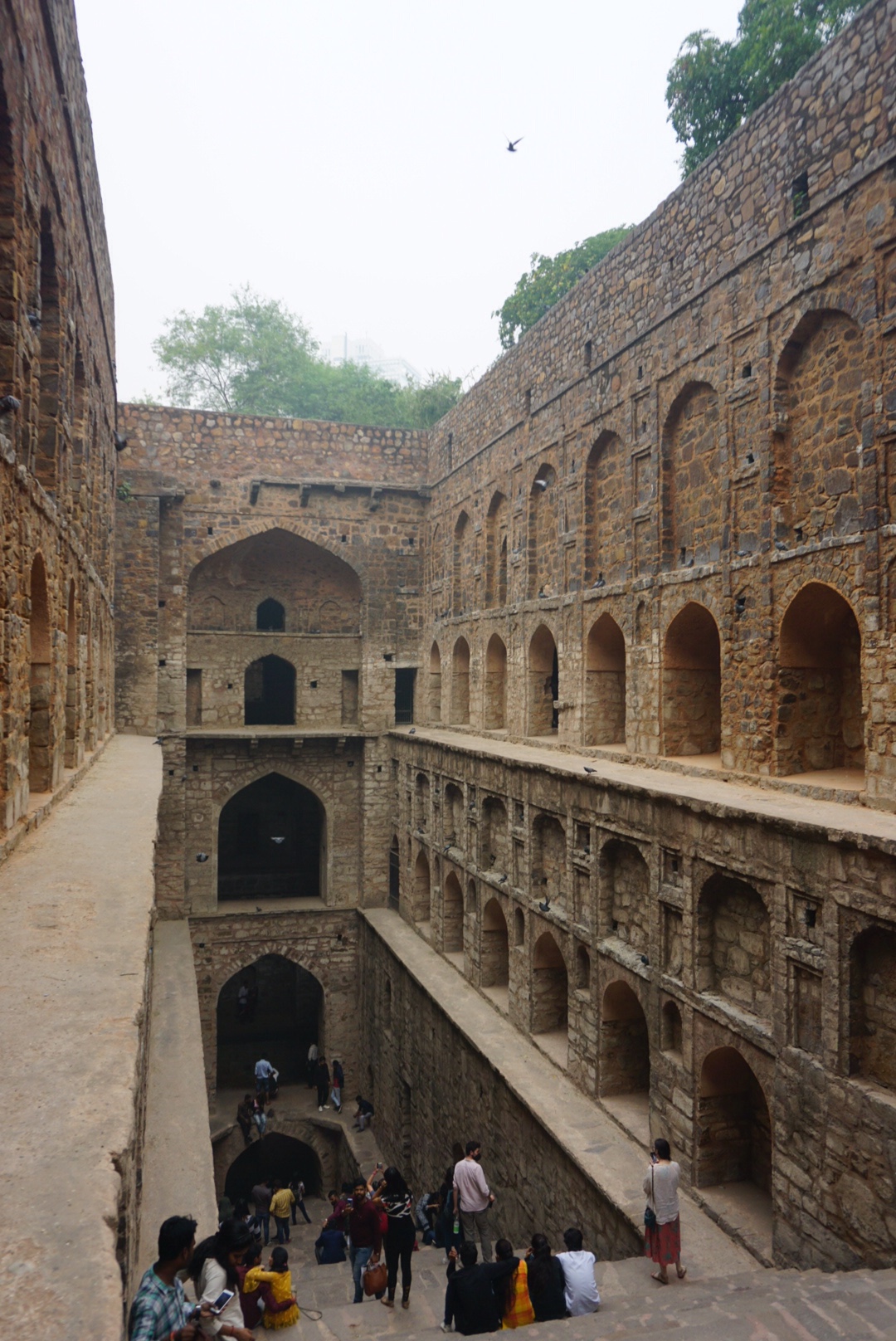
Old mate did good here, so we rolled the dice and went with his recommendation again, the Agrasen Ki Baoli. This is close to my digs but well and truely hidden away.

Again from sometime around the 13-14 century, this step well is 60 metres long and 15 metres wide. It’s purpose was to store water underground for the city in its dry periods.

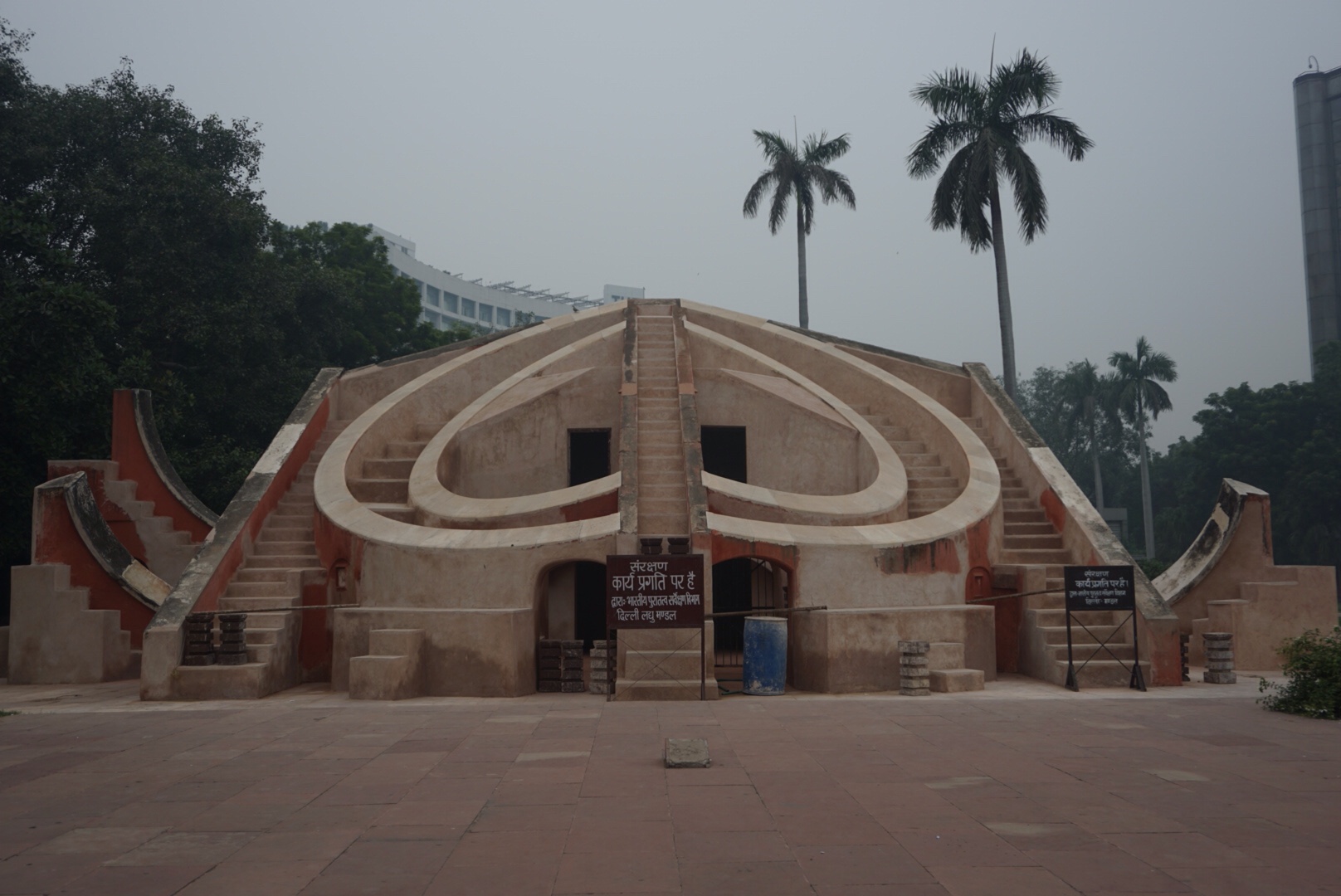
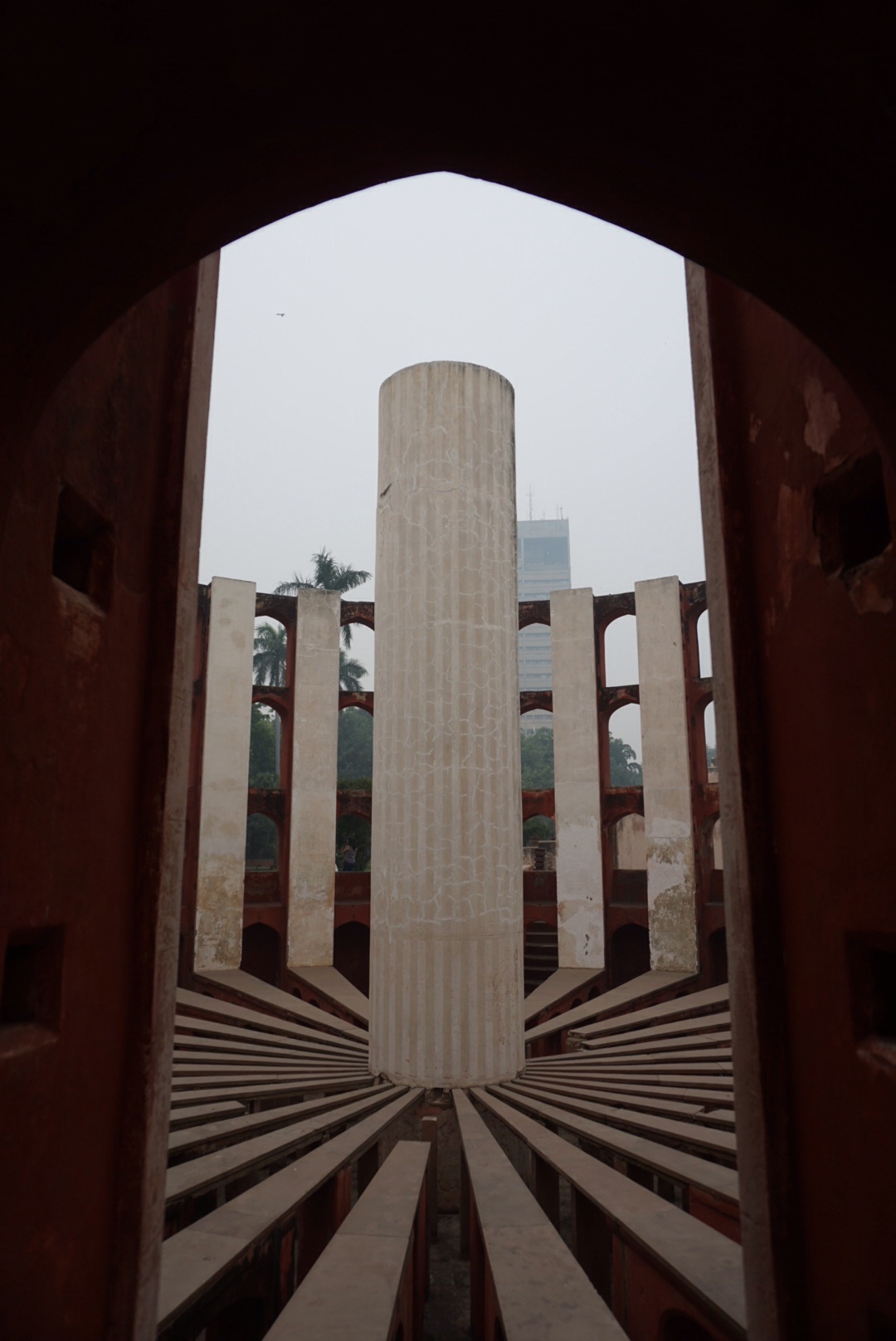
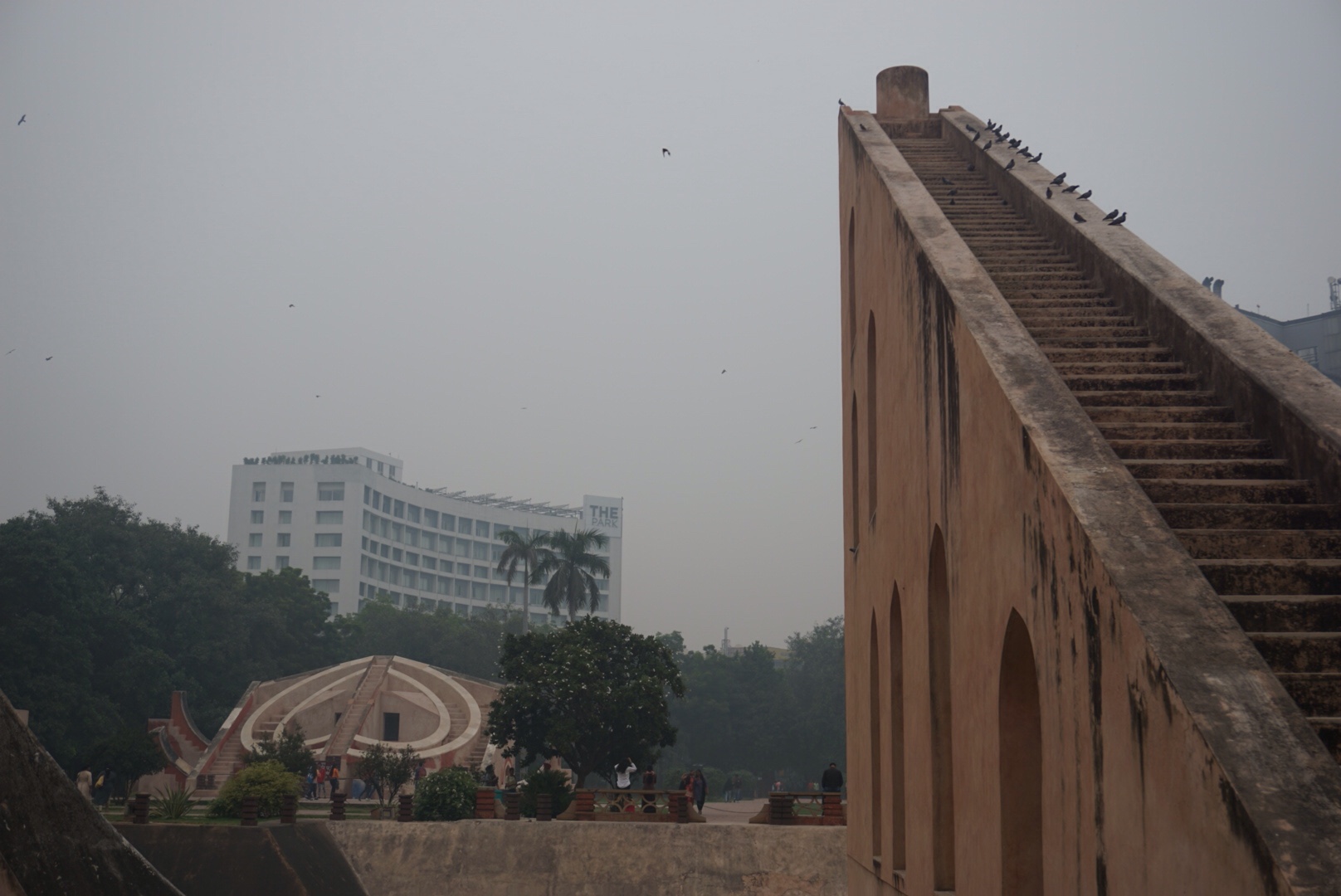
Final stop the day, before the bar with happy hour, was Jantar Mantar, opposite the hotel. This is a collection of nineteen astronomical instruments built by 1734. The instrument precisionally told the local time and the location of celestial bodies. Jai Singh built others around India to improve the accuracy of his readings here in Delhi.

And here is was time to walk all the way back, across the road, to my hotel, The Park.

Old mate did alright today, four hours of work and got more than a good days pay for it to take home to his wife and two children!

A day in Delhi ….

Wowwee!!

From the moment you walk out of the hotel compound, and it is a compound with security on the front gates and scanners to enter the building, you are accosted for anything and everything!

First day in a big city and thought a trip around the Hop on Hop off bus was the way to go. I suspect I would have found it a lot easier if I didn’t have to deal with a Cameron Ling like tagger named Faizan trying to get me to jump in his auto rickshaw. But he wasn’t even the first to hit me up, a taxi driver right out the front wanted to know what I was doing for the day and how long would I need him for!! Back to Faizan, he would have followed me about 1.5 kms and spoke to me about 10 times. Crazy and it wasn’t 9am yet.

Faizan insisted I take his number to call him later. He didn’t get mine.

Besides trying to shake Lingy, I had offers to clean my shoes and half a dozen other rickshaw rides.

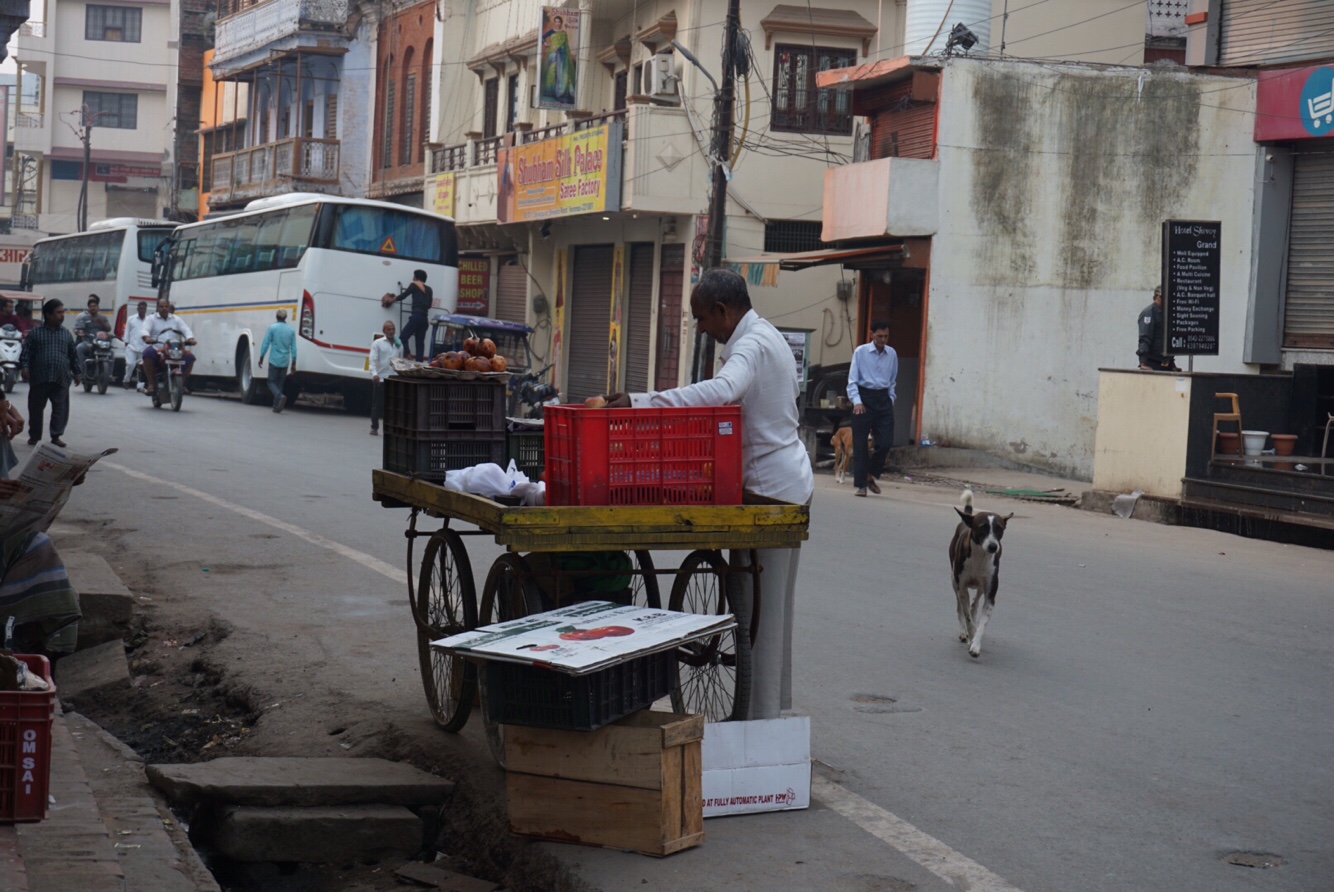
But what was most startling was the myriad of people sleeping rough in this part of the city. Small encampments, washing hanging on traffic barriers and children as well doing it rough. Today is a school day and the number of school age children out working, selling anything from water to poppadoms was incredible.

I saw my first cow today, pulling a cart along the road, being given some gentle encouragement by a long stick held by a boy not much older than Matthew. It looked like it was ready for retirement.

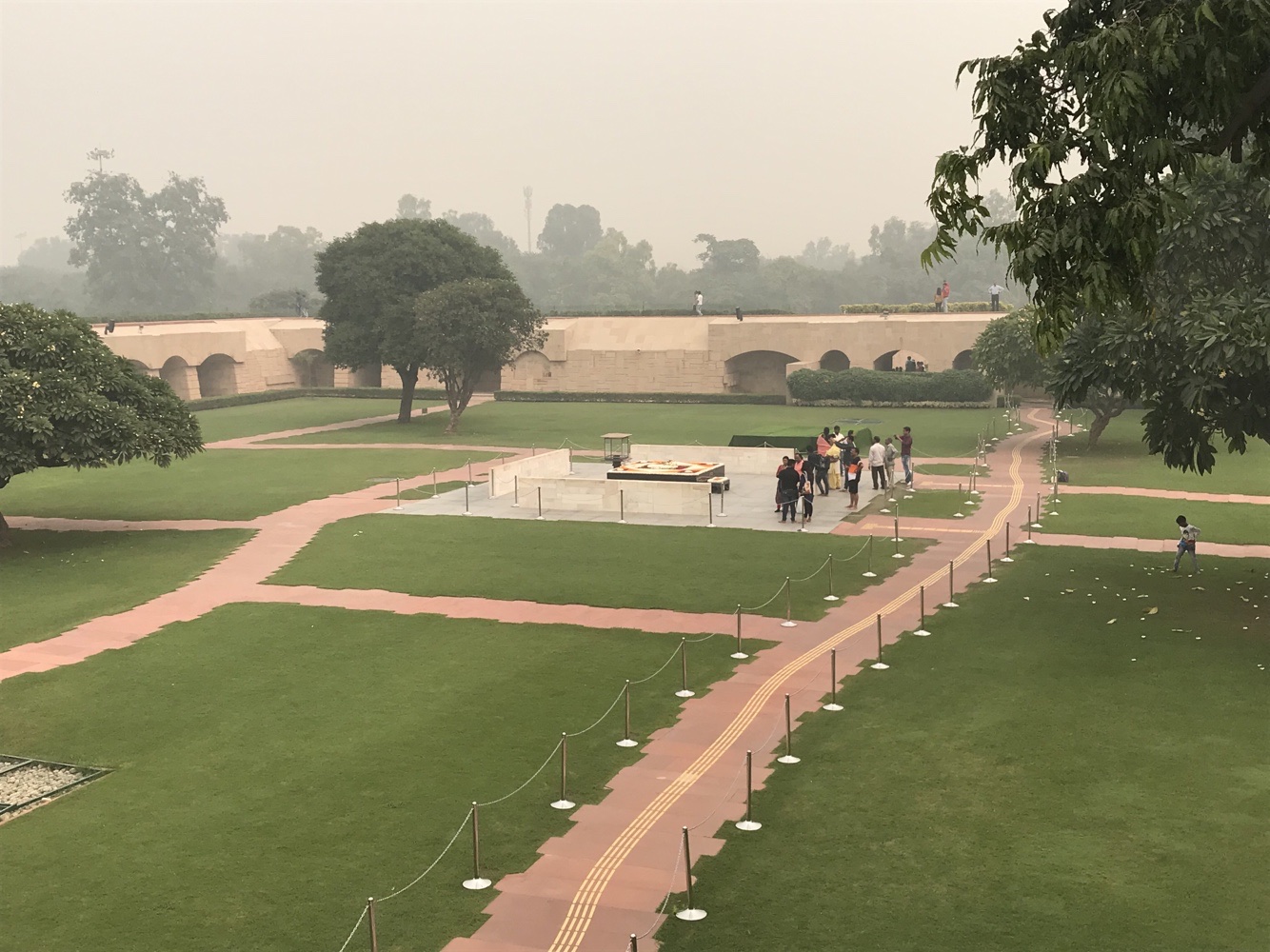
But while I have only seen one bovine, I would have seen hundreds of dogs walking the city, sleeping on the footpaths, crossing roads and being in packs. They are everywhere, except the Rajghat, where the army officer on gate duty discourages their entrance into the park with a long stick. Better than his AK47!

(The Rajghat is the place where Mahatma Gandhi was cremated following his assassination in 1947. The place is sacred, and peaceful, and a no dogs rule holds up there.)

Wherever it is possible to see a tourist, you will see someone trying to flog you something. A rickshaw ride to Old Delhi, a bottle of water, some coconut and a shoe clean to name a few. Wander into other areas and you will be offered advice on which markets to shop at, head scratchers for purchase as well as one bloke who tried to offer me a chance to have my ears cleaned. I gave that a miss despite the gentleman’s persistence including getting me to read a passage written, in English, from his little black book by Tom English (whoever that is). I informed my new friend, and I have made many today, that this passage was not very nice and I had to go (things about body passages).

It’s fair to say that I am a magnet for anyone trying flog something. And I suspect it isn’t just because I am carrying a camera that is making me a target.

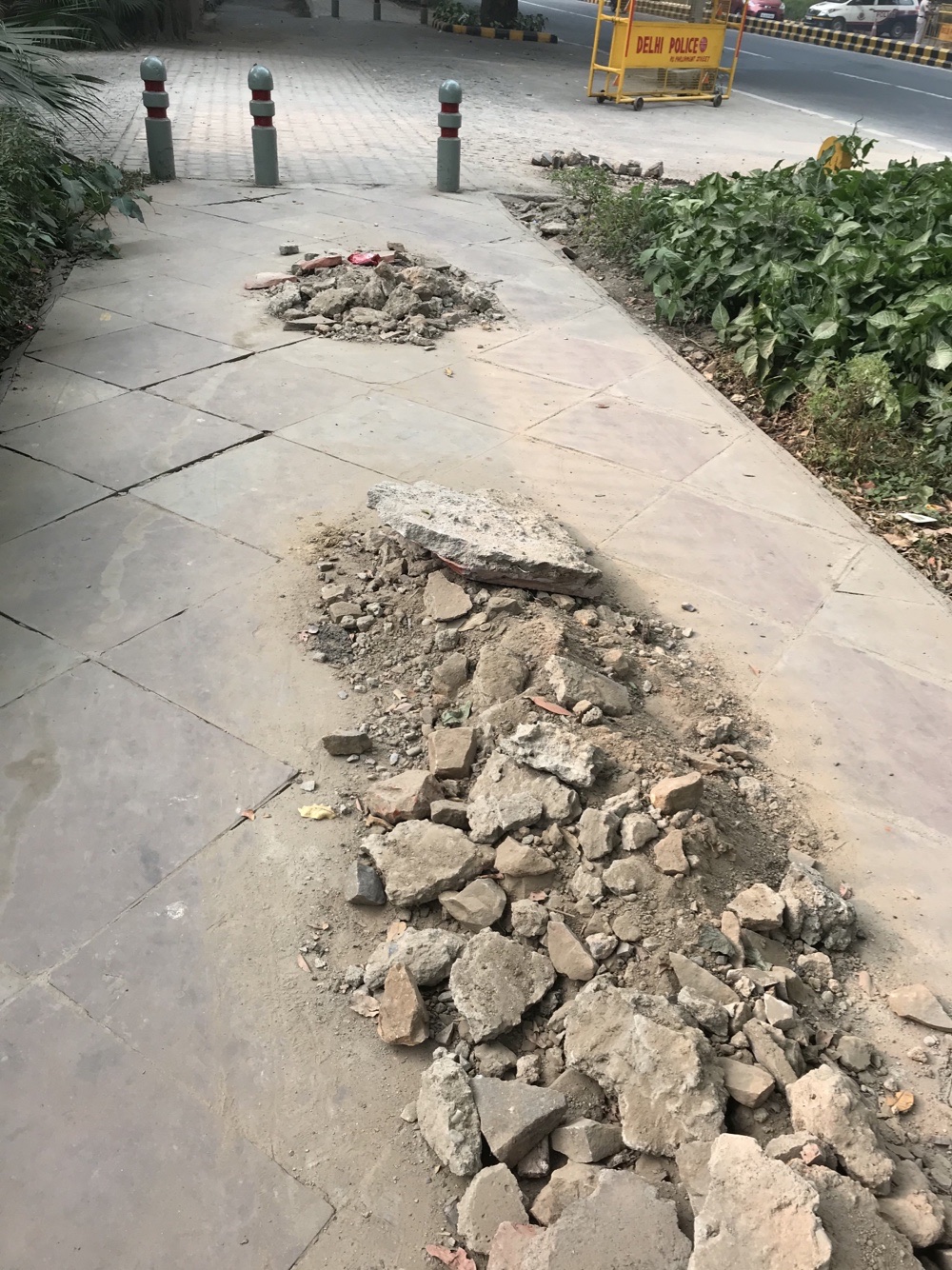
I have been fortunate enough to visit a number of large cities, London, Paris and Tokyo, but this one is insane. The pollution, the filth, the spitting, pissing and shitting wherever, the stench, the mass of people, the noise and the traffic. This city is quite literally crumbling under its enormous population; roads are pothole infested, walls are collapsing, footpaths are broken concrete and dirt and even buildings (homes) are falling around the ears of their inhabitants.

One of many, many broken footpaths

The place sounds horrid, but it is great!! All that I have written makes this an amazing place. One that makes your eyes and throat hurt at the end of a day sightseeing due to the pollution, but fills you with experiences that you will struggle to find any where in the western world.

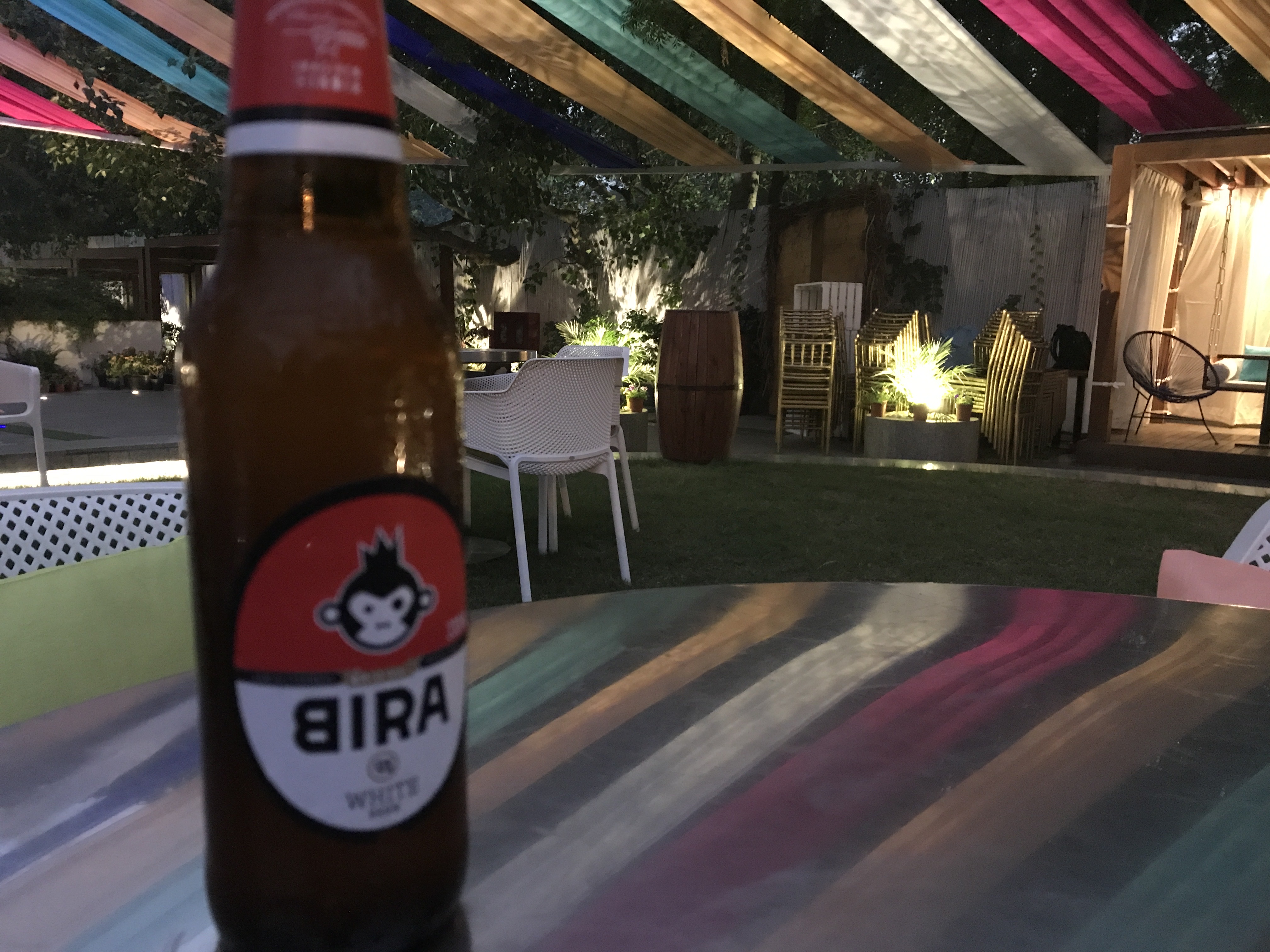
But after a quite a few hours out and about, the hotel offers up as a sanctuary from Delhi, despite still being able to hear the tooting of horns from the poolside bar.

What can you do!!

Cheers

Holey Moley

First impressions – as the A380 approached New Delhi airport, you could see the fog/smog though the windows and it was a real pea soupper.

As the plane underwent decompression with the opening of doors, it didn’t take long for the Delhi air to permeate into the cabin.

After managing my way through immigration and customs, my first view of outdoor Delhi was a sea of people held back waiting for loved ones to also appear from their travels. Besides the people, the noise and taste of the ‘fog’ also struck me. It was described as ‘fog’ by my local guide as we headed off to the car for a 45 minute trip to my hotel.

It appeared that every vehicle on the road had a dint in every panel. And I can understand why after about 2 minutes on the road. There are some parts of the road with line markings, but these are ignored. If it showed 3 lanes, it was not uncommon to have up to six vehicles filling across the road. At some points you could reach your arm out of the window and pass something to the person in the vehicle next to you, except you couldn’t open your window due to the fog!!

And what an adventure that 45 minutes was!

And the road was filled with cars, taxis, ubers, scooters and motorbikes, the most banged up old buses, bikes, motorised rickshaws and walkers!

Beside some sections of the road there were street merchants with carts selling drinks and crisps. Along the route there were at least a dozen police cars just sitting there with lights a blaze on their roof.

And the noise was incredible. Vehicles were tooting everytime they were coming up behind another vehicle to let them know they were squeezing into the gap besides them and not to hit them!!

What am I doing?

For the next 3 and half weeks, I will be traveling through northern India and Nepal.

I will be part of a small travel group, but travelling on my own, no Sherie or the kids. As I travel, I intend to document my journey for myself, family and friends. While I will endeavour to write about each day, this may not always be the case.

Why do I do this blog?

It allows me to look back at previous travels and reminisce about what I have experienced as well as allow others to see what and where I am travelling.

Why am I travelling without the kids and Sherie to India?

We often would sit at the dinner table and compare lists as to where we wanted to travel to, and while I was always keen to go where the other three said, I always had India and a couple of other places on my list.

So when I arranged for LSL last year, which was not for travel but work around the house, Sherie encouraged me to go India during my time off work. I think it came about after another cranky day at work and it was the best she could offer to take my mind off that and give me something to look forward to. I have to admit I am excited and a little nervous about it.

The things I am most nervous about is getting sick and being away from home for so long.

So if reading about my trip might be something for you, please subscribe or log in and have a look every few days.

Design a site like this with WordPress.com
Get started