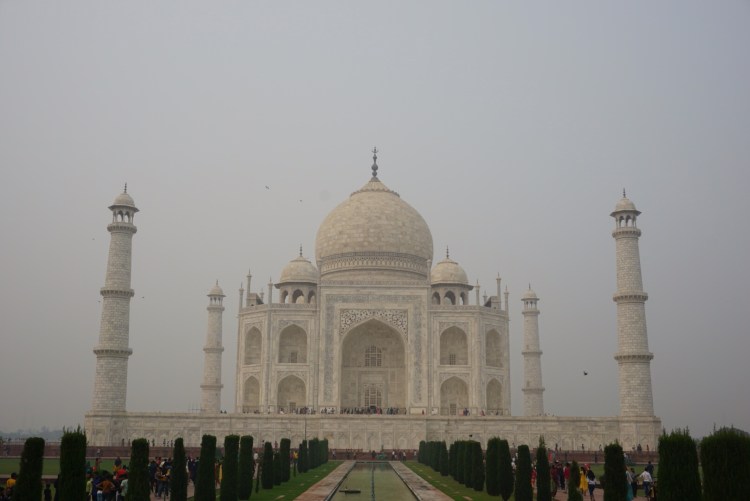
 To many the best known place in India is the Taj Mahal. It was amazing, but there is more to Agra than just The Taj.
The journey to Agra from Delhi is about 180 km but took over 4 hours to complete as buses are unable to drive at speeds greater than 40km/h, even on many parts of the motorway. However if you saw most buses on the motorway you could understand why this is an acceptable speed limit!
We were able to quickly leave a waking city of 23 million people and reach the motorway. As we snaked our way through the massive city of Delhi, we could see the homelessness were starting to arise and men in shirts and trousers were in dilapidated buses and auto rickshaws.
As we ‘sped’ into the country side, our view from the bus was quite hampered by the persistent smog that has engulfed much of the north of India. But what could be seen in that reduced visibility was a countryside that showed many sides to India. Farmers tending to their cattle and goats, others ploughing fields and some wandering into paddocks, not sure for what reason, with a couple of camels. What was not evident was permanent, and sound, structures for habitants. Many small mud and reed constructions laid between the motorway and the paddocks. People were working hard in the fields too; ploughing paddocks with bullocks, making bricks from the beneath them or carting reeds by donkey along the road. The motorway is punctuated with toll booths, which are indescribable.
As we approached Agra, the outskirts was littered with unbelievable filth; built up besides small building, choking waterways and scattered across the ground in front of small businesses. The small buildings, either permanent brick and cement, or semi permanent, timber and tarp/corrugated iron, each have a purpose. A line of motor bike repair shops, food outlets, farm supplies or construction materials. So the busyness and dirtiness of these areas then makes sense, in many parts, as this is the normal practice of working. It is just done here in the side of the road, not in some 150m2 light industrial complex!
Agra has a number of key visiting points. The Taj Mahal and the Agra Fort were the two we were going to do.
Firstly, the Agra Fort. A Mughal Fort built in the late 1500s by emperor Akbar, it is constructed from red sandstone and sits above the city along the Yamuna River. Oringially built as a Fort, it was transformed into a palace by the son and mostly the grandson of Akbar. The grandson, Shah Jahan, preferred white marble in construction and the back sections are visibly the additions during his dominance over the Fort and the city. However, the Fort unltimately became the prison for Shah Jahan when his son cracked it and over threw him!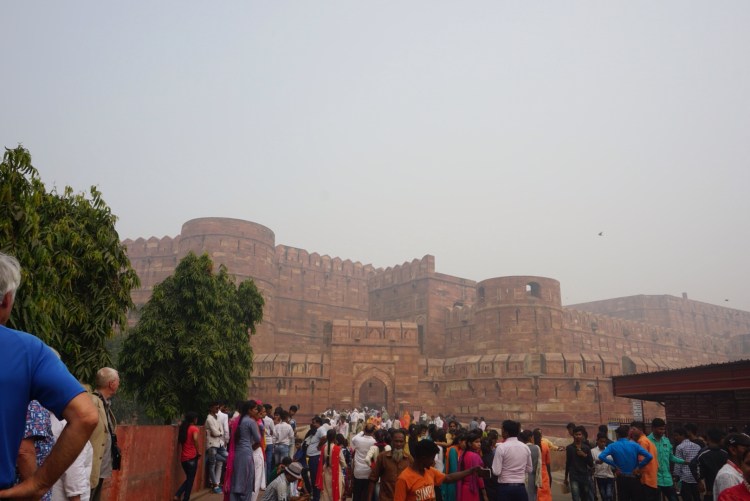
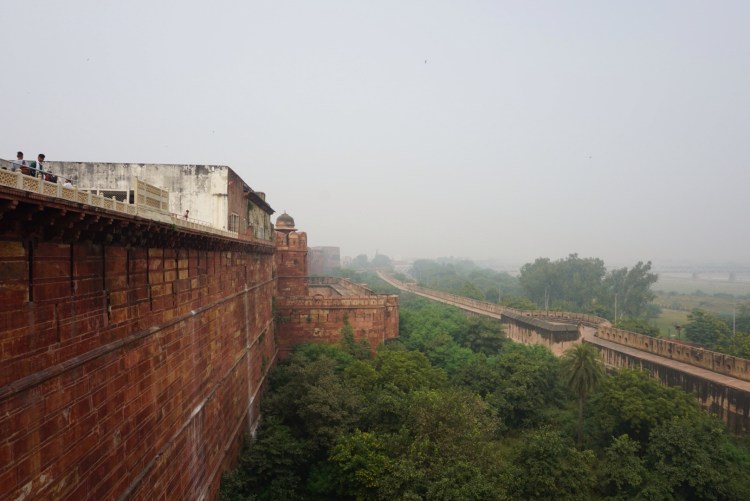
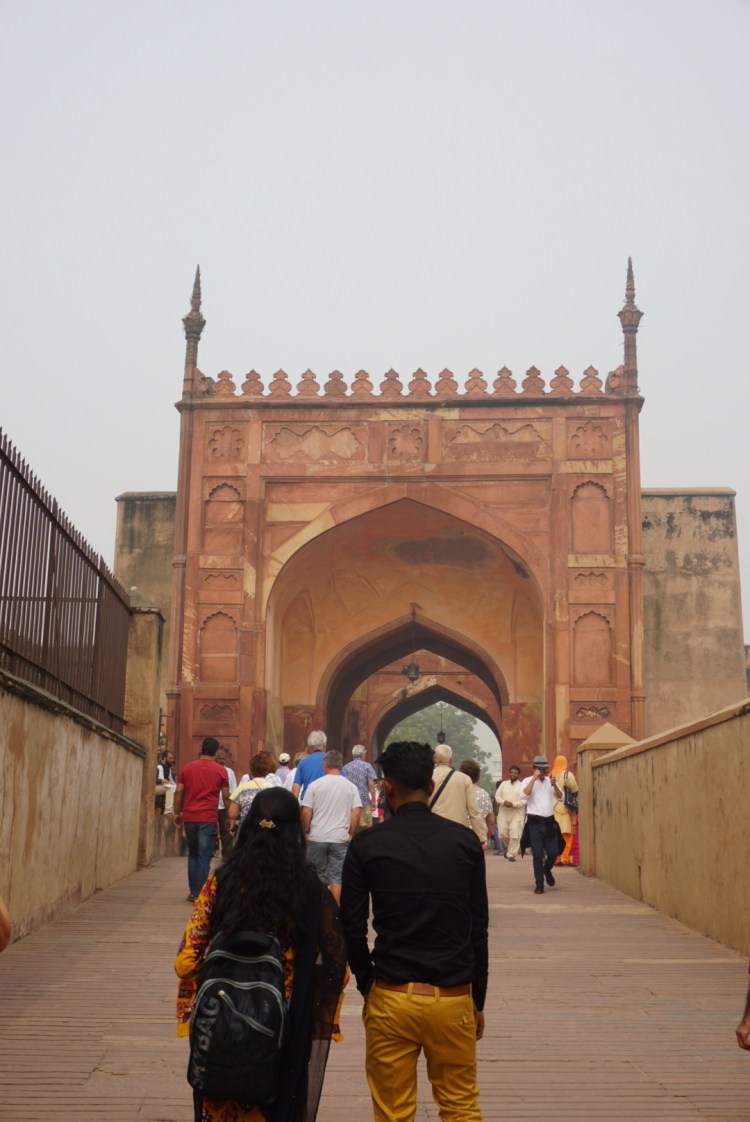
The walls of the Fort rise some 20 metres above the surrounding ground and form not one, but two moats. The outer moat was water filled with crocodiles and the second most was a dry moat, with lions and tigers. The 2.5km walls were never captured by invaders and consist of a plethora of buildings for prayer (Moti Masjid and Nagina Masjid), for governing (Hall of Private Residences) and for shopping ( ladies bazaar).

From the Agra Fort I was able to get my first glimpse of the Taj Mahal.
I visited the Taj Mahal twice, once in the late afternoon during free time and secondly, before sun rise.
The Taj Mahal was constructed following the death of Shah Jahan’s third wife during her 14th child birth. She died not in Agra and was buried at her place of death for about a year. Heartbroken, Shah Jahan, commenced the construction of the Taj Mahal as a mausoleum for his beloved third wife whose body was brought back and laid to rest where the Taj now sits.
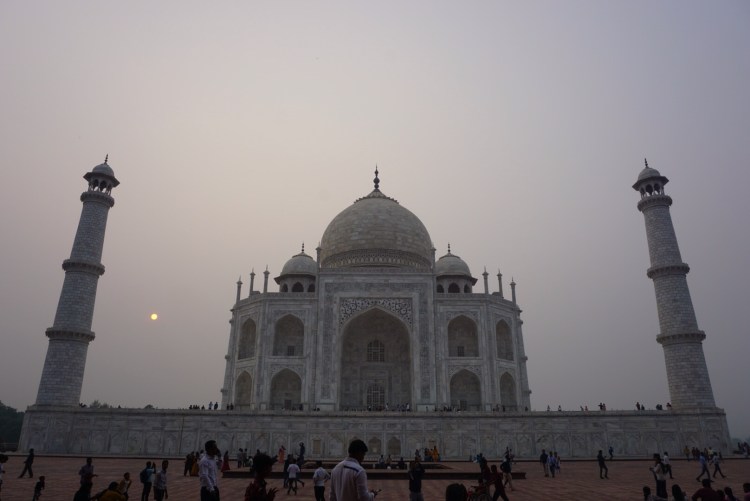
The splendour of this place is magnificent. Rising high above the Yamuna Rive behind it, the pristine white marble of the 8 sided building that was built as a sign of the love and grief shown by Shah Jahan for his wife.
You are instantly drawn towards the opening of the mausoleum with its large Arabic script inviting the deceased to enter paradise, but all the while advising those who wish harm what would happen to them.
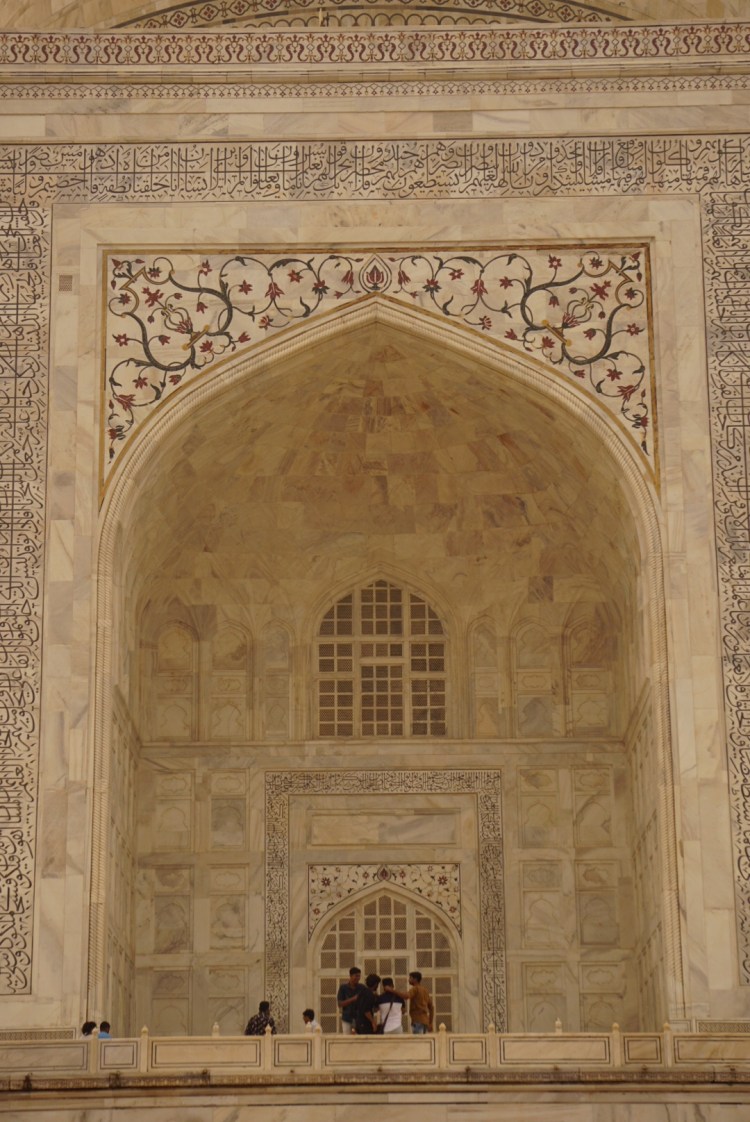
The grounds are traditional in that they consistent of 4 gardens, a common Mughal trait, where each are divided by a constructed water way.
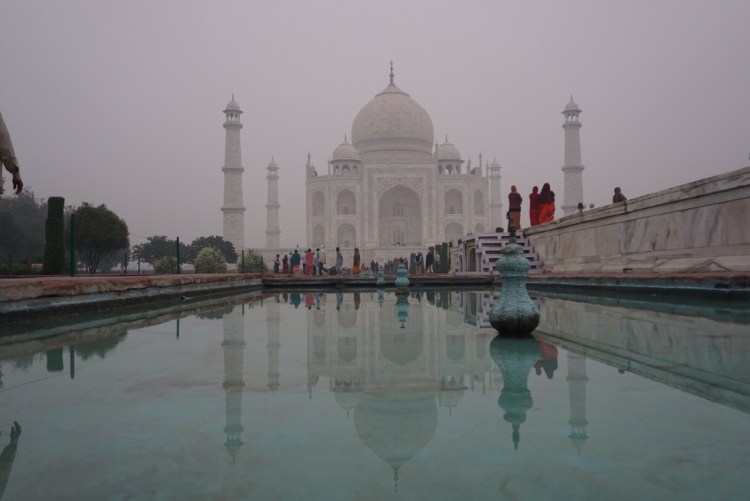
The symmetry of the entire complex, not just the Taj itself, is incredible. But there is one abnormality to the symmetry, and that is the Tomb of Shah Jahan which sits of centre inside the mausoleum. As you enter the mausoleum, you walk past the steps down to the cript where the bodies of the two lovers are placed, 10 feet below the inside surface of the Taj. Into the mausoleum proper and a 8 foot high white marble lattice surrounds the 2 tombs. The marble is decorated with dozens of different gemstones and other precious stones which glow when under light. As you walk around the lattice, you look up and ponder the great expense and effort that was put into building such a monument for one person. You snake back out into the outer corridors of the mausoleum and come out the back of the Taj overlooking the Yamuna River and look across it and see the foundations of what would have been a second tower, but this one in black marble with the two connected via a bridge. This was never completed as Shah Jahan was relieved of his position as emperor by one of his sons who imprisoned him in Agra Fort. His son did show him compassion however allowing him to be buried besides his wife.
Two great mosques also sit beside the Taj, with only the left one being consecrated due to its positioning towards Mecca.
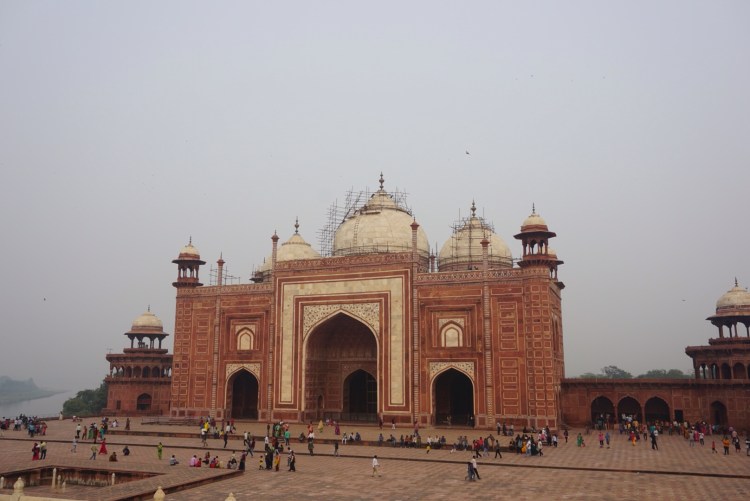
When visiting the Taj in the afternoon it is jammed packed with locals and foreign visitors. So after some confusion and debate, our trip to Taj was changed, allowing me to go twice, once in the afternoon with another couple and again in the morning for sunrise. Arriving at 5:20, I was first in the queue for the 6:02 opening!
And the morning was different. Foreign tourists mostly and therefore less people. As we got this so early, it was possible to photograph the monument without others in the photos and the local guides will take you around to e best spots for photos
The Taj Mahal is simply breathtaking and something that all should try and see once.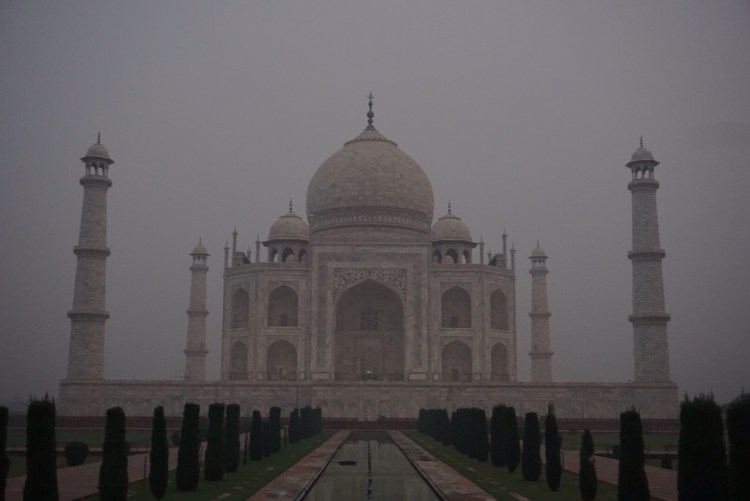
 India and Nepal 2019
Love your blog about the Taj Mahal Tim, it sounds even more incredible than I thought.😄
Varanasi would be hard to see, the dirt and poverty, but at the same time special.
LikeLike